An Ice Age Respiratory System
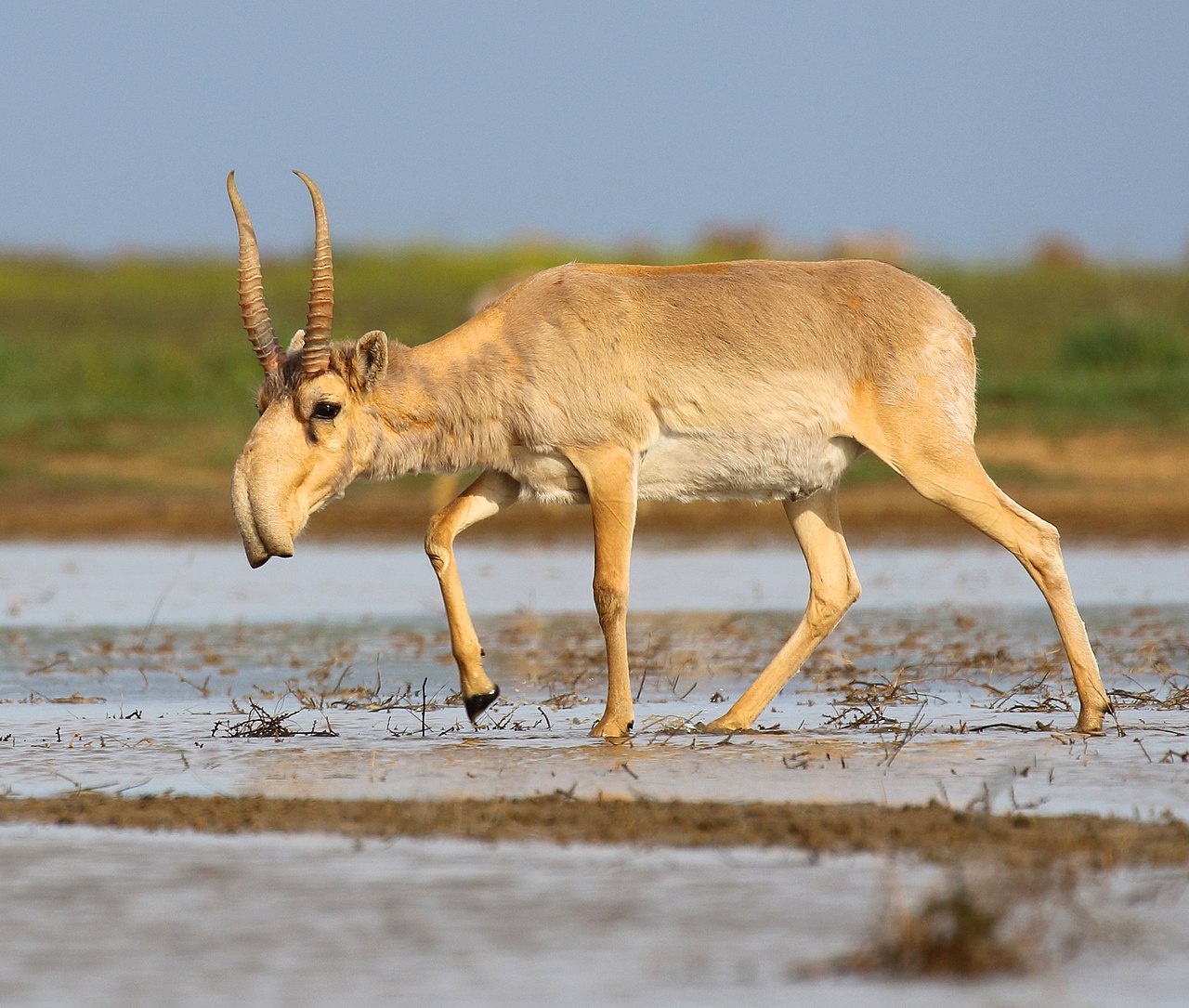
The saiga antelope (Saiga tatarica) is a living relic, a species that survived the end of the last Ice Age, having roamed the Mammoth Steppe with woolly mammoths and sabre-toothed tigers. Important to its survival in the harsh, semi-arid grasslands of Central Asia is its most distinctive feature: a large, fleshy proboscis that hangs over its mouth. This is no simple snout. The internal structure is a complex adaptation to an environment of extreme temperatures and dust.
The inside of the nose features an enlarged nasal vestibule with scroll-like bones called turbinates. These are covered in a network of hairs and mucous-secreting glands. This complex system creates a vast surface area. During the brutally cold winters, when temperatures can plummet, this structure acts as a heat exchanger. It warms the frigid air before it reaches the animal's lungs, preventing thermal shock and conserving body heat. In the summer, as great herds migrate across the dry plains, the same structure filters out clouds of dust kicked up by thousands of hooves.
A Tool for Communication and Survival
The saiga's nose is a sophisticated climate-control device and an important tool for communication. The nasal structure is sexually dimorphic, being more developed in males. During the autumn mating season, or rut, males use their proboscis to produce loud, low-frequency nasal roars to attract females and intimidate rivals. By extending their flexible nose, males can temporarily elongate their nasal vocal tract by about 20%, which alters the acoustics of their calls to signal their body size and fitness.
This specialized respiratory system also presents a vulnerability. In May 2015, a catastrophic event saw the death of approximately 200,000 saigas in a matter of weeks—more than two-thirds of the entire global population at the time. The cause was identified as hemorrhagic septicemia caused by the bacterium Pasteurella multocida. This bacterium normally lives harmlessly in the saiga's respiratory tract, but scientists believe that unusually high humidity and air temperatures created conditions that allowed the pathogen to become deadly, leading to a mass mortality event.
Despite threats from poaching, habitat loss, and disease, conservation efforts have been remarkably successful. After dropping to a low of around 48,000 in 2005, the population rebounded to over 1.9 million by late 2023. This led the International Union for Conservation of Nature (IUCN) to upgrade the saiga's status from Critically Endangered to Near Threatened.