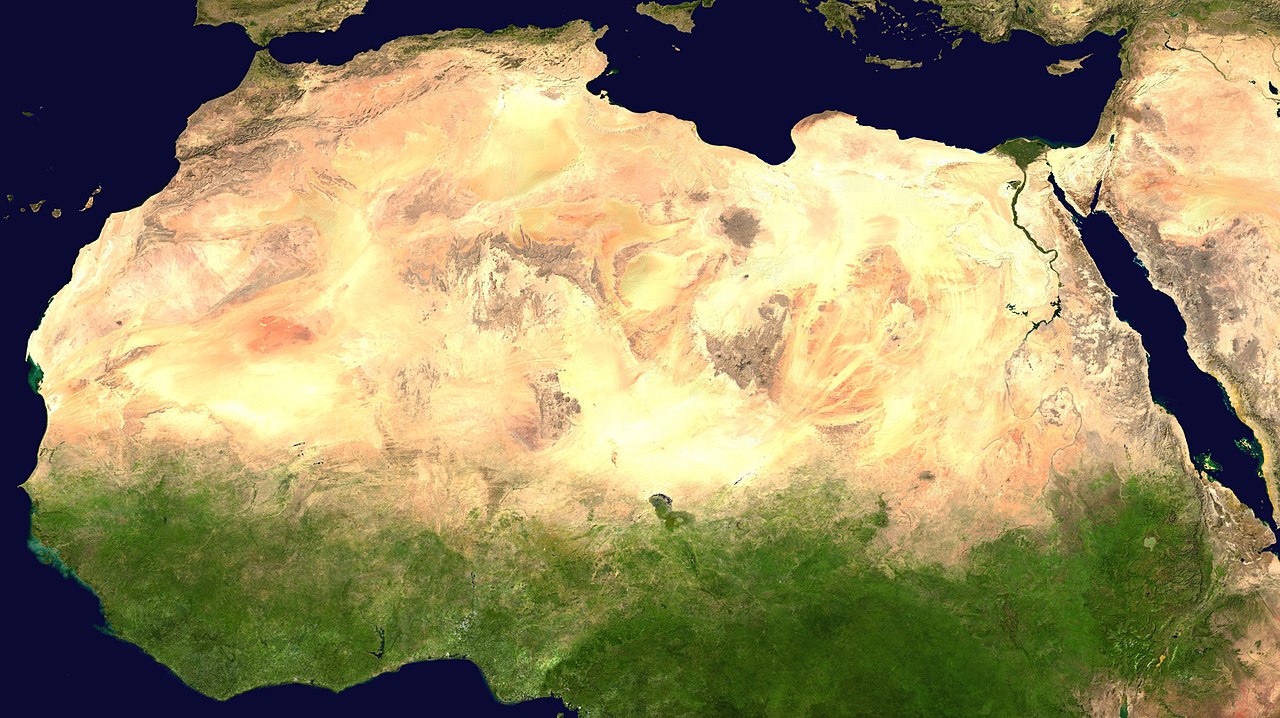
A once-green Sahara
The Sahara we know today—a vast expanse of sand and rock—was a different world during the "African Humid Period." This recurring wet phase, which lasted from about 11,000 to 5,000 years ago, transformed North Africa into a landscape of grasslands and woodlands, river, and lake systems. Evidence for this greener world is widespread. Sediment cores drilled from ancient lakebeds contain pollen from savanna grasses and even Mediterranean-type trees. The largest of these ancient lakes, known as Lake Mega-Chad, covered an area of about 400,000 square kilometers, making it larger than the modern Caspian Sea.
This verdant environment supported a diversity of wildlife. Crocodiles and hippos lived in the lakes and rivers. Herds of elephants, giraffes, and aurochs roamed the grasslands. This fauna is immortalized in thousands of petroglyphs and rock paintings found across the region, particularly in mountainous areas like Niger's Aïr Mountains and Algeria's Tassili n'Ajjer. In the Agadez region, life-sized engravings of giraffes, dated to be around 8,000 years old, record this lush past. These artworks document the animals and the human hunter-gatherer and pastoralist societies that flourished there.