The physics of passive cooling
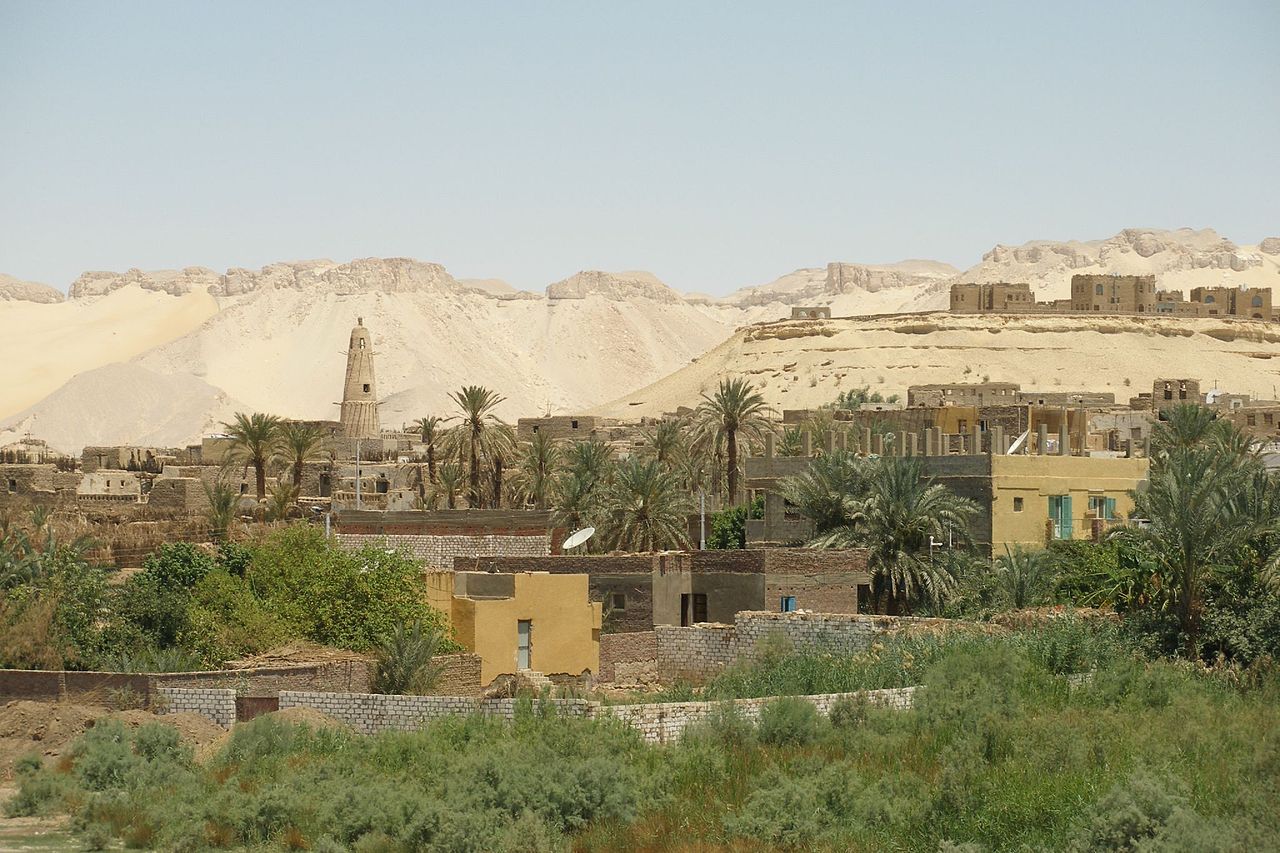
Al-Qasr is an elegant solution to a physics problem: how to live comfortably when desert temperatures are extreme. The town's design and materials work together as a passive cooling system, a example of climate-adapted engineering that predates modern air conditioning by centuries. The core of this system is the town's dense, interwoven urban plan. Streets are narrow and twisting, often covered by the upper stories of houses, which maximizes shade and reduces the surface area exposed to direct sun. This layout also creates pressure differentials that generate airflow, pulling breezes through the shaded corridors.
The primary building material is sun-dried mud brick, a composite of local clay, sand, and chopped straw. Mud brick has a high thermal mass, meaning it absorbs the sun's intense heat slowly throughout the day. This heat then radiates out during the cold desert night, keeping indoor temperatures relatively stable. The thick walls, often 50 cm at the base, provide excellent insulation. Ceilings are constructed from a network of palm and acacia wood beams, layered with palm leaves and topped with mud, further insulating the homes from the sun. Some buildings incorporate air catchers, or malqaf, a traditional design where a double-walled structure catches prevailing winds and funnels the cooler air down into the living spaces below.
Living archaeology
The town was founded in the 12th century by the Ayyubids, strategically built over the remains of a much older Roman settlement. This earlier Roman town, known as Trimithis (modern Amheida), had its own long history, with evidence of settlement dating back to the Old Kingdom. The builders of Al-Qasr frequently reused materials from the Roman ruins; it is common to find stone blocks with hieroglyphic or Ptolemaic carvings embedded in the walls and doorjambs of the medieval houses.
The settlement is a fortress, with districts that could be sealed off at night by large wooden gates. Within these walls, the society was structured around extended families, many of whom have occupied the same multi-story houses for generations. This continuous habitation makes Al-Qasr a site of archaeology, where cultural traditions are layered directly onto ancient structures. Key buildings document the town's history. The 21-meter-high, three-story minaret of the Nasr el-Din Mosque dates to the Ayyubid period and is one of the oldest in the Western Desert. An adjacent madrasa (school) is still used as a school and meeting place. Wooden lintels above house entrances are often carved with the owner's name, Quranic verses, and the date of construction—the oldest dates to 1518.