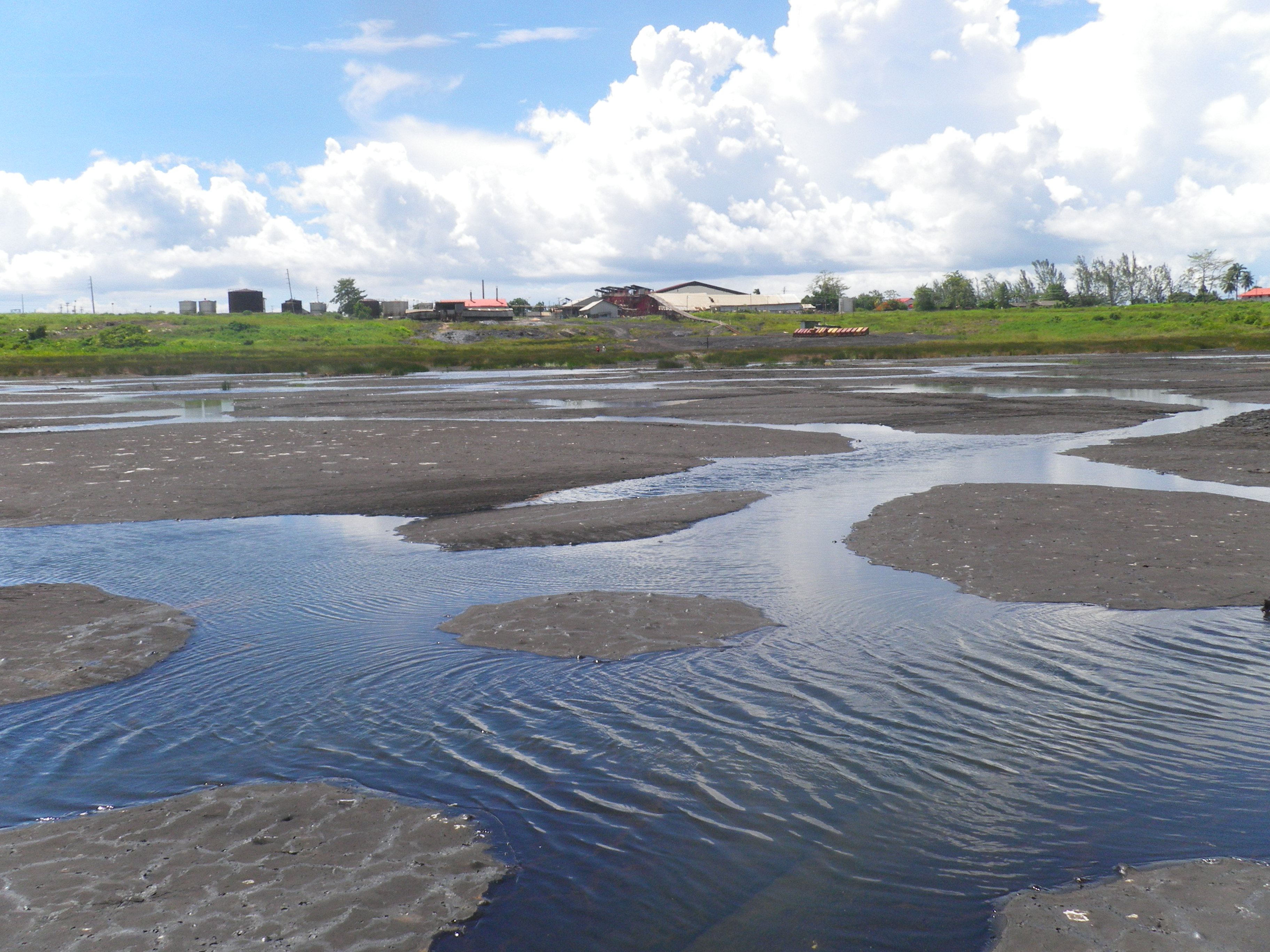
An ecosystem in asphalt
The La Brea Pitch Lake in Trinidad is the largest natural deposit of asphalt on Earth, covering about 41 hectares and reaching a depth of 76 meters. This massive reserve, estimated to hold 10 million tons of asphalt, originates from deep subterranean oil deposits. Tectonic fault lines allow crude oil to seep upwards, and as the lighter hydrocarbon elements evaporate in the heat, the dense, viscous asphalt remains. The lake is not static; it churns in a slow, continuous motion, driven by gas pressure from below. This movement occasionally causes ancient tree trunks and other objects to surface before being swallowed again.
Within this environment of heavy oils and toxic compounds, scientists have discovered a unique and active microbial ecosystem. Life exists within microscopic droplets of water trapped in the hydrocarbon matrix. These droplets, some as small as a single microliter—about 1/50th the size of a typical drop of water—contain diverse communities of bacteria and archaea. The extremophile populations can reach between 10 million and 100 million cells per gram of asphalt. These microbes are surviving; they actively metabolize the hydrocarbons.
Life without water or oxygen
The microbial communities within the Pitch Lake are distinct from those found in other hydrocarbon-rich environments, like California's La Brea Tar Pits. Many of the species discovered here are novel to science. The microorganisms include bacteria from the order Burkholderiales and salt-tolerant archaea from the order Halobacteriales. These extremophiles are adapted to an environment with almost no available water and no oxygen.
The microbes use other elements for respiration, metabolizing sulfur, iron, and various hydrocarbons to survive. This metabolic activity alters the chemical composition of the oil and produces methane gas. The methane rises through the viscous asphalt, creating the bubbles that dot the lake's surface. When these bubbles trap rainwater, they form the transient, water-filled microhabitats that host these complex communities. The water inside the bubbles is often highly salty, suggesting it may originate from deep underground brine that ascends with the oil. The entire ecosystem within a bubble exists only for the short time before the bubble bursts, releasing its gases into the atmosphere.