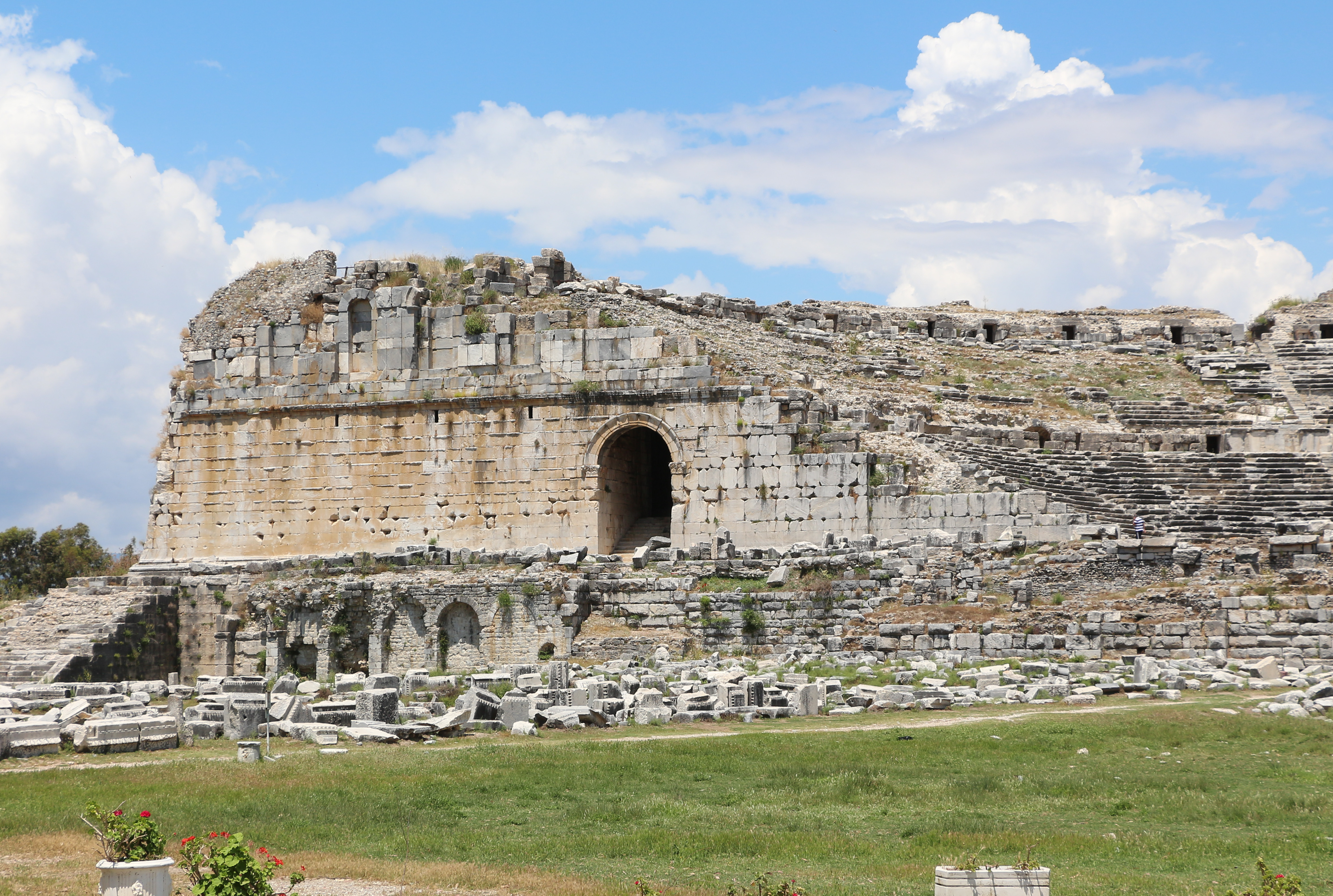
The ancient Phrygian musical mode (E-E on white piano keys) was considered so emotionally powerful it was restricted in ancient Greece. Modern analysis suggests the interval pattern activates different neural pathways than major/minor scales.
Bernard Gagnon, CC BY-SA 3.0
The scale of ecstasy
The Phrygian mode is a musical scale with an ancient history, named for the kingdom of Phrygia which flourished in the Anatolian highlands of modern-day Turkey around the 8th century BCE. The scale can be produced by playing the white keys on a piano from E to E. Its defining characteristic is the interval between the first and second notes—a minor second. This small, half-step interval creates an immediate tension and a dark, exotic quality that sets it apart from the common major and minor scales used in Western music.
This unique sound was a subject of debate among ancient Greek philosophers. In his Republic, Plato argued for the restriction of certain musical modes to cultivate a virtuous and stable society. He identified the Phrygian mode as intensely emotional, capable of inspiring ecstasy and passion. While he permitted it for warriors to evoke courage, he banned other "soft" or "drinking" harmonies like the Ionian and Lydian modes, fearing they would lead to indolence and moral decay. Aristotle, in his Politics, also categorized the Phrygian mode as one that "inspires enthusiasm". He believed different modes could represent and encourage different character traits, such as anger, courage, and temperance. They agreed that music directly affected the soul and that its use in education and society required careful consideration.
The ancient Phrygian kingdom itself was a significant power after the fall of the Hittite Empire around 1200 BCE. Its people were known for their artistic skill, particularly in pottery and rock-carved monuments. The region, known as the Phrygian Valley, is has monumental tombs, temples, and former cities carved into the soft volcanic tuff rock, including the famous Midas Monument at Yazılıkaya, which was a major cult center.
A psychoacoustic signature
Greek ideas about the Phrygian mode's power aligns with modern psychoacoustics. The scale's defining feature, the lowered second degree (♭2), creates a semitone relationship directly above the root note. This interval is inherently dissonant, creating a sense of friction and instability in the listener's ear, even without any harmonic movement. The brain perceives this constant tension, which can evoke feelings of suspense or darkness.
Unlike a standard minor scale (the Aeolian mode), which has a whole step between its first two notes, the Phrygian mode's initial half-step creates a strong downward pull toward the tonic. This structure resists easy resolution and contributes to its characteristic sound. While direct neuroscientific studies mapping the brain's response to specific ancient modes are complex, the processing of musical intervals is well-understood. The auditory cortex processes the frequencies, but the emotional response is mediated by the limbic system. Dissonant intervals like the minor second can trigger a heightened response compared to more consonant intervals like perfect fifths or octaves.
This specific interval is the primary reason the Phrygian mode is used in diverse genres to create specific moods. It is fundamental to the sound of Spanish Flamenco music, often appearing in a variant called the Phrygian dominant scale. Film scores frequently use it to generate mystery and tension, while many heavy metal and rock songs rely on its dark and powerful character.
💡Fun Facts
The Phrygian dominant scale, a close relative with a major third, is also known as the "Spanish Gypsy" scale and is essential to Flamenco music.
Many heavy metal riffs use the Phrygian mode for its heavy, dark sound; examples can be found in the music of bands like Metallica.
The oldest complete surviving musical composition, the Seikilos Epitaph, discovered in Turkey, is considered to be in a Phrygian-like mode.
In medieval times, the Catholic Church codified the scale as the "Third Mode," using it in liturgical chants.