A living evolution experiment
In the arid scrublands of the Monte Desert, an extraordinary evolutionary process is unfolding beneath the surface. The protagonists are small, burrowing rodents called tuco-tucos, belonging to the genus Ctenomys. This group of over 60 species is undergoing rapid diversification, and the primary engine of this change is their chromosomes. Across the entire genus, the diploid chromosome number—the total count of chromosomes in a cell—ranges dramatically from 2n=10 in one species to 2n=70 in another. This is one of the largest ranges of chromosomal variation known in any mammal genus.
This genetic variability is more than a curiosity; a powerful mechanism for creating new species. When two populations of tuco-tucos with different chromosome numbers attempt to interbreed, their offspring are often infertile. The mismatched chromosomes fail to pair correctly during the formation of sperm and eggs, a process known as meiotic failure. This effectively creates a reproductive barrier, isolating the gene pools of the two populations. In the San Luis Province, this process can be observed over very short distances, where populations separated by only a few kilometers, or by a subtle shift in soil type, are already on distinct evolutionary paths. The primary mechanisms for these changes are thought to be Robertsonian translocations (the fusion or splitting of chromosomes) and other rearrangements.
Life underground
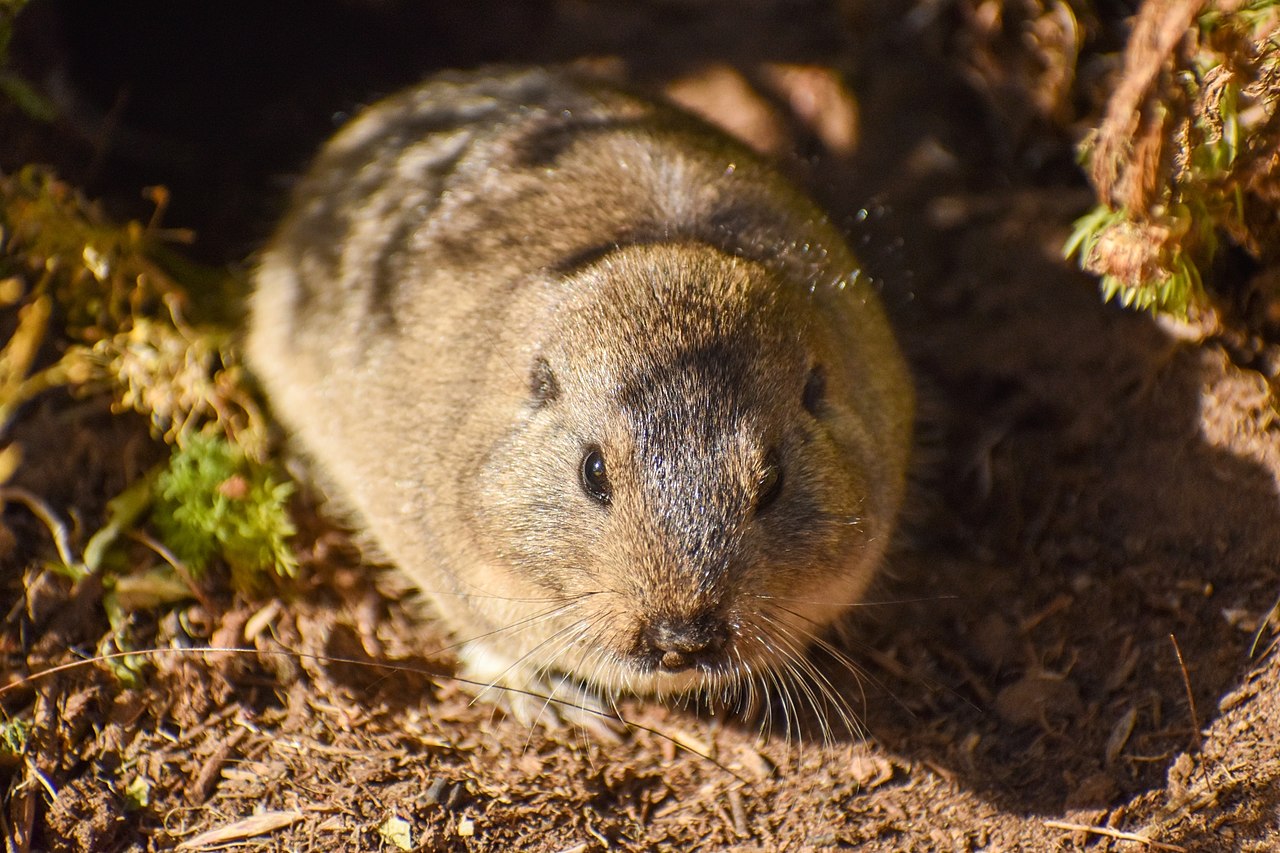
Tuco-tucos are highly adapted to a fossorial, or burrowing, lifestyle. They have stout, cylindrical bodies and powerful forelimbs with strong claws for digging, small eyes, and tiny ears. Their scientific name, Ctenomys, means "comb-mouse," a reference to stiff bristles on their hind feet used for grooming. These rodents spend the vast majority of their lives in complex, sealed burrow systems, which provide protection from predators and a stable microclimate.
This subterranean existence makes chromosomal changes so effective at driving speciation. Tuco-tucos have low mobility and form small, isolated populations. Even a minor geographical barrier, like a change in soil that is harder to dig, can keep populations separate. This isolation allows unique chromosomal arrangements to become fixed in a local group. What looks like a continuous, uniform area on the surface is, for a tuco-tuco, a patchwork of distinct territories. This fragmentation provides the perfect conditions for the rapid, explosive speciation seen in the genus today. They are an example of evolution in action, driven by large-scale changes to their genetic blueprint.