Turquoise water has carved marble for 6,000 years. Retreat rate measurements show wave action removes 1cm of rock per century, constantly reshaping the cathedral-like caverns.
Jorge Morales Piderit, Public domain, via Wikimedia Commons
A Paleozoic rock meets a Holocene lake
The story of the Marble Caves begins with a geological mismatch of epic proportions. The rock itself is ancient, a Paleozoic-era limestone formed from the calcium carbonate shells of marine creatures on a temperate coral reef roughly 320 million years ago. Tectonic forces later buried this limestone, subjecting it to intense heat and pressure that metamorphosed it into the dense, crystalline marble seen today. This process, at temperatures around 200-500°C, folded and recrystallized the rock, creating bands of white, blue, and pink that swirl through the caverns. Impurities in the original limestone created the different colored mineral veins. The entire deposit is large, with estimates suggesting over 5 billion tons of marble with a 94% calcium carbonate purity.
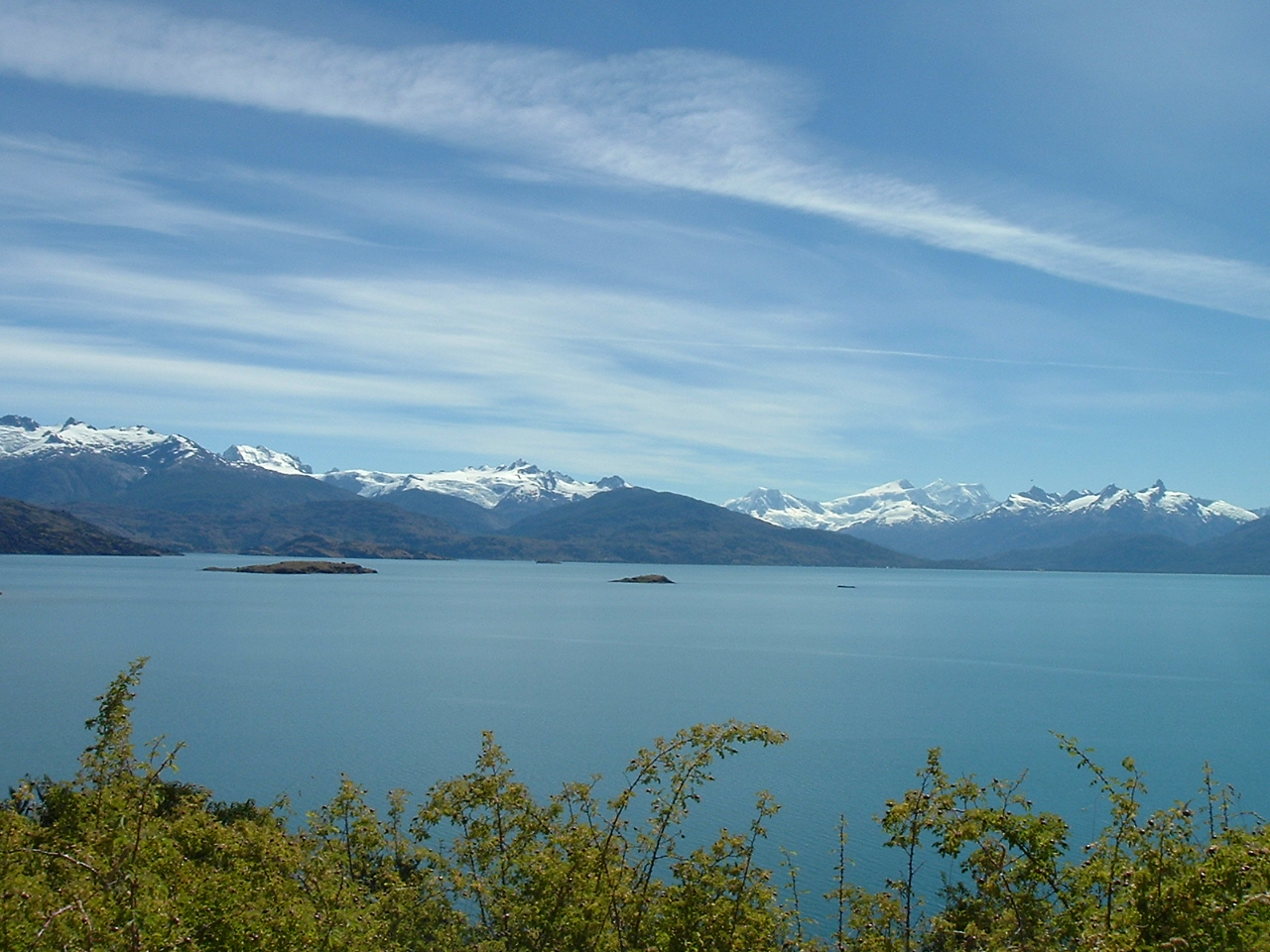
The force that carved this ancient rock is much younger. The caves formed because of General Carrera Lake, a body of water that formed only after the Patagonian Ice Sheet retreated at the end of the last ice age. The sculpting process began around 6,000 years ago when the lake's water level stabilized and wave action could consistently attack the marble cliffs. This makes the caves a relatively recent geological feature, carved into a stone that is millions of years older.
The chemistry and physics of erosion
The erosion of the Marble Caves is a two-part process involving both chemical dissolution and physical abrasion. The water of General Carrera Lake is fed by glacial melt. This water is rich in fine rock particles, known as glacial silt or rock flour, which gives it a distinct turquoise color by reflecting blue and green light. While the lake water has a fairly neutral pH, the marble's high calcium carbonate content makes it alkaline, with a pH of about 9.9. This difference allows the slightly acidic rainwater and meltwater entering the lake to slowly dissolve the rock.
This chemical weathering is amplified by constant physical attack. The relentless waves of the lake, driven by strong Patagonian winds, physically batter the marble shoreline. The water forces itself into cracks and weaknesses in the rock, while the suspended glacial silt acts as a liquid abrasive, grinding away at the surfaces. This combination of dissolution and abrasion carves out the smooth archways, columns, and tunnels. The process creates distinct formations, with the most famous being the Marble Cathedral (Catedral de Mármol) and the Marble Chapel (Capilla de Mármol). The entire system of caves and tunnels stretches for about 300 meters along the shoreline.
💡Fun Facts
The rock of the caves is Paleozoic marble, approximately 300 million years old, while the caves themselves were formed in the last 6,000 years.
The lake is binational, called General Carrera Lake in Chile and Lake Buenos Aires in Argentina, and is the second largest lake in South America.
The water's brilliant turquoise color is caused by "glacial flour," fine particles of rock suspended in the water that refract sunlight.
Before the Carretera Austral highway was built in the 1990s, the Chilean side of the lake was mostly isolated and accessed via Argentina.
Tours are dependent on weather and depart daily, typically with more frequency during the Patagonian summer (December-February).
Admission
Tour prices vary. A boat tour costs approximately 10,000 CLP, while a kayak tour is around 30,000-35,000 CLP.
Accessibility
The caves are only accessible by boat or kayak from the town of Puerto Río Tranquilo. The journey to the town involves driving on the Carretera Austral, which has gravel sections.