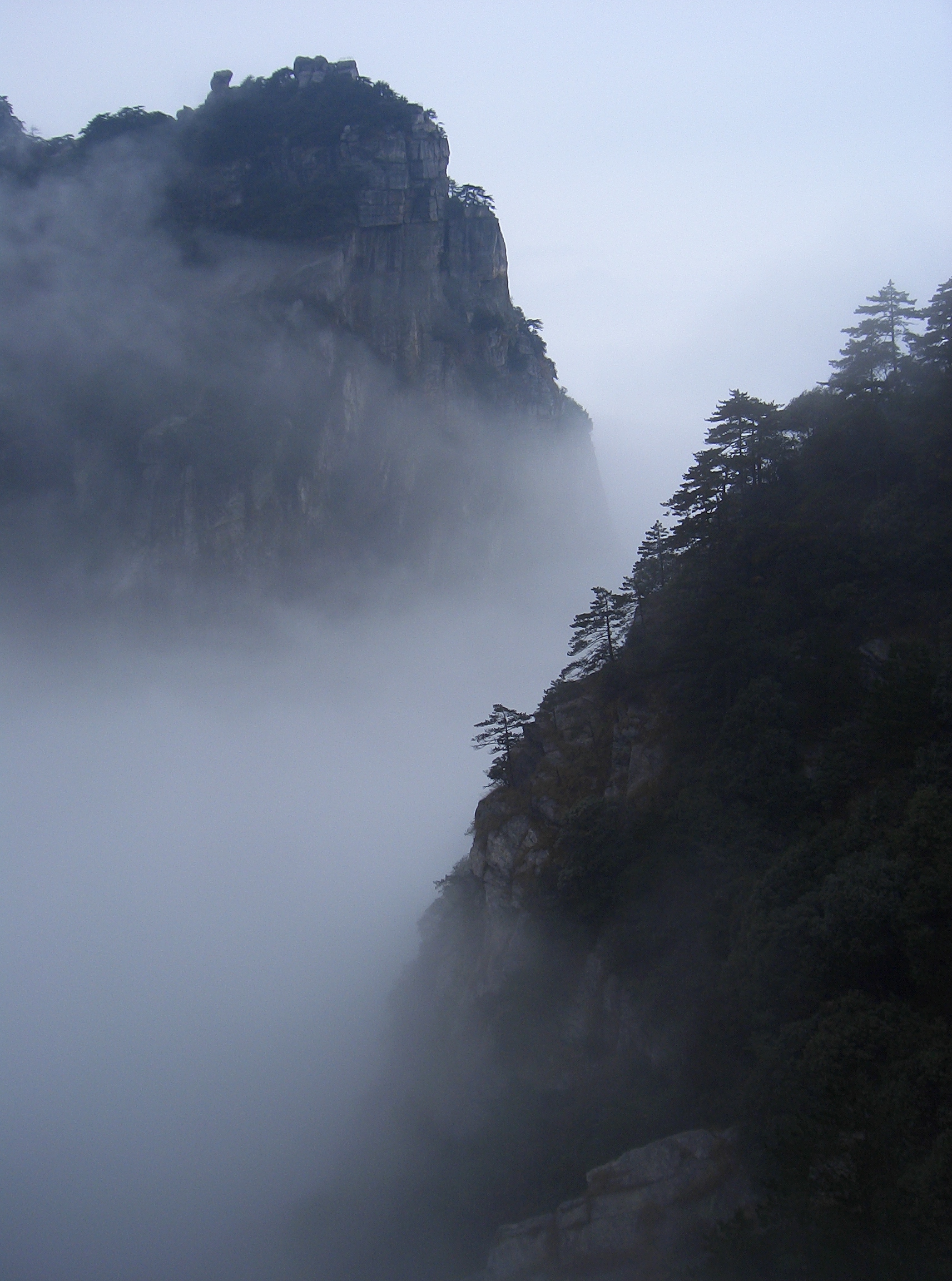
The mountain that makes its weather
Lushan Mountain, a massif rising to 1,474 meters at its highest peak, is an isolated barrier in the humid subtropical climate of Jiangxi province. Its position south of the Yangtze River and west of Poyang Lake—China's largest freshwater lake—provides a constant source of moisture. As warm, moist air from the plains is forced upwards by the mountain's steep slopes, it cools and condenses, a process known as orographic lift. This effect generates a persistent "sea of clouds" and a remarkable microclimate where fog occurs on an average of 196 days per year.
The Lushan Meteorological Bureau, established in 1954, sits on the mountain and is a national reference climatological station. For decades, scientists here have studied the unique atmospheric conditions. The mountain is one of six observation sites for a cloud-fog testing station run by the Chinese Academy of Meteorological Sciences, providing a natural laboratory for understanding cloud physics. Researchers have collected vast amounts of data on cloud microphysics, including over 2,400 samples and more than 5,000 measurements of raindrop size distribution. These studies help explain the formation of the mountain's frequent drizzles and the specific properties of its dense fogs.