Ponds in the trees
High in the canopy of Puerto Rico's Luquillo Mountains, within the El Yunque National Forest, entire aquatic ecosystems exist inside the leaves of a single plant. These unique habitats are formed by tank bromeliads, a type of epiphyte that grows on tree branches. Their tightly overlapping leaves create a watertight reservoir, or "phytotelma," that collects rainwater and falling organic debris like leaves and insects. Depending on the species, these aerial ponds can hold anywhere from a few milliliters to over 20 liters of water, creating a stable aquatic environment dozens of meters above the ground.
The water chemistry within these tanks is distinct from simple rainwater. As collected leaves and other debris decompose, they release nutrients, creating an acidic broth. Field studies show the pH in these tanks typically ranges from 4.0 to 6.5, often becoming more acidic than the local rain due to plant activity and decomposition. This nutrient-rich water contains significantly higher concentrations of nitrogen, phosphorus, calcium, and other elements compared to rainwater, essentially forming a fertilizer tea that both nourishes the host bromeliad and supports a community of organisms.
A complete food web
Each bromeliad tank has a multi-level food web. The foundation consists of bacteria, fungi, and protozoa that break down the collected detritus. These microorganisms are consumed by filter-feeding mosquito larvae and other small invertebrates. The community of life is varied and can include hundreds of species, from microcrustaceans and worms to the larvae of flies and beetles like the family Scirtidae.
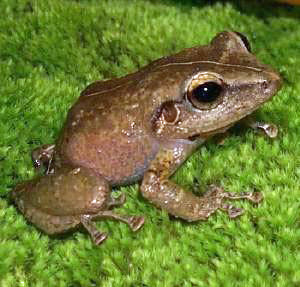
These primary consumers become food for a range of predators. Damselfly larvae from genera such as Leptagrion are specialized hunters in this environment. The most famous resident is the common coquí frog (Eleutherodactylus coqui), Puerto Rico's unofficial territorial symbol. Coquís use the water-filled bromeliads as a safe place to lay their eggs. Unlike most frogs, coquís undergo direct development, hatching from their eggs as fully formed, miniature froglets without a free-swimming tadpole stage. The male frog often guards the eggs, keeping them moist until they hatch inside their protected, elevated nursery. This complete, self-contained world of predator and prey relationships makes each bromeliad a natural laboratory for studying ecology. Research in the Luquillo Experimental Forest, a Long-Term Ecological Research (LTER) site, uses these microcosms to understand everything from nutrient cycling to how communities respond to disturbances like hurricanes.