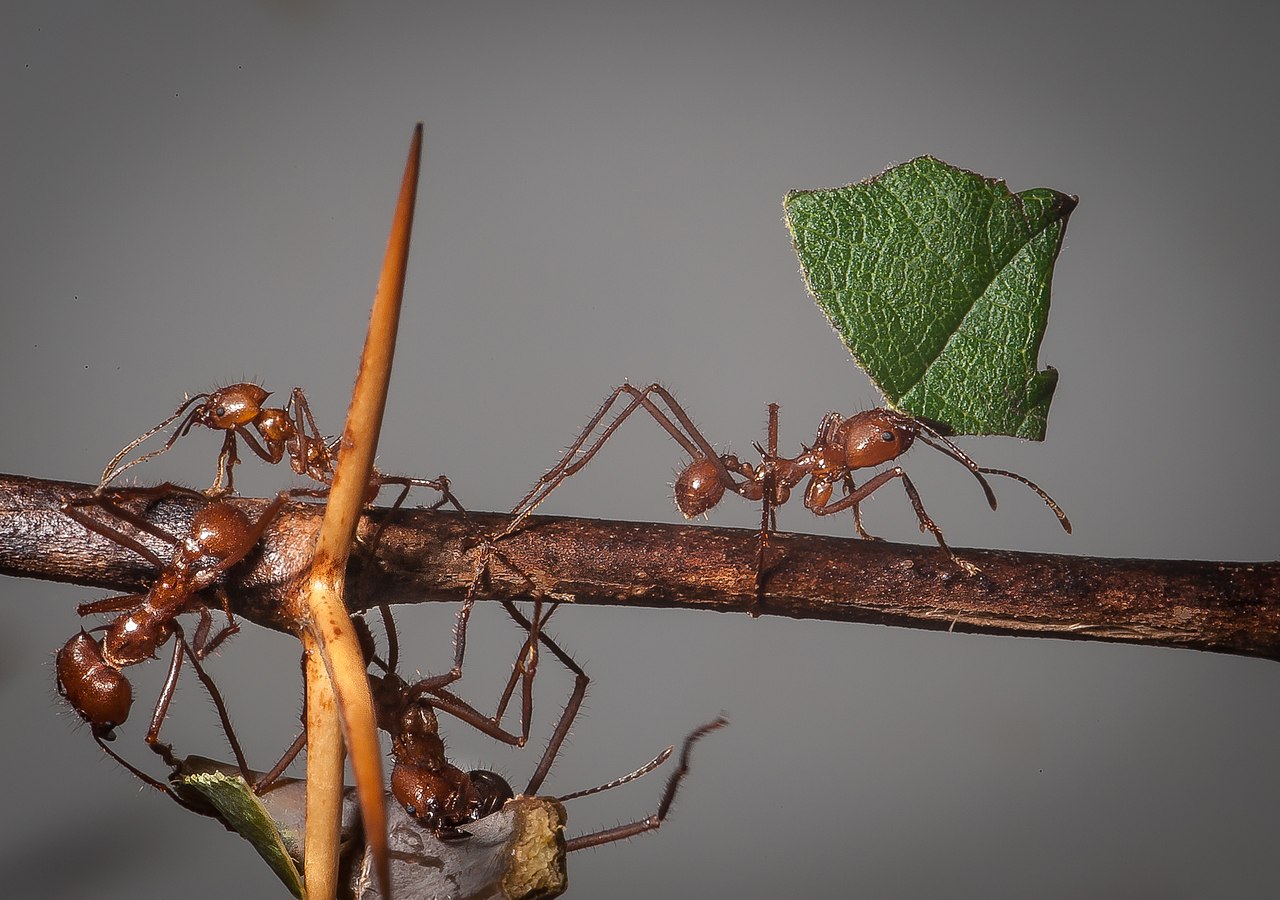
The original farmers
Long before humans planted their first seed, leafcutter ants had mastered agriculture. For over 50 million years, ants in the Atta and Acromyrmex genera have engaged in a farming symbiosis with a fungus, Leucoagaricus gongylophorus. These ants, found throughout the tropical regions of the Americas, do not eat the vegetation they famously carry in long lines across the forest floor. Instead, they use it as compost. Inside immense underground nests that can exceed 6,400 square feet, the ants meticulously chew the leaf fragments into a pulp.
This pulp becomes the substrate for their fungal gardens. The ants deposit fecal droplets containing enzymes that help break down the plant matter, making it digestible for the fungus. The fungus, in turn, grows specialized, swollen hyphal tips called gongylidia. These nutrient bundles are the primary food source for the ant larvae, while adult ants primarily feed on leaf sap. The relationship is an obligate mutualism; the ants cannot survive without their fungus, and this particular species of fungus is found nowhere else in nature. A new queen establishes a colony by carrying a piece of the fungus from her parent nest in her mouth to the new location.
A society of specialists
Leafcutter ant colonies are massive societies that can contain over five million individuals. The society is divided into different castes, each with a role determined largely by size. The largest ants, the majors or soldiers, defend the nest from intruders. Medium-sized workers, or mediae, are the foragers responsible for cutting and transporting leaf fragments. The smallest workers, called minims, never leave the nest; they are the gardeners and nurses, tending to the fungus and the ant larvae.
This agricultural system faces a constant threat from a specialized parasitic mold called Escovopsis. This "weed" can devastate a fungal garden and lead to colony collapse. To combat this, the ants have developed a multi-pronged defense strategy. They physically "weed" the gardens by removing infected sections. They also employ a form of chemical pest control. Many leafcutter species harbor a beneficial bacterium, primarily from the genus Pseudonocardia (an actinobacteria), on their bodies. This bacteria produces potent antibiotics that specifically inhibit the growth of Escovopsis without harming the cultivated fungus. Some ants are so covered in these bacteria they appear to be dusted in white powder.