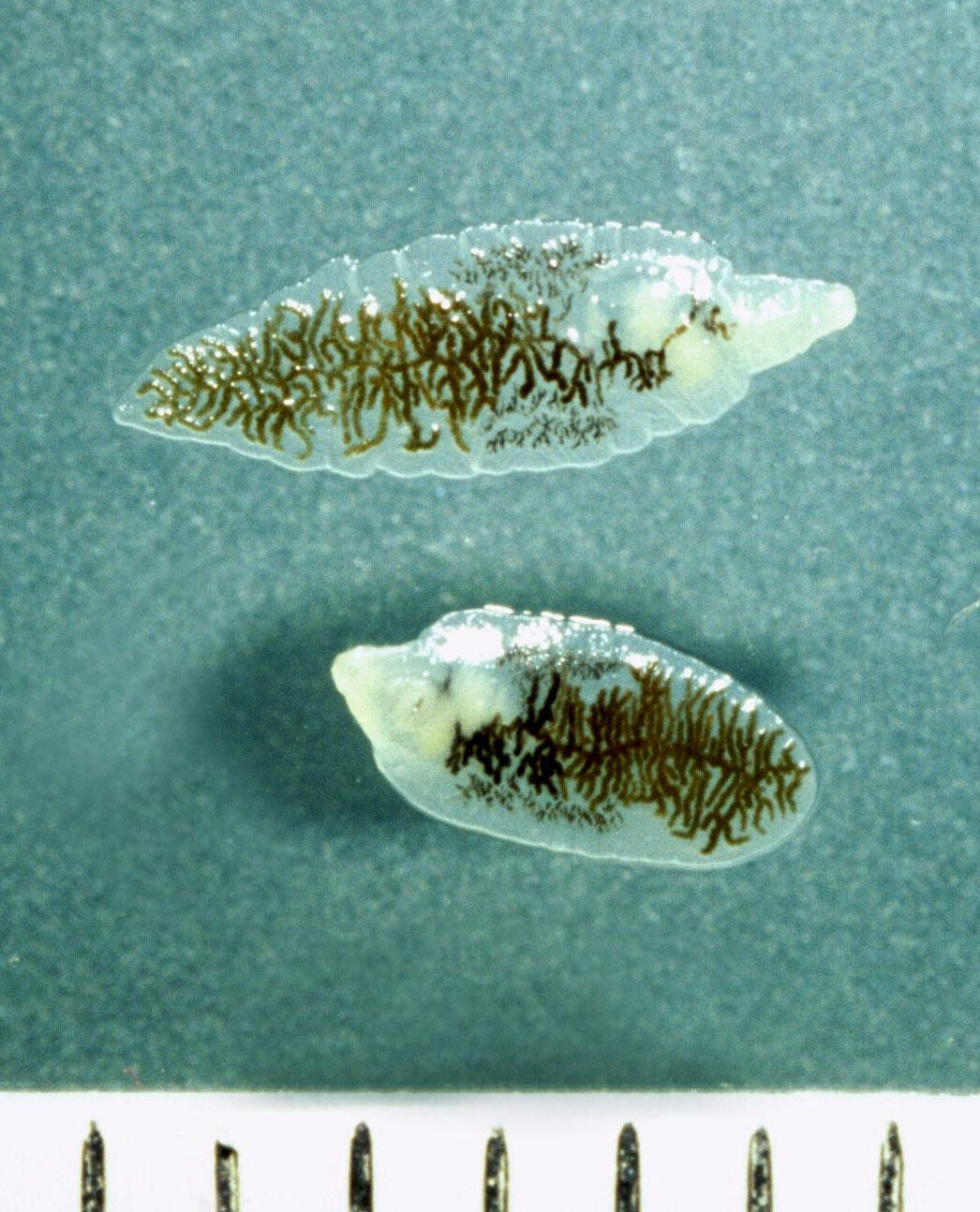
In these fields, a microscopic parasite forces ants to become willing sacrifices for grazing sheep.
Alan R Walker, CC BY-SA 3.0, via Wikimedia Commons
A three-act tragedy
In the quiet pastoral areas of Bavaria, a complex biological drama unfolds, directed by the lancet liver fluke, Dicrocoelium dendriticum. This parasitic flatworm, measuring only 6 to 10 millimeters in its adult form, orchestrates a multi-host life cycle to ensure its survival. The cycle begins when a grazing mammal, such as a sheep, deer, or cow, excretes fluke eggs in its feces. A terrestrial snail consumes the dung, and the fluke eggs hatch within it. Inside the snail's gut, the larvae, called miracidia, penetrate the intestinal wall and transform into sporocysts. These sporocysts reproduce asexually, creating daughter sporocysts which in turn produce hundreds of juvenile flukes known as cercariae.
To escape the snail, the cercariae migrate to its respiratory chamber, irritating the host. The snail defends itself by expelling the parasites in a ball of protective mucus. This "slime ball," containing up to 500 cercariae, is then consumed by an unsuspecting ant, often from the genus Formica. The ant becomes the second intermediate host, led to a remarkable act of behavioral manipulation.
The summit of sacrifice
Once inside the ant, most of the fluke larvae encyst in the insect's abdomen, where they are called metacercariae. One, or sometimes two, embarks on a specific mission. This lone "brainworm" travels to the ant's sub-esophageal ganglion, a nerve cluster that controls the mandibles. It does not cause significant damage but seizes control of the ant's motor functions.
This mind control is precise and temperature-dependent. As the evening air cools, the infected ant is compelled to abandon its nest and normal behavior. It climbs to the top of a blade of grass, a flower, or other vegetation. Once at the summit, the fluke induces a mandibular lock, a state of tetany, causing the ant to bite down hard and remain fixed in place. This positions the ant perfectly to be accidentally eaten by a grazing herbivore during the cool hours of dusk or dawn. If the ant survives the night, the warmth of the rising sun releases the cramp, and the ant returns to the colony as if nothing happened, only to repeat the climb the next evening. Once ingested by the final host, the metacercariae in the ant's abdomen are released. The lone brainworm dies, having sacrificed itself for its siblings. The others migrate from the intestine to the host's liver and bile ducts, where they mature, reproduce, and release their eggs, beginning the cycle anew.
💡Fun Facts
The mind-controlling fluke doesn't eat the ant's brain; it latches onto a nerve center to control the ant's jaw muscles.
The "zombie" climbing behavior is triggered by cool temperatures, typically below 15°C. If it gets too hot, the parasite allows the ant to climb back down to safety.
The first intermediate host, a snail, attempts to defend itself by coughing up the parasites in balls of mucus.
Up to 50,000 adult flukes can live inside the liver of a single infected sheep.