The unseen surge
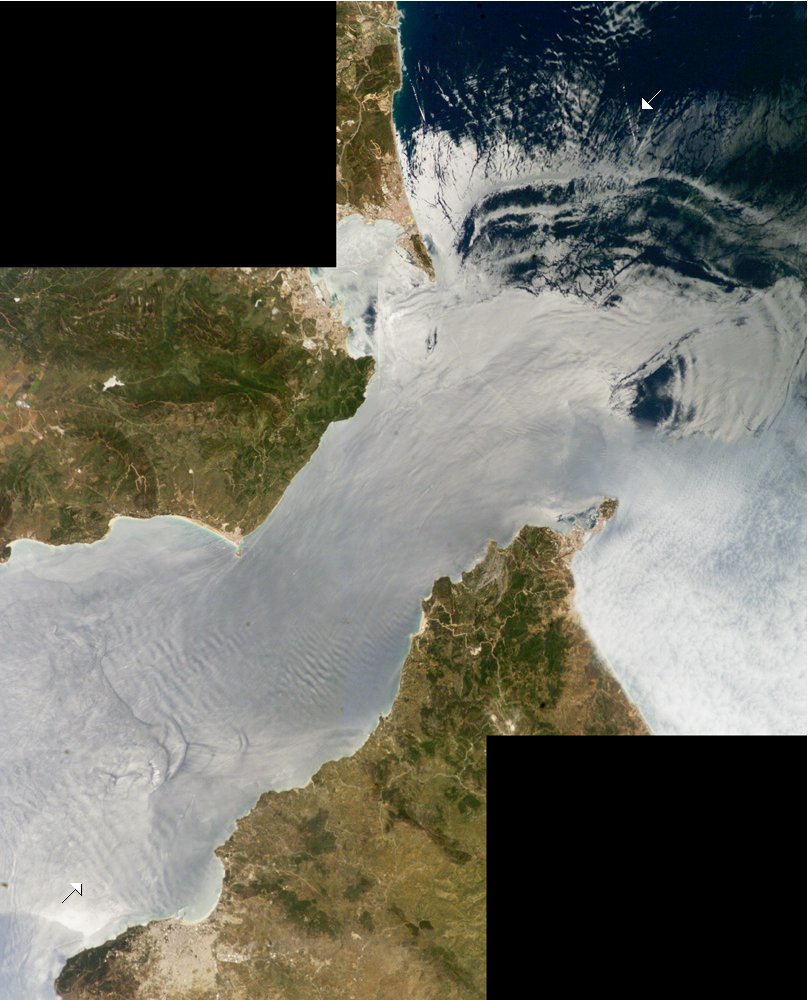
Beneath the placid surface of Lake Maggiore, an immense and invisible hydrological process unfolds daily. Here, internal waves, with amplitudes reaching up to 40 meters, oscillate within the lake's depths. These are not surface phenomena but gravity waves that propagate along the boundary between water layers of different densities. In summer, the sun warms the lake's upper layer (the epilimnion) while the deep water (the hypolimnion) remains cold. The sharp transition zone between them, known as the thermocline, acts like an internal surface. During the summer months, the water temperature of Lake Maggiore can reach 20-22°C in the epilimnion, creating a strong density stratification that allows these large waves to form.
Wind begins the process. Lake Maggiore is subject to regular wind patterns, including the Tramontana in the morning and the Inverna in the afternoon. Persistent winds blowing along the lake's 65-kilometer length push the warmer, lighter surface water toward one end of the basin. This action depresses the thermocline at the downwind end and raises it at the upwind end. When the wind subsides, gravity acts as a restoring force, pulling the tilted thermocline back toward equilibrium. The momentum of this movement causes it to overshoot, setting up a continuous, slow-motion sloshing of the entire thermocline known as an internal seiche.
A daily deep-water dance
The oscillation of Lake Maggiore's internal waves has a distinct rhythm, with a period of approximately 24 hours. This timing is no coincidence; it shows a planetary-scale force. As the internal seiche moves water over vast distances within the large lake basin, its motion is deflected by the Earth's rotation. This phenomenon, the Coriolis effect, transforms the simple back-and-forth sloshing into a basin-wide rotational movement. The resulting waves are a specific type known as Poincaré waves, or rotational gravity waves. These near-inertial waves are a common feature in large, stratified bodies of water like the Great Lakes and the ocean.
Scientists from institutions like the CNR Institute of Ecosystem Study in Verbania Pallanza track these hidden waves using moored instruments. Arrays of temperature sensors and Acoustic Doppler Current Profilers (ADCPs) record temperature and water velocity throughout the water column over long periods. The data reveals the daily vertical migration of the thermocline and the associated rotating currents, which can reach speeds of over 10 centimeters per second. These currents are strong enough to stir up sediments from the lakebed, creating a "nepheloid layer" of suspended particles in the deep water. This wind-driven, Coriolis-modified deep-water dance helps mix the lake, distributing heat, nutrients, and dissolved oxygen through the water column.