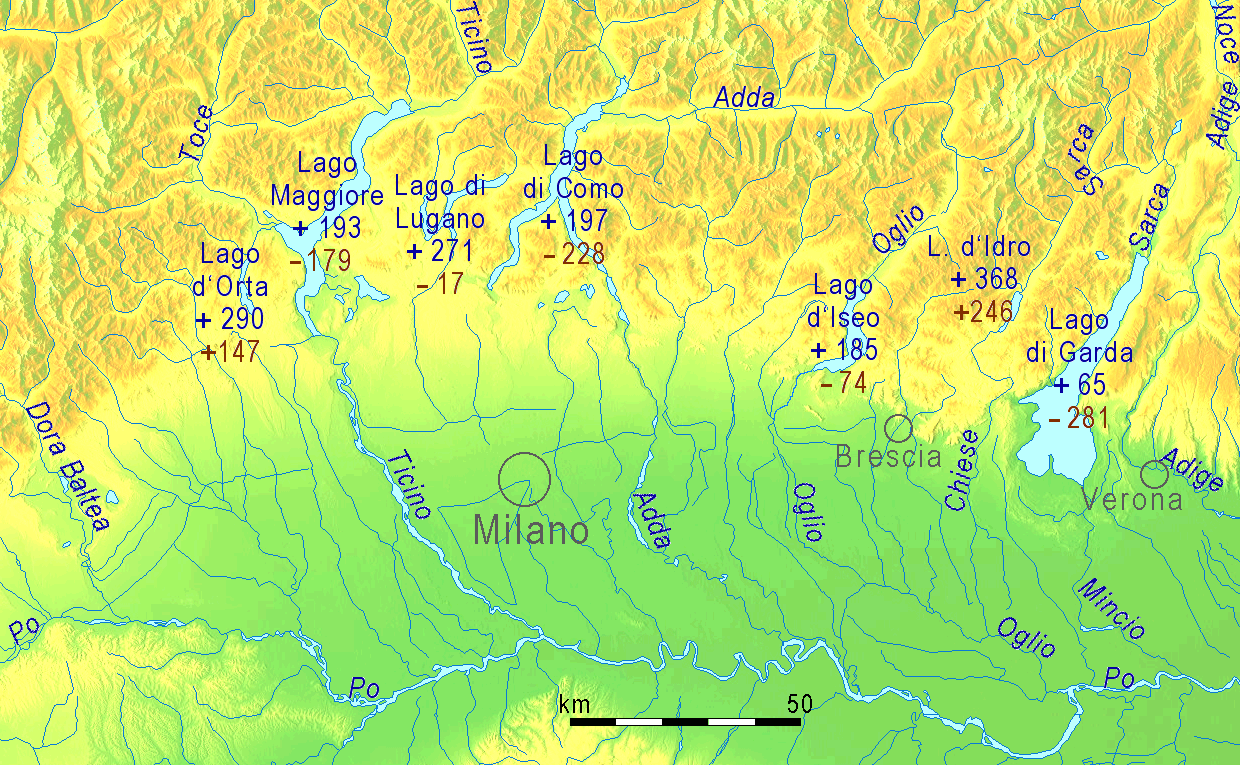
A Glacial Excavation Below the Sea
Lake Como's surface sits at an elevation of 198 meters, but its floor plunges to a maximum depth of 425 meters. This means the lake bottom is over 200 meters below mean sea level, placing it in a geological category known as a crypto-depression. A crypto-depression is a depression in the Earth's surface, filled by a lake, whose floor is below sea level. This deep depth is the result of immense geological forces operating over millions of years.
The story begins long before the ice ages, during the Messinian Salinity Crisis around 5.9 million years ago, when the Mediterranean Sea nearly evaporated. This event caused rivers in the region to carve deep canyons into the landscape. Later, during the Quaternary Period's repeated glaciations, massive glaciers originating from the Adda valley flowed south. These powerful ice flows followed and intensely deepened the pre-existing river valleys, scouring the basin far deeper than the original canyons. This process of glacial erosion carved the lake's U-shape and pushed its bottom well below sea level. The bedrock, primarily composed of Mesozoic carbonate rocks like limestone and marl, was systematically ground away and removed by the ice.