The Shire's engineered ecology
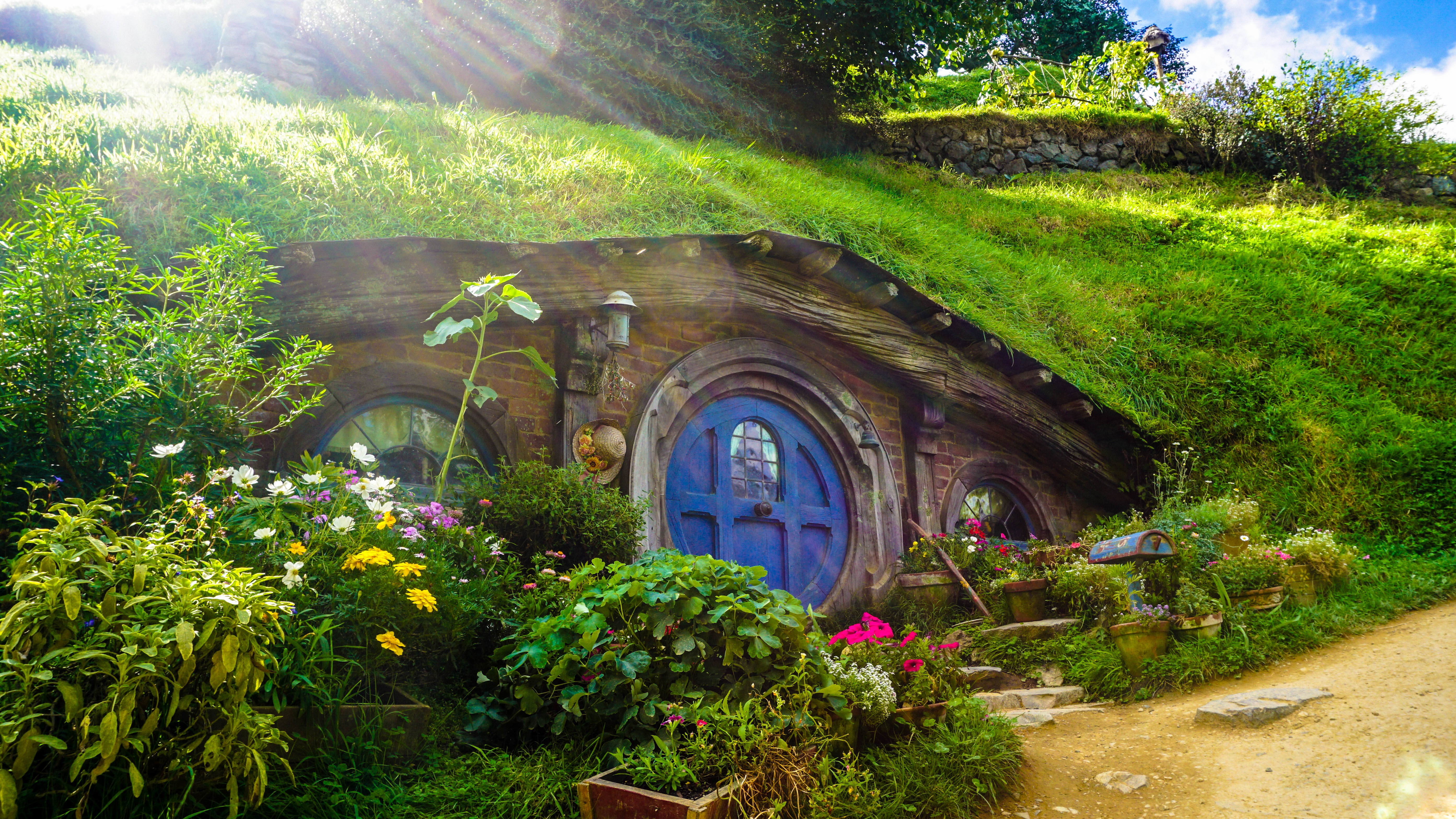
The Hobbiton Movie Set began its transformation from a 1,250-acre sheep and cattle farm into The Shire in March 1999. The New Zealand Army was brought in to build a 1.5-kilometer road and perform initial earthworks, contouring the landscape with heavy machinery. The original 39 hobbit holes were constructed from temporary materials like untreated timber, plywood, and polystyrene, intended only to last for the three months of filming.
A scientific challenge was to create an illusion of age. To make the new construction look ancient, set designers developed a specific methodology. They applied a mixture of glue, paint, and sawdust to surfaces to simulate weathering. In a clever use of microbiology, they also spread yogurt on wooden fences and structures to encourage the rapid growth of actual lichen and moss. While some of this artificial aging remains, many surfaces now host naturally cultivated lichens, evidence of the long-term ecological management of the site.
When the set was permanently rebuilt in 2009 for The Hobbit trilogy, the hobbit holes—now numbering 44—were reconstructed with lasting materials. This permanent installation required a dedicated, year-round effort to manage the site as a living environment.
A living film set
The vegetation of Hobbiton is a managed ecosystem, with a team of full-time gardeners maintaining the "perfectly unkempt" look. The gardens contain real vegetables, fruits, and flowers, including roses, foxgloves, dahlias, and various herbs. Produce grown on-site is sometimes used in the kitchens of the Green Dragon Inn. The plants surrounding each of the 44 hobbit holes are designed to indicate the supposed profession of the hobbit living inside.
One of the engineering features engineering features is the artificial oak tree that stands over Bag End. The original tree used for The Lord of the Rings was a 26-tonne oak that was cut down, transported in sections, and reassembled on the hill. Its leaves were supplemented with thousands of artificial ones imported from Taiwan and individually wired onto the branches. When that tree died, a new, entirely artificial one was built for The Hobbit films. This replica is made of steel and silicon. Its 376,000 fiberglass and silk leaves were also individually attached and were famously repainted by hand because the director was not satisfied with their original color.
The Green Dragon Inn serves beverages from the exclusive Hobbit Southfarthing range, brewed locally by Good George Brewing. The range includes an Amber Ale, an Apple Cider, and a traditional English-style ale, formulated to match the descriptions from the books.