An Accidental Seismic Marvel
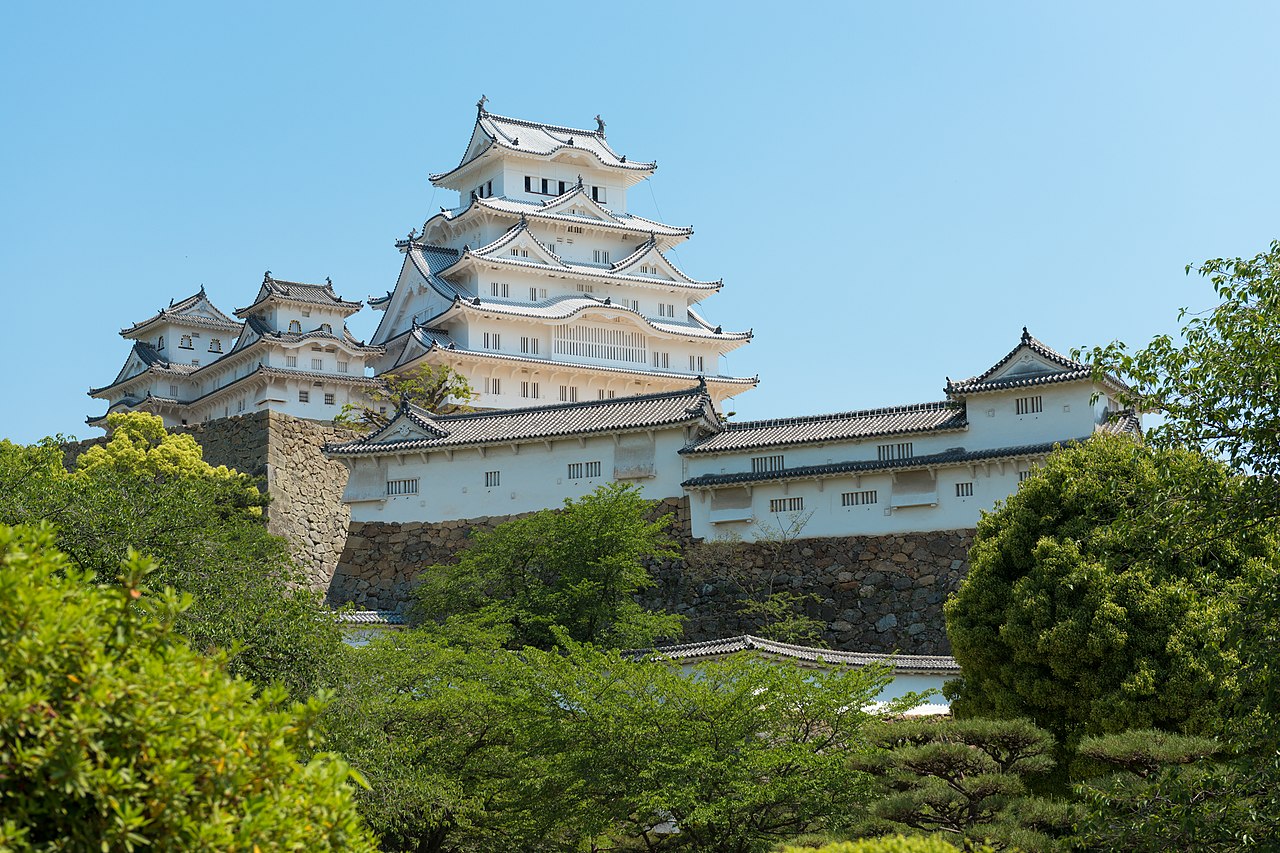
Completed in its current form in 1609, the main keep of Himeji Castle is a masterpiece of unintentional earthquake-resistant design. Its resilience comes not from rigid strength, but from a combination of clever construction techniques that allow the structure to flex and dissipate seismic energy. The entire complex sits atop a massive stone base, or ishigaki. These walls, built without mortar, consist of large, interlocking stones angled inwards. During an earthquake, this design allows for slight movement; the stones shift and settle inward, absorbing and diffusing the shockwaves rather than cracking. This flexible foundation is why the castle has survived for over 400 years in one of the world's most seismically active regions.
The six-story wooden structure of the main keep itself is designed for movement. Traditional Japanese timber framing, using a method called kigumi, relies on complex, interlocking wood joints instead of nails. This technique allows the massive wooden pillars and beams to shift and sway during a tremor, absorbing kinetic energy through friction within the joints. This principle of flexibility is important in modern seismic engineering. The castle's thick, white plaster walls, made from a mixture including seaweed and shell ash, also add to the structure's resilience while providing fire resistance. At the core of the main keep are two central pillars, or shinbashira, that provide immense support for the structure. This design, similar to the central pillar in traditional pagodas, helps to dampen vibrations and control the building's sway.
A Real-World Stress Test
The castle's innate seismic resistance was put to a dramatic test on January 17, 1995. The Great Hanshin earthquake, a magnitude 6.9 event, devastated the nearby city of Kobe and caused substantial damage in Himeji itself. Yet, the castle complex suffered remarkably little harm. While some plaster on corridor walls peeled away and a few roof tiles were dislodged, the main keep and its towers remained structurally sound. Famously, a bottle of sake placed on an altar on the top floor of the main keep did not fall over, evidence of the building's ability to absorb the violent shaking.
This remarkable survival is a direct result of its 17th-century design. The flexible wooden superstructure, combined with the energy-dissipating stone base, allowed the castle to ride out the seismic waves. Following a research report that suggested the upper floors could be vulnerable to a stronger quake, the castle underwent a major restoration from 2009 to 2015. This "Great Heisei Restoration" involved extensive repairs to the roof and walls. During this project, subtle reinforcements were made to the pillars, beams, and floors to increase the castle's seismic capacity without altering its historic character. The work ensures that this accidental feat of earthquake engineering will continue to stand for centuries to come.