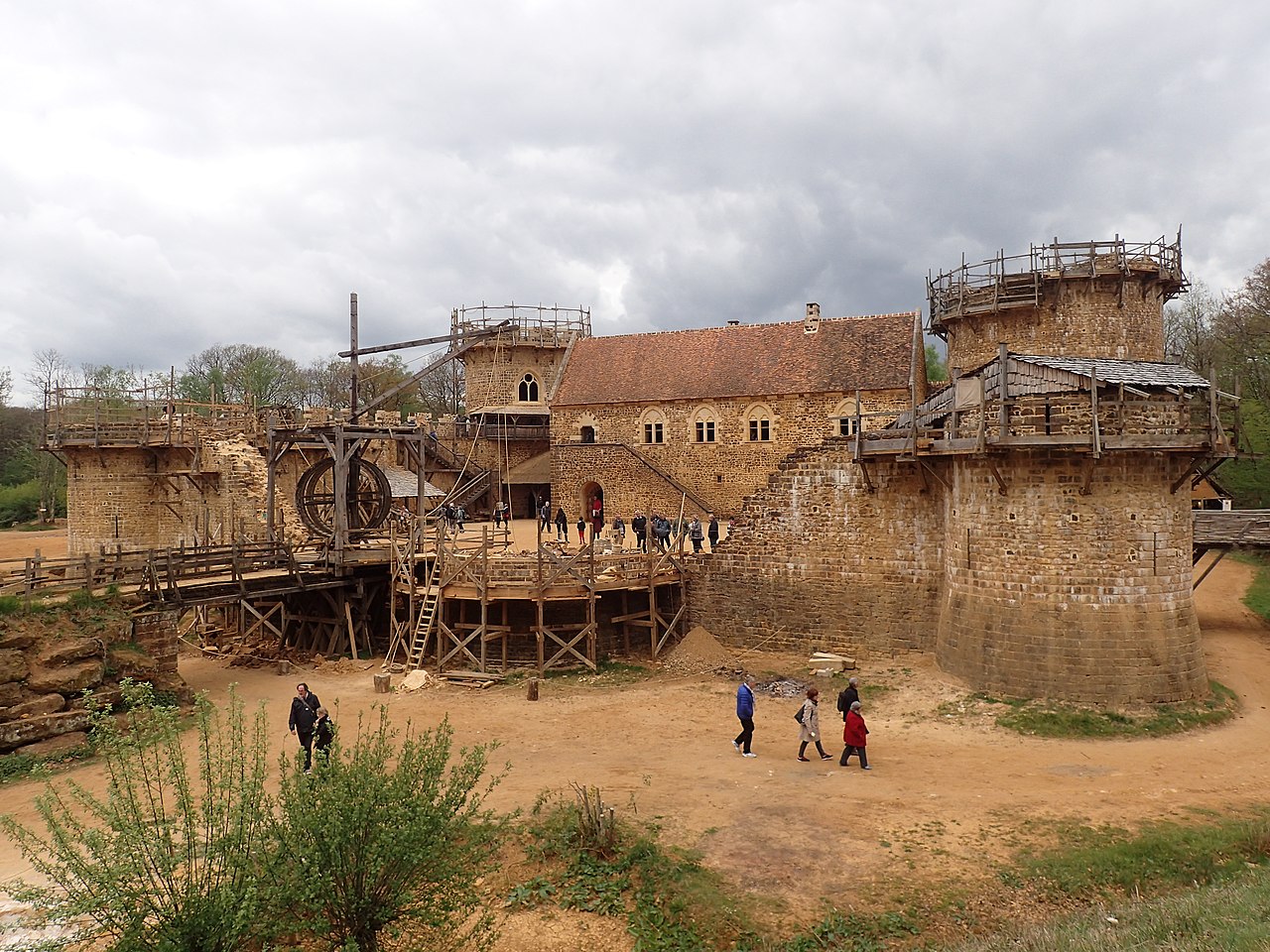
A living laboratory for history
In a disused sandstone quarry in Burgundy, France, a team of about 40 master builders is conducting one of the world's largest and longest-running experimental archaeology projects. The goal is to build a complete 13th-century castle from scratch. The project adheres to a strict set of rules: all materials must be sourced locally, and every task must use only the tools and techniques available in the Middle Ages. Construction began on June 20, 1997, and the project is a scientific investigation into medieval engineering.
The castle's design follows the architectural principles established by King Philip II of France in the 12th and 13th centuries. The entire site operates with a fictional backstory set in the year 1228 to guide architectural and financial decisions. The imagined owner is a low-ranking nobleman, meaning the castle is functional and not excessively ornate. This narrative helps solve construction dilemmas, such as whether to install expensive glass windows (the answer was no, opting for cheaper painted parchment). Every problem, from mixing the correct lime mortar to firing roof tiles, becomes an experiment that provides new data on historical practices.