A geologic barcode
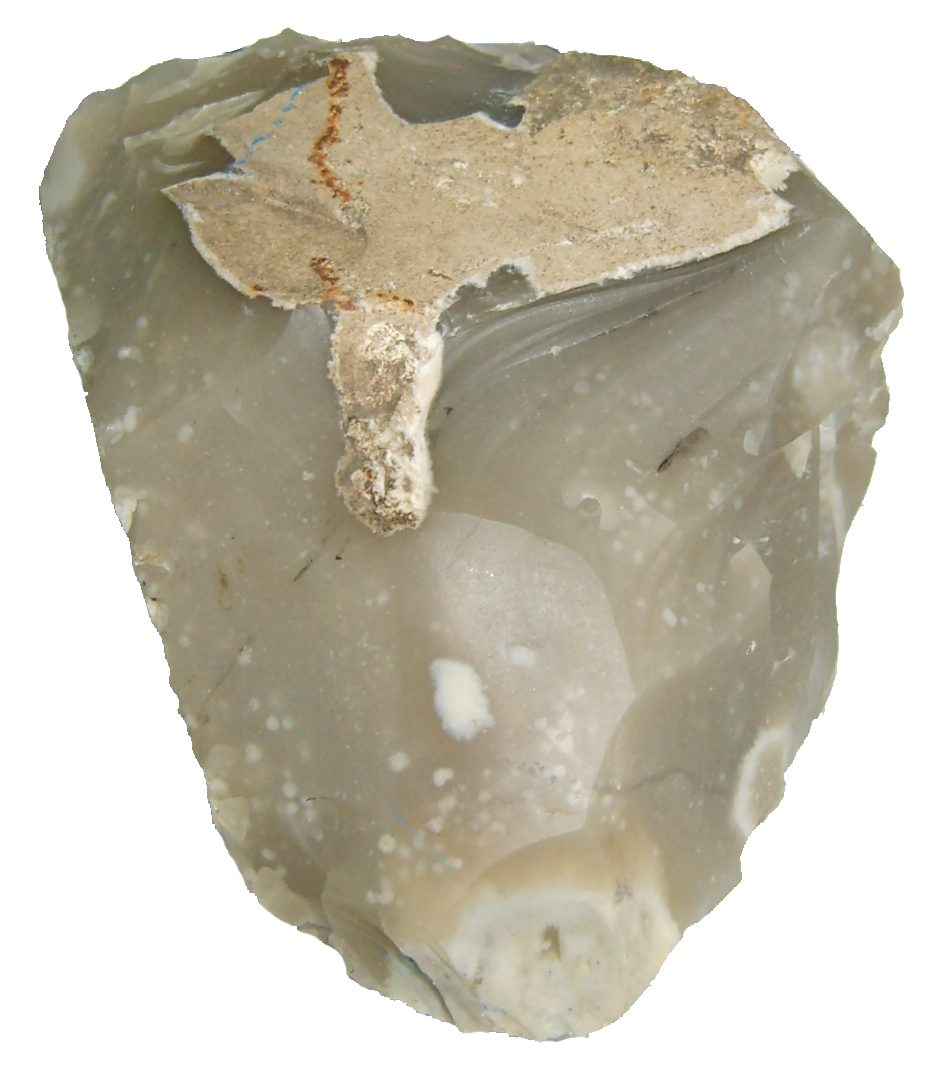
The rolling hills of Burgundy hold a prehistoric secret within their limestone bedrock. For millions of years, nodules of flint have formed here, deep in the chalk layers deposited during the Late Cretaceous Period, roughly 90 million years ago. This flint, a dense, cryptocrystalline form of quartz, is not uniform. Each nodule contains a unique combination of trace elements, impurities absorbed from the surrounding sediment as it formed from the silica of ancient marine sponges. This combination creates a distinct geochemical signature, a geological record.
Scientists can read this barcode using non-destructive analytical techniques like Particle-Induced X-ray Emission (PIXE). By bombarding a sample with a high-energy ion beam, researchers can cause it to emit X-rays. The energy of these X-rays is specific to the elements present, allowing for a precise quantitative analysis of the material's composition. This method can identify elements down to parts-per-million, creating a detailed fingerprint that can be used to match an artifact to its exact geological origin with high confidence.
Neolithic trade and prestige
This scientific technique becomes a powerful tool for archaeology. Across Europe, archaeologists have unearthed polished stone axe heads, known as celts, at Neolithic sites. During the Burgundy Middle Neolithic period, from about 4000 to 3500 BCE, people established settled agricultural communities. While many of their tools were made from local materials, certain finely crafted artifacts stand out. Using PIXE analysis, researchers have traced some of these polished axes, discovered at sites up to 500 kilometers away in places like Switzerland and Germany, directly back to the flint sources in Burgundy.
The existence of these axes so far from their origin provides direct evidence of extensive long-distance trade networks operating 5,000 years ago. Burgundy was already a natural crossroads for trade routes that would persist for millennia. These flint axes were not simple wood-chopping tools; their exotic origin and the labor required to polish them into their final form made them prestige items. Many are found in burials or ceremonial deposits, suggesting they marked status and power within these early farming societies. The ability to acquire goods from distant sources was a clear indicator of an individual's or a group's influence and connections.