The Authenticity Debate
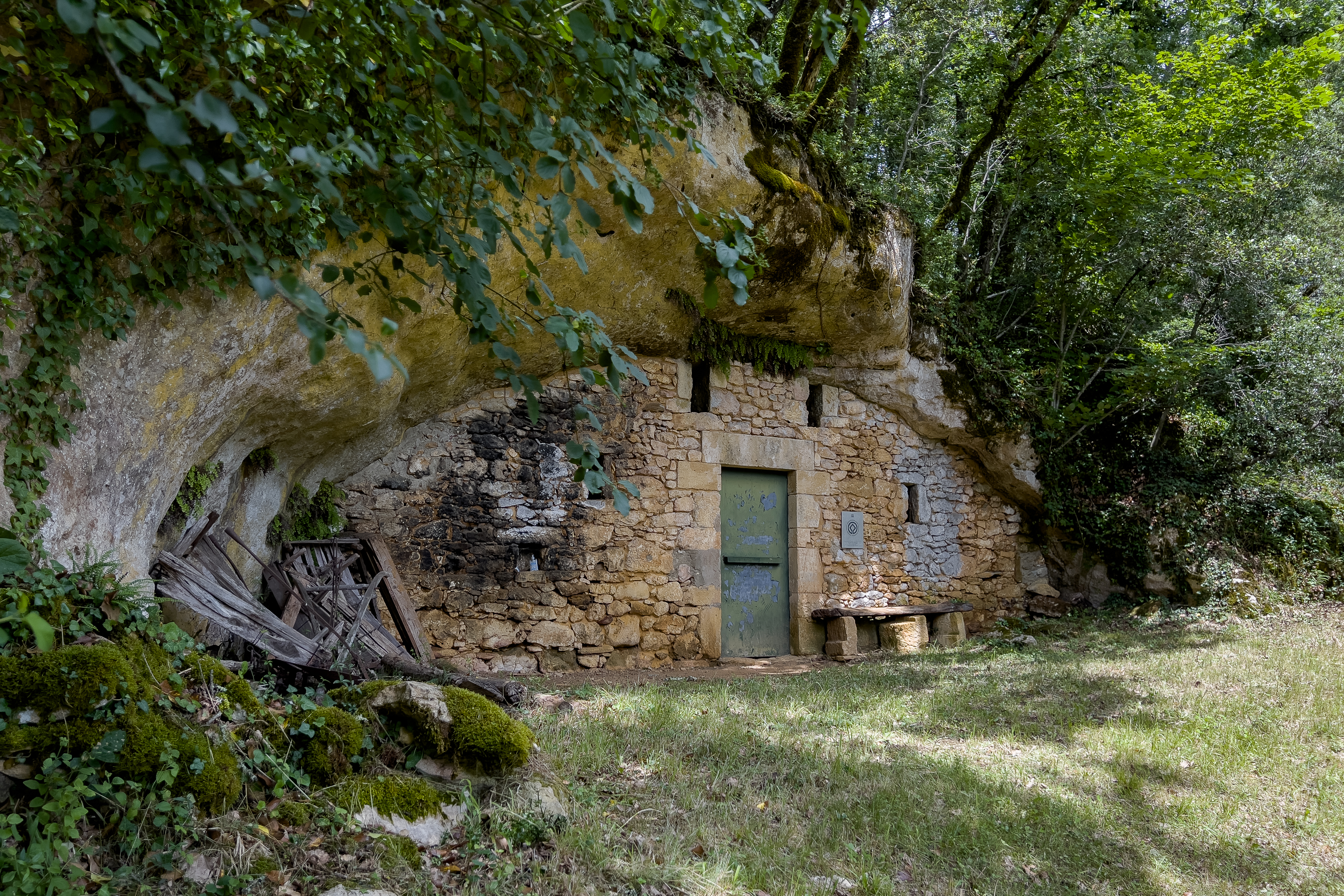
In the late 19th century, the scientific community largely dismissed the idea of Paleolithic art. Finds like the paintings at Altamira in Spain were considered forgeries, too sophisticated for "primitive" humans. The discovery of Grotte de la Mouthe in 1895 changed the field. The cave's entrance near Les Eyzies-de-Tayac was completely sealed by sediment layers from the end of the Pleistocene. The archaeologist Émile Rivière excavated these layers, proving that whatever was inside had been undisturbed for millennia.
When Rivière cleared the entrance, he revealed a gallery containing engravings. The fact that the art was behind an archaeologically dated, sealed entrance provided undeniable proof of its antiquity. This discovery compelled influential skeptics, including Émile Cartailhac, to publicly accept the existence and age of Paleolithic cave art, changing the study of human prehistory. The cave was one of the first decorated caves to be officially recognized as a Paleolithic site by the scientific community in 1902.
A Gallery Through Time
Grotte de la Mouthe is a single gallery extending approximately 182 meters. The art is not visible for the first 90 meters from the entrance. The cave contains over 200 images, including engravings and some paintings in red ochre and black manganese. The animal figures depicted include bison, horses, reindeer, ibex, a mammoth, a wolf, and felines.
one of the important artifacts found by Rivière in 1899 was a sandstone lamp. This closed-circuit lamp, with a carved depression to hold animal fat and a wick, has an engraving of an ibex head on its underside. Its discovery in a Magdalenian-era hearth, dated to around 12,000 BC, shows how Paleolithic artists illuminated the deep, dark chambers where they worked. The sandstone was likely sourced from near Brive, about 40 kilometers away.
The cave's stratigraphy shows a long history of human use. The lowest archaeological layers contain Mousterian stone tools, shows occupation by Neanderthals potentially as far back as 60,000 BC. Above these are layers from the Aurignacian, Gravettian, Solutrean, and Magdalenian periods, showing continuous use by early modern humans who created the art.