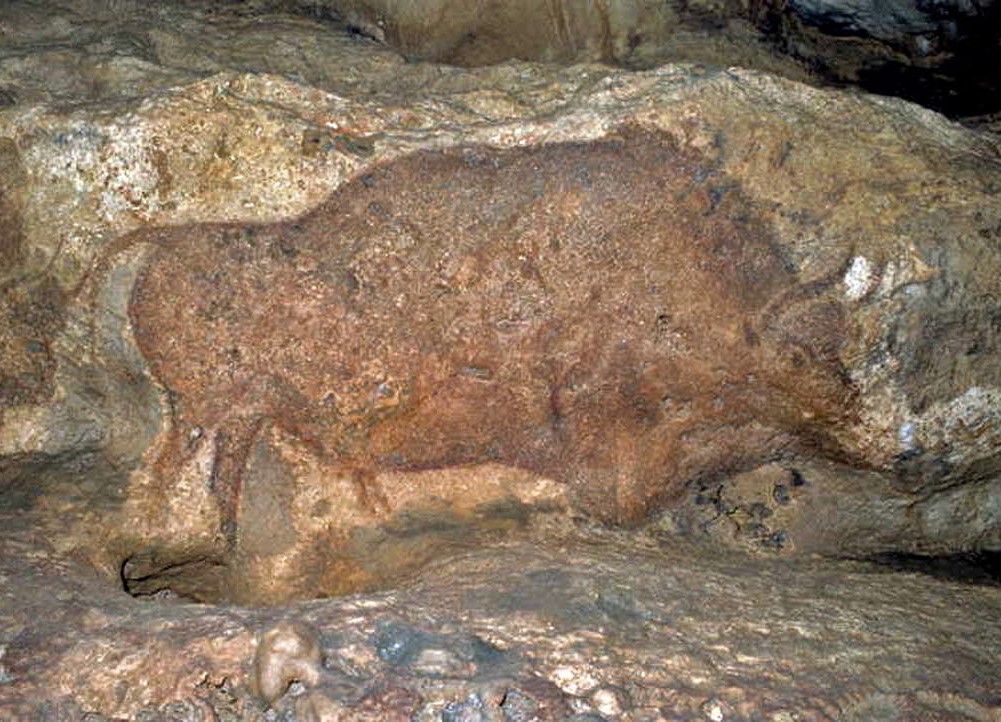
A gallery of Magdalenian masters
Deep inside a 120-meter-long passage in the Vézère valley is one of the world's premier examples of Paleolithic art. The Font-de-Gaume cave contains more than 200 painted and engraved images created during the Magdalenian period, around 17,000 years ago. Unlike reproductions in other famous sites like Lascaux, these are the original artworks, making this the last cave in France with polychrome paintings still accessible to visitors. The animal figures are in the gallery, with 82 bison, 45 horses, and 29 mammoths among the identified creatures.
The artists of Font-de-Gaume understood their medium. They used mineral pigments, such as iron and manganese oxides, to create a palette of blacks, reds, and browns. They applied these colors to produce polychrome effects that gave the animals shading and volume. The technique often involved first engraving the outline of an animal into the rock before applying the pigments. These Magdalenian masters also incorporated the natural, undulating contours of the cave walls into their work, using the rock's own bumps and curves to represent a bison's hump or the swell of a horse's flank, giving the flat images a three-dimensional quality.
Prehistoric animation and preservation
The cave's most celebrated feature is a frieze of five bison, discovered by accident during a cleaning in 1966. The figures are overlapped and painted with subtle shading. This arrangement creates a striking illusion of movement when viewed by a moving, unsteady light source, such as the animal-fat lamps or torches that the original artists would have used. This has led some researchers to consider these compositions an early form of animation. The artists intentionally layered figures to simulate a herd in motion, a technique that brings the static images to life in the dancing light.
The cave is extremely fragile. The carbon dioxide, heat, and humidity introduced by human visitors can cause irreparable damage to the ancient pigments. This is why other sites, like the famous Lascaux cave, have been closed to the public. To protect the art, Font-de-Gaume operates under strict conservation rules. The number of daily visitors is severely limited, and the time inside the narrow main gallery is restricted to about 30 minutes. This careful management allows the cave to remain open, showing art that is 17 millennia old.