An Interplanetary Messenger
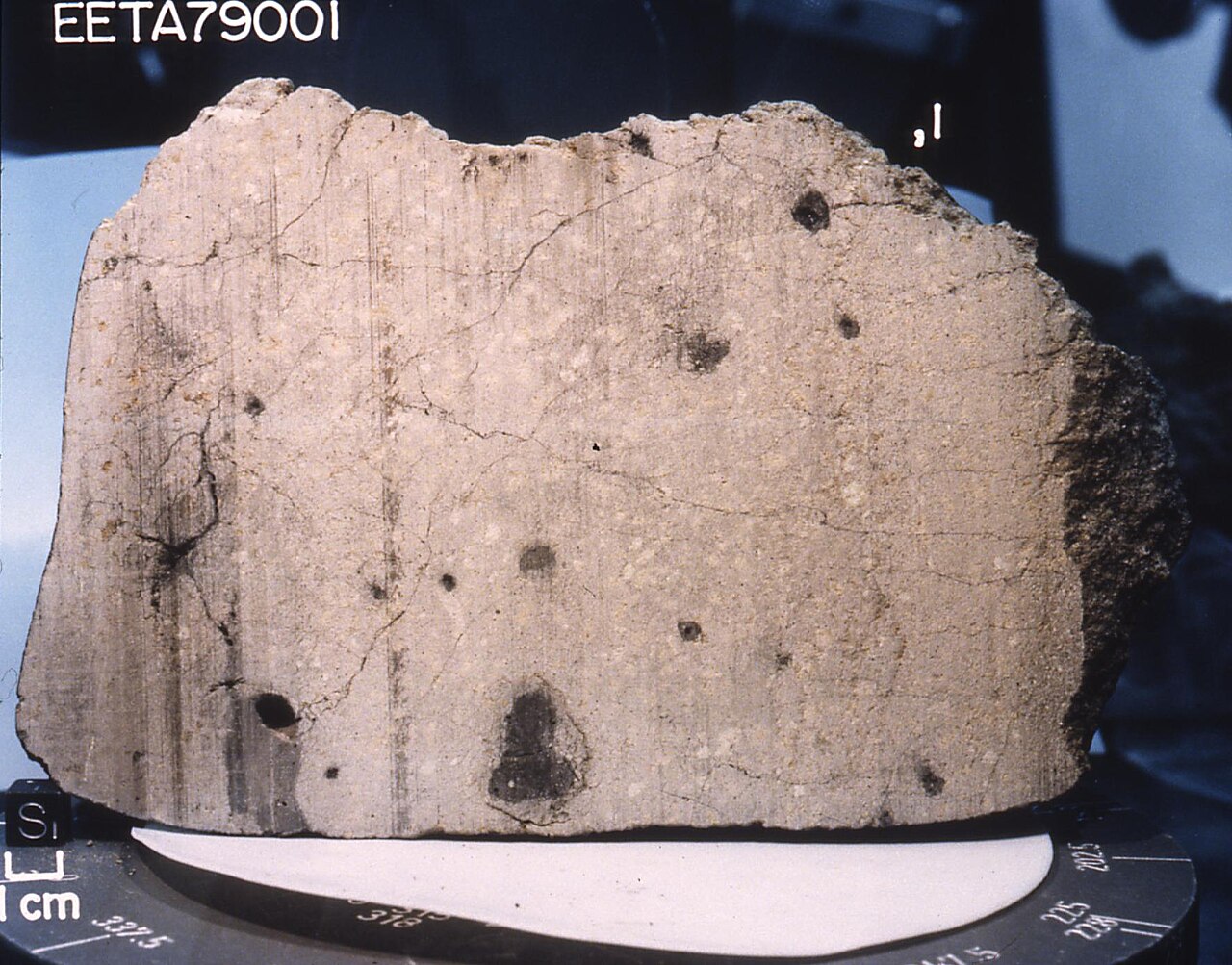
On display at the Muséum de Toulouse is a fragment of Mars. This small, rock is a Martian meteorite, a member of an exclusive club of space rocks known to have originated on the Red Planet. Of the tens of thousands of classified meteorites found on Earth, only a tiny fraction—less than half a percent—are confirmed to be from Mars. These rocks provide physical samples of Martian geology, offering insights that missions by rovers and orbiters alone cannot.
The movement of a Martian meteorite to Earth is a violent and lengthy process. It begins when a large asteroid or comet strikes Mars with enough force to eject surface rock into space, overcoming the planet's gravity. This ejected material then drifts through the solar system for millions of years before some pieces are captured by Earth's gravitational pull. As the rock plunges through our atmosphere, friction creates a dark, glassy fusion crust on its exterior. All known Martian meteorites are igneous rocks, formed from volcanic processes on Mars.
Scientists can confirm a meteorite's Martian origin with remarkable certainty. The main piece of evidence lies within tiny pockets of glass inside the rock, melted and trapped during the initial impact on Mars. These pockets contain small bubbles of gas. In the 1970s, NASA's Viking landers analyzed the Martian atmosphere directly. When scientists analyze the gases trapped in these meteorites, the composition perfectly matches the atmospheric data sent back by Viking, providing a definitive chemical fingerprint.
Reading the Story in the Stone
Martian meteorites are broadly classified into three main groups: shergottites, nakhlites, and chassignites, collectively known as SNC meteorites. Shergottites are the most common type, named after the Shergotty meteorite that fell in India in 1865. They are volcanic rocks, similar in composition to terrestrial basalts, and their study helps scientists understand the history of Martian volcanism.
The age of these rocks tells a multi-layered story. Using radiometric dating techniques, scientists can determine when the rock originally crystallized from magma on Mars—often over a billion years ago. They can also estimate how long the meteorite traveled in space through its exposure to cosmic rays. Some Martian meteorites, like the famous Allan Hills 84001 found in Antarctica, formed from volcanic lava more than four billion years ago. That particular rock is thought to have been ejected from Mars about 16 million years ago before landing on Earth around 13,000 years ago. Analysis of such ancient samples provides information about the early conditions on Mars, including the historical presence of water, which is suggested by carbonate minerals found within some specimens.