A 2,000-year-old pollution record
The otherworldly blue light of Capri's Grotta Azzurra, or Blue Grotto, illuminates seawater and shows a 2,000-year-old record of environmental pollution. The cave, a famed tourist destination, is a natural sediment trap. Its small, semi-submerged entrance limits water circulation, allowing fine particles that wash in from the surrounding sea to settle on the bottom undisturbed. This process has created a layered archive of environmental history, which scientists have accessed by drilling sediment cores from the grotto's floor.
Analysis of these cores shows a dramatic spike in mercury (Hg) concentration that corresponds precisely with the height of the Roman Empire. The geology of the grotto itself is complex, with some evidence suggesting a sulfuric acid origin for the cave system, but the mercury contamination is distinctly anthropogenic. This ancient pollution layer is a record of human industrial activity long before the modern industrial revolution. The Roman emperor Tiberius even had a personal swimming hole in the cave, and several Roman statues were recovered from its floor in 1964.
Fingerprinting the source
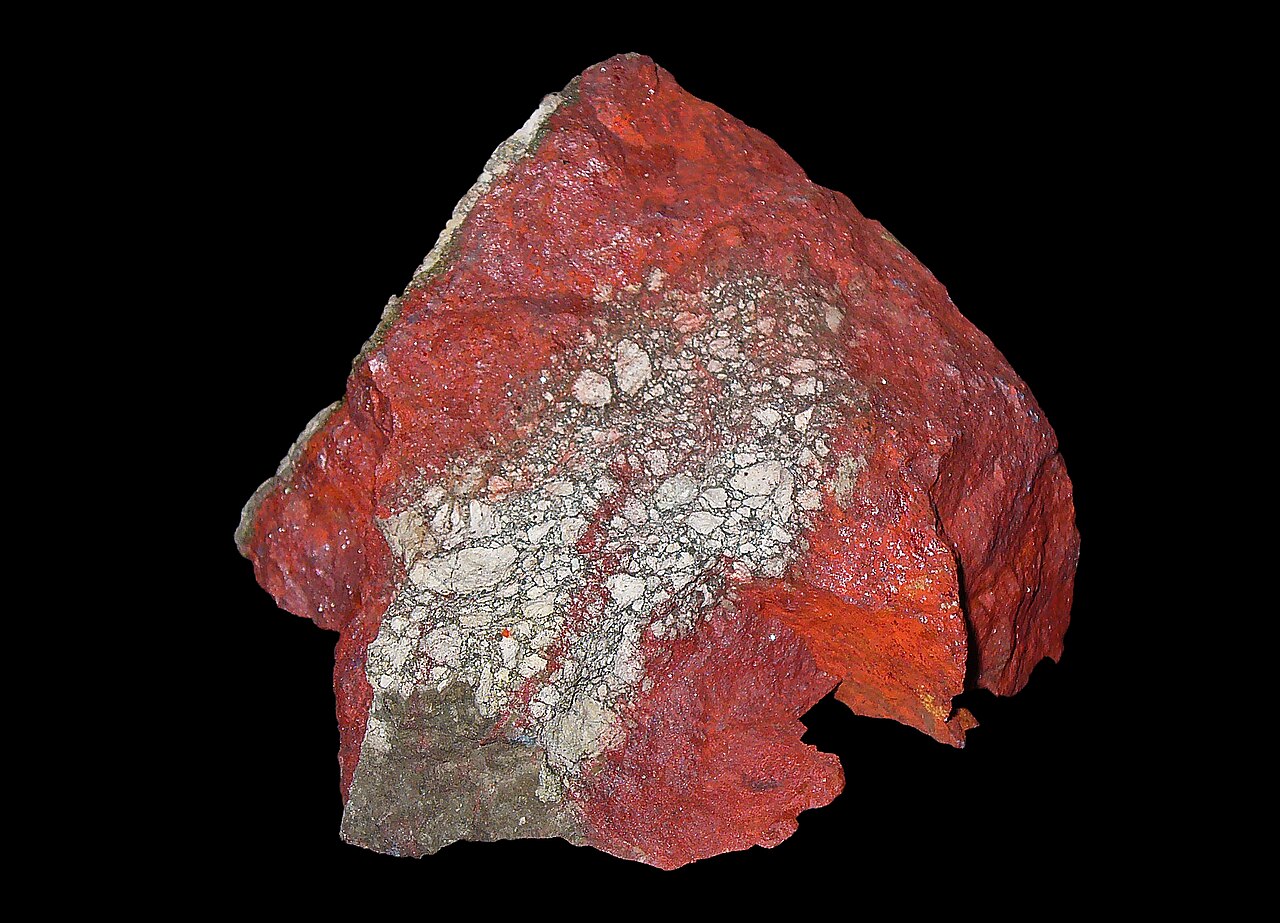
To identify the origin of the ancient mercury, researchers analyzed its isotopic composition. Mercury from different geological sources, such as volcanic emissions versus mined ore, has a unique isotopic "fingerprint." The mercury in the Blue Grotto's Roman-era sediment layer perfectly matched the fingerprint of cinnabar from the Almadén mines in Spain. The Almadén district was the Roman Empire's primary source of cinnabar, a bright red mercury sulfide (HgS) mineral.
The Romans mined cinnabar for two main purposes. First, it was roasted to produce liquid mercury. Second, and more importantly for this story, it was ground into a powder to create the brilliant red pigment known as vermilion. This pigment was used extensively in frescoes, paintings, and, High-end cosmetics. Roman texts describe the use of vermilion for lipstick and rouge. The mercury pollution in the Blue Grotto is believed to be the direct result of cosmetic products and other Roman wastes washing into the sea from the lavish imperial villas on Capri, eventually settling in the calm waters of the cave. This finding demonstrates that significant, measurable human-caused pollution has a legacy stretching back millennia.