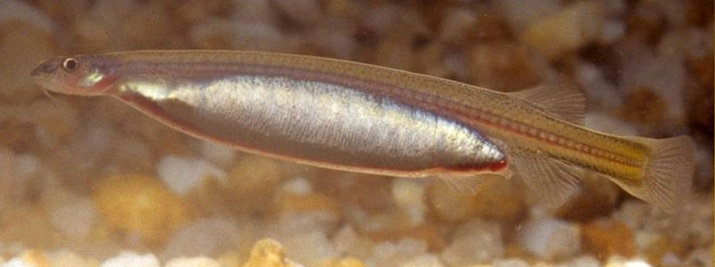
The vampire fish of the Amazon
In the slow-moving, acidic waters of the Amazon River basin lives a parasitic catfish, Vandellia cirrhosa. Commonly known as the candiru, this fish is scaleless and translucent, with a thin, eel-like body that reaches a maximum length of 17 cm, though most individuals are much smaller. It spends much of its time burrowed in the sandy or muddy river bottom. The candiru is a hematophage, meaning its diet consists exclusively of blood.
To feed, the candiru seeks out larger fish, particularly catfish from the Pimelodidae family and characins. It enters the host's gill cavity as the larger fish breathes. Once inside, the candiru erects short, backward-facing spines on its gill covers to anchor itself firmly. It does not suck blood; instead, it uses its needle-like teeth to bite one of the main arteries—the ventral or dorsal aorta. The host's own blood pressure rapidly pumps blood into the parasite. A feeding event is brief, lasting between 30 and 145 seconds, after which the engorged candiru detaches and returns to the riverbed to digest.
A chemical compass
The method the candiru uses to locate its hosts is a subject of scientific study. The long-standing hypothesis centers on chemoreception. Fish do not excrete all nitrogenous waste through urination; a significant amount of ammonia and urea is released directly into the water from their gills during respiration. For decades, it was believed that the candiru actively follows this chemical trail, homing in on the source of the waste to find a host's gills. This supposed attraction to urea is the reason for its fearsome reputation.
Experimental evidence complicates this theory. A 2001 study investigating the feeding behavior of candiru found that the fish did not respond to chemical attractants, including ammonia and human urine. Instead, the fish in the study appeared to hunt primarily by sight. The current understanding is that the candiru likely uses a combination of senses. While its eyes are large for its body size, the turbid waters of the Amazon limit visibility. It probably relies on vision to identify a nearby host before possibly using chemical cues for the final approach to the gills.