An explosive claim
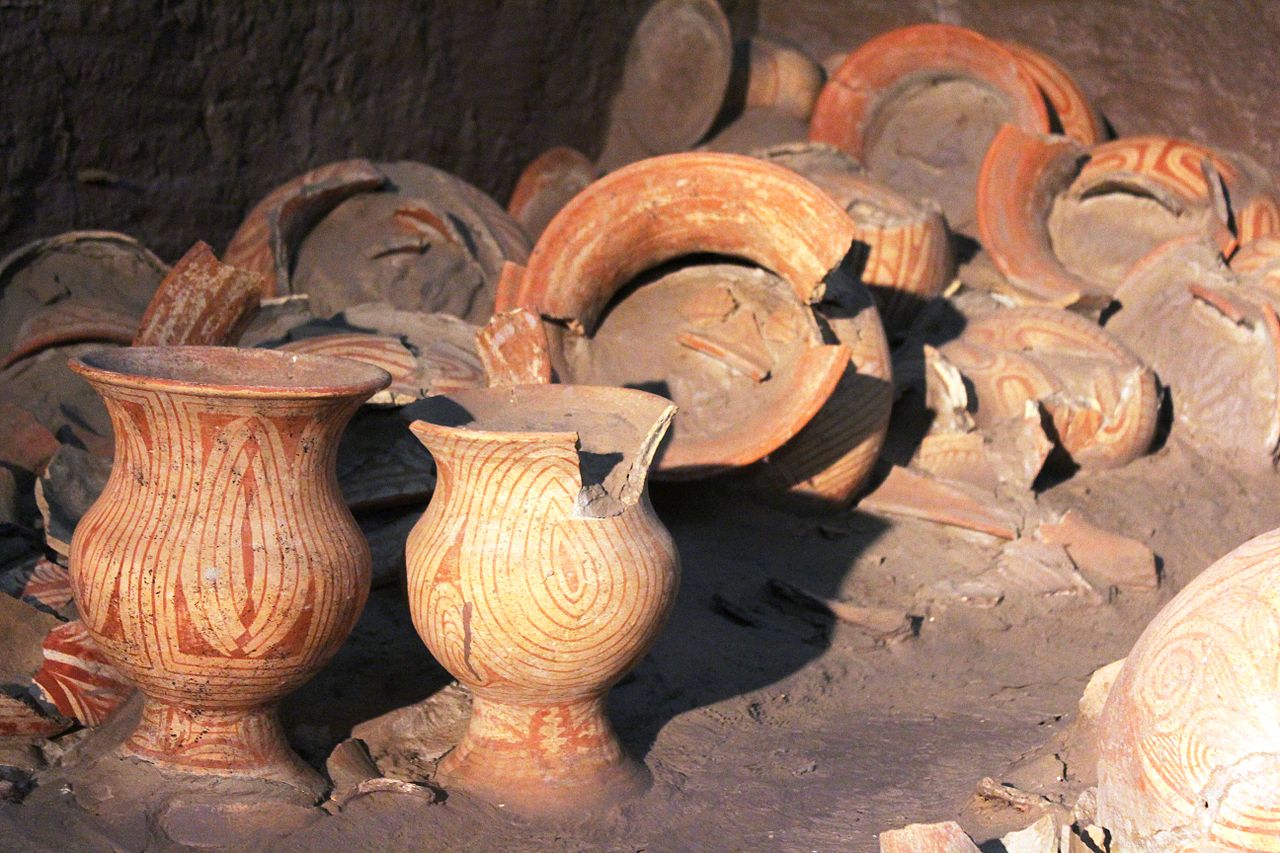
In 1966, Harvard anthropology student Stephen Young was walking through the village of Ban Chiang when he tripped over a tree root. He fell, and found himself looking at the exposed rims of small, beautifully decorated pottery jars. This accidental discovery triggered a series of excavations that would challenge the entire timeline of human technological development.
Early investigations, led by archaeologists like Chester Gorman and Pisit Charoenwongsa, unearthed many artifacts, including distinctive red-on-buff pottery and sophisticated bronze objects. The most startling results came from thermoluminescence dating, an experimental technique at the time used to determine when pottery was last fired. The tests returned a range of 4420 to 3400 BCE for the site. This implied that the people of Ban Chiang were casting bronze thousands of years before it was thought to have begun in Mesopotamia, the accepted "cradle of civilization." The news caused a sensation, suggesting Southeast Asia was not a cultural backwater but a major, independent center of innovation.
A chronological correction
The extraordinary dates from Ban Chiang prompted intense scrutiny from the scientific community. Archaeologist re-evaluation was archaeologist Charles Higham, who had been part of the 1974-1975 excavations. He and other researchers argued for a more rigorous dating method using radiocarbon analysis on materials with a more secure context, such as the rice chaff used in pottery temper and the bones of humans and animals buried in the graves.
These new analyses produced a much more conservative timeline. Radiocarbon dating of bones and other organic materials from the deepest burial layers consistently placed the beginning of bronze metallurgy at Ban Chiang around 1000 BCE. The transition from the Neolithic (Stone Age) to the Bronze Age is now accepted by many researchers to have occurred between 1200 and 1000 BCE.
The vast discrepancy between the two timelines stemmed from the limitations of the original dating technique. Thermoluminescence dating can be skewed by environmental factors, and the early pottery sherds tested were of uncertain stratigraphic provenance. Issues with radon gas emanation from the soil and a lack of secular equilibrium in the uranium decay chain within the pottery itself likely produced inaccurate results. While the revised timeline overturned the claim of Ban Chiang having the "world's oldest bronze," it solidified its importance as a place of sophisticated, independent metallurgical development.
Bronze Age ingenuity
The furnaces, crucibles, and finished objects found at Ban Chiang reveal a sophisticated understanding of metalworking. The local smiths created a tin-bronze alloy and cast tools using bivalve (two-part) molds, sometimes with a core to create hollow sockets for spearheads and axes. The artifacts show evidence of casting, cold-working, and annealing, a process of heating and slow cooling to make the metal less brittle.
The site yielded a variety of bronze items, from practical tools like spearpoints, axes, and adzes to personal ornaments such as bracelets and anklets. Bimetallic objects, which combine a forged iron blade with a cast bronze socket, also appear in the archaeological record here. The sheer volume and variety of metal goods, produced in a village setting without the presence of a centralized state, makes Ban Chiang is a Bronze Age society. The archaeological evidence points to a culture where metallurgical skill was widespread, with local communities developing their own distinct styles and products.