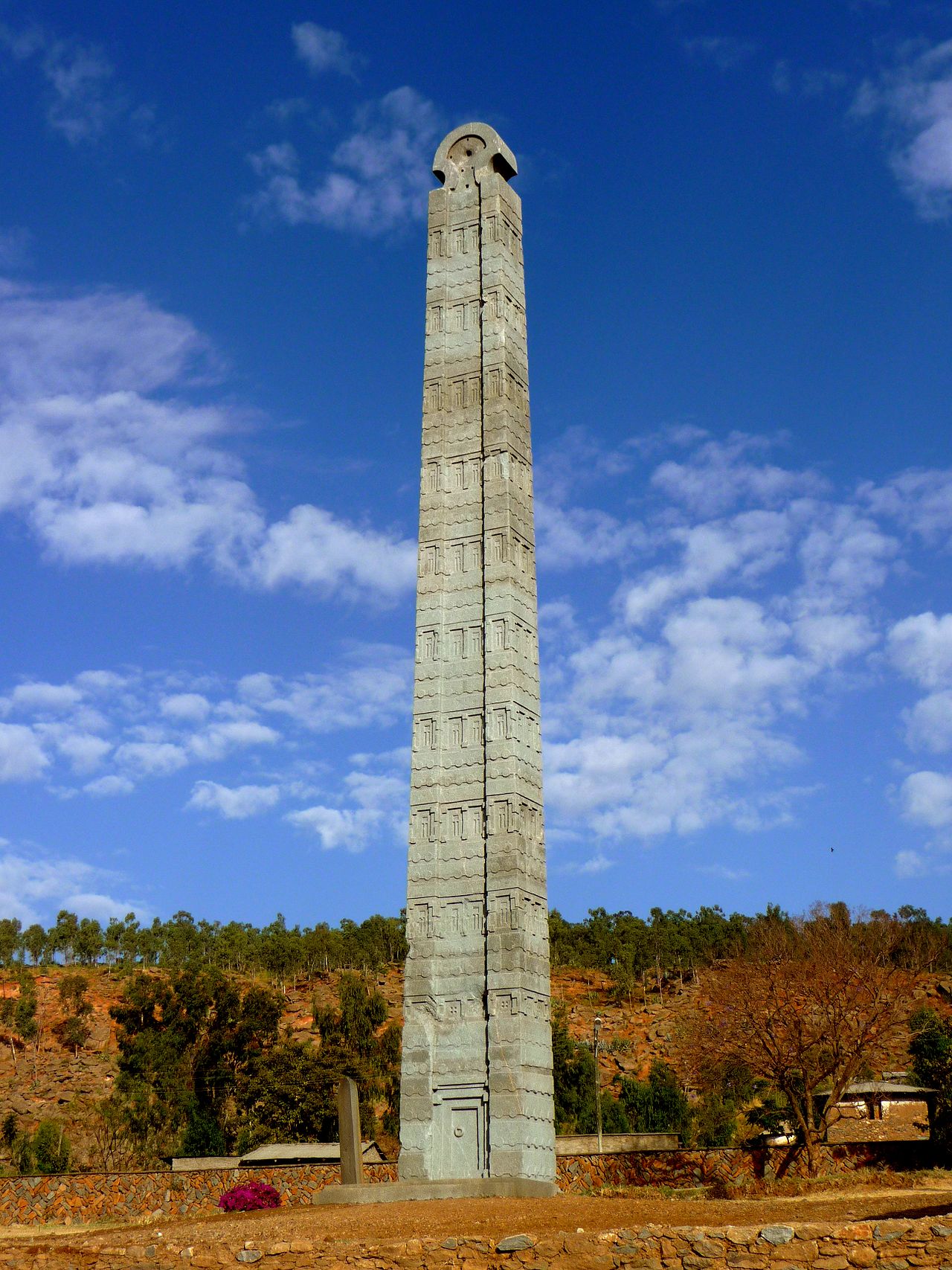
The Aksumite Empire of ancient Ethiopia built massive stone obelisks but moved its capital frequently to avoid exhausting local soils and forests. This strategy of mobility let them maintain power for centuries in a region where staying put meant environmental collapse.
Ondřej Žváček, CC BY 2.5, via Wikimedia Commons
Granite skyscrapers of a lost empire
In the highlands of northern Ethiopia stand the remnants of an ancient metropolis, Aksum. The most striking monuments are the stelae—towering, single-piece stone obelisks that dominate the area. These are not simple pillars; they are elaborate carvings meant to represent multi-story buildings, complete with false doors and windows. Erected between the 3rd and 4th centuries AD, they were grave markers for Aksumite royalty, standing over a network of underground tombs.
The scale of this engineering is immense. The largest of the stelae, known as the Great Stele, measures 33 meters (108 feet) long and weighs an estimated 520 tonnes. It now lies shattered on the ground, believed to have fallen and broken during its erection. The tallest one still standing is the 24-meter (79-foot) Obelisk of Axum. Weighing 160 tonnes, this single block of carved stone was hewn from a quarry several miles away and transported to the site. The stelae were carved from nepheline syenite, a weather-resistant rock similar to granite, which has allowed their intricate details to survive for centuries.
A monument's modern history
The second-tallest stele, the Obelisk of Axum, has a complex modern history. In 1937, Italian soldiers occupying Ethiopia disassembled the monument and took it to Rome as a spoil of war. There, it was reassembled and erected near the Circus Maximus. After World War II, a 1947 UN agreement stipulated its return, but technical difficulties and political inertia delayed the process for over 50 years.
The return home was a significant logistical challenge. In 2005, the 160-tonne obelisk was cut into three pieces and flown back to Ethiopia aboard a massive Antonov An-124 cargo plane—one of the largest and heaviest air freight operations attempted. Before the stele could be re-erected, archaeologists took the opportunity to excavate its intended location. They discovered a vast network of royal tombs, part of a larger necropolis that extends beneath the stelae field. One of the few accessible tombs today is known as the "Tomb of the False Door." The Obelisk of Axum was finally reassembled and unveiled in its original home in 2008.
The construction of these stelae ceased in the mid-4th century, around the time the Aksumite ruler, King Ezana, converted to Christianity. The last major stele erected is believed to be King Ezana's Stele, which stands 21 meters tall. The decline of the Aksumite empire from the 7th century has been attributed to several factors, including the loss of trade routes and environmental degradation from over-farming and deforestation.
💡Fun Facts
The Obelisk of Axum was looted by Benito Mussolini's forces in 1937 and stood in Rome for 68 years before being repatriated in 2005.
The Great Stele, at 520 tonnes, is one of the largest single blocks of stone humans have ever attempted to erect.
The detailed carvings on the stelae imitate the architectural style of elite Aksumite tower houses, some representing buildings up to 13 stories high.
During the obelisk's re-installation, UNESCO archaeologists discovered a large network of underground royal tombs that had been previously unknown.