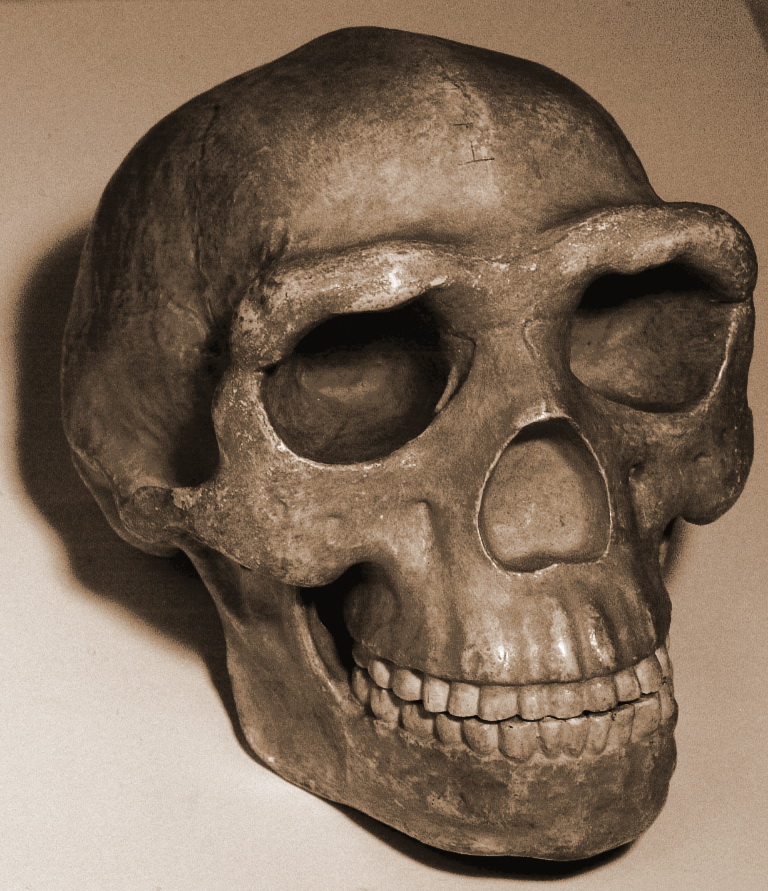
750,000 years of occupation layers documenting Homo erectus evolution: the famous 'Peking Man' site. The original fossils were lost during WWII evacuation; possibly sunk on a Japanese prison ship. Only casts remain of some of humanity's most important ancestors.
kevinzim, CC BY 2.0, via Wikimedia Commons
A 40-meter deep record of human evolution
The Zhoukoudian cave system, about 50 kilometers southwest of Beijing, is a series of limestone fissures that trapped sediments for hundreds of thousands of years. The most important of these, Locality 1, became known as the "Peking Man" site. Its deposits are nearly 40 meters thick and contain 13 distinct stratigraphic layers. These layers provide a near-continuous record of occupation and environment from approximately 770,000 to 230,000 years ago.
Excavations that began in the 1920s removed thousands of cubic meters of earth. This work yielded the remains of about 40 to 45 individual hominins classified as Homo erectus pekinensis. The fossils discovered between 1929 and 1937 included five nearly complete skullcaps, along with numerous mandibles, teeth, and limb bones. In addition to hominin remains, the layers contain over 100,000 stone tools and the fossilized bones of almost 200 other animal species, including the giant hyena Pachycrocuta brevirostris.
Life in the Pleistocene
The inhabitants of Zhoukoudian were toolmakers. The vast majority of the stone artifacts recovered are simple choppers and flakes made from local quartz, sandstone, and flint. These tools were likely used for a variety of tasks, including butchering animals and processing other materials. The animal remains found alongside the hominin fossils suggest H. erectus was a capable hunter or scavenger.
A debated aspects of the site is the evidence for the controlled use of fire. Thick ash layers, some up to six meters deep, were identified during early excavations, along with burned bones and fire-cracked stones. While some later analyses suggested these were natural sediment deposits, more recent studies have reaffirmed evidence for in-situ, human-controlled fire in several layers. This makes Zhoukoudian one of the earliest sites in the world with solid evidence for consistent fire use by early humans.
The entire collection of original Homo erectus fossils discovered before the war was lost in December 1941. Packed into two large footlockers to be shipped to the United States for safekeeping from the advancing Japanese army, they vanished in transit. Theories about their disappearance range from being aboard the sunken Japanese ship Awa Maru to being buried and forgotten near a U.S. Marine base. Despite numerous searches, they have never been found, and today only high-quality casts made by anthropologist Franz Weidenreich remain.
💡Fun Facts
The first "Peking Man" fossil, a single tooth, was identified by Canadian anatomist Davidson Black in 1927.
Later occupations of the cave system include archaic *Homo sapiens* from around 200,000-100,000 years ago and modern *Homo sapiens* in the "Upper Cave" dated to between 35,000 and 10,000 years ago.
The Upper Cave yielded three complete skulls, bone needles, and hematite powder, suggesting burial rituals and the making of tailored clothing.
Post-war excavations, guided by meticulous records from the original digs, have unearthed additional *H. erectus* fossils, including pieces that completed a skullcap first found in the 1930s.