A Forest Out of Time
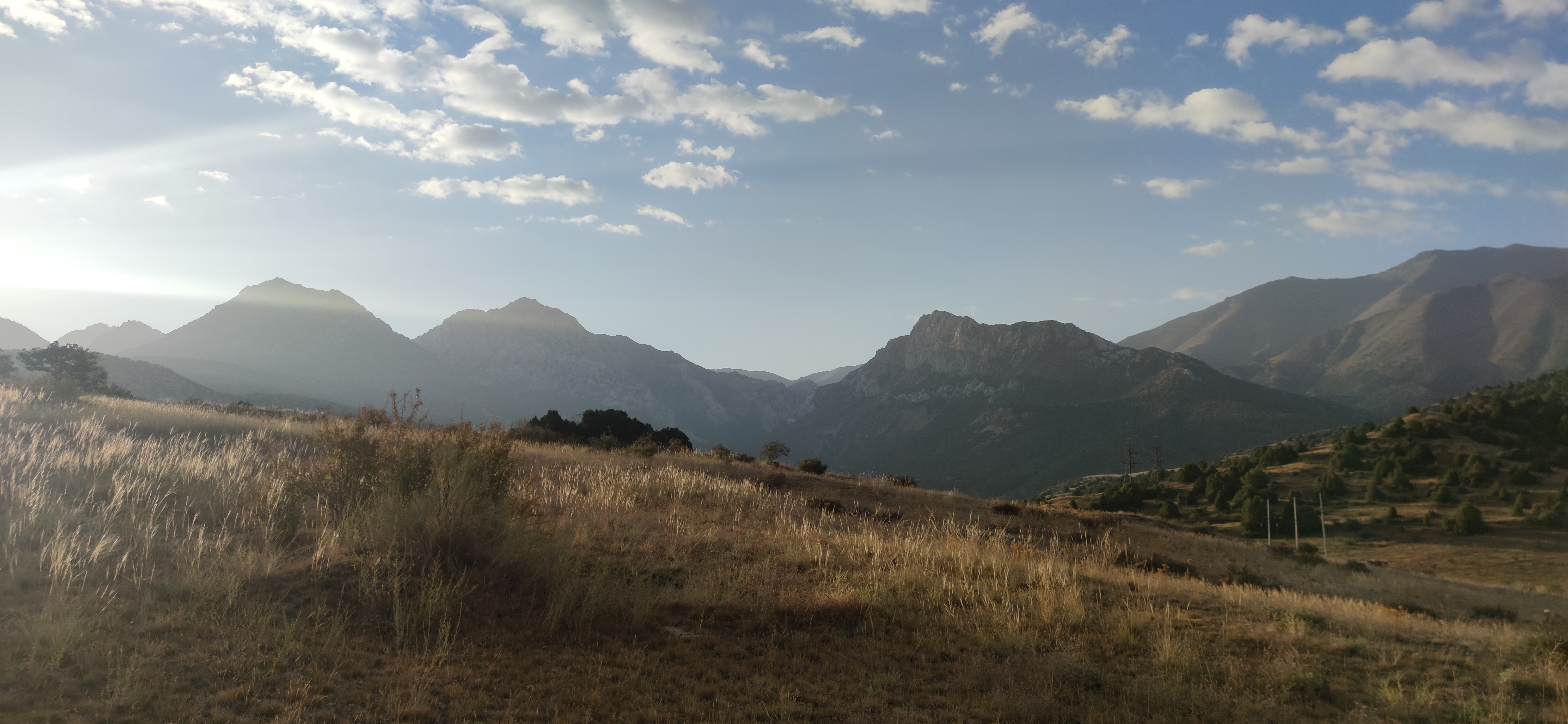
In the dry continental climate of eastern Uzbekistan, the northern slopes of the Turkestan Range hold a secret ecosystem. Here, in what is now Zaamin National Park, isolated stands of ancient juniper forests cling to the mountainsides. These are old trees; they are living relics. Palynological studies of the region, which analyze ancient pollen preserved in sediment layers, show a different environment during the Holocene climatic optimum. Around 6,000 years ago, a wetter climate allowed for extensive forest cover throughout these mountains. The current arid conditions have left only these isolated patches, primarily on cooler, north-facing slopes that retain more moisture—a remnant of a greener past.
The park itself, established in 1926 as the Guralash Nature Preserve, is the oldest in Uzbekistan and protects these unique ecosystems. The landscape ranges from mountain steppe at lower altitudes (around 1,700 meters) to alpine meadows above the treeline, with the highest point reaching 3,571 meters at Guralash Peak. The forests are dominated by three species of juniper: Juniperus seravschanica, Juniperus semiglobosa, and Juniperus turkestanica. These trees create a unique habitat that supports many species in an otherwise dry region. The park is crisscrossed by several rivers, including the Aldashmansoy, Baikungur, Gurulash, and Kulsoy, which are fed by mountain snowmelt and provide essential water.
Biodiversity in Isolation
The isolation of these forests has supported a remarkable degree of biodiversity. Over 700 species of plants have been recorded within the park, with dozens of them being endemic to the area. This includes a significant number of medicinal herbs, with more than 107 identified species having therapeutic properties. The undergrowth beneath the ancient junipers features shrubs like Turkestan hawthorn (Crataegus turkestanica), various species of rose (Rosa fedtschenkoana), and Blueleaf Honeysuckle (Lonicera korolkowii).
This unique flora supports a diverse fauna, with 40 species of mammals and 150 species of birds recorded. The park is a sanctuary for several rare and endangered species listed in the Red Book of Uzbekistan. Lucky observers might spot the Turkestan lynx, the snow leopard, or the Asiatic black bear. The remote Chortangi gorge is a known nesting site for the rare bearded vulture and the black stork. This concentration of life differs from the surrounding arid plains, a direct result of the specific microclimate created by the mountain slopes and their ancient forest cover.