A Symbiotic Specialist
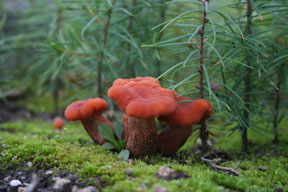
Beneath the soil of temperate and boreal forests, the fungus Laccaria bicolor operates a vast underground network. This small, tan-colored mushroom is a specialist in forming ectomycorrhizal relationships, a type of symbiosis where the fungus's thread-like hyphae envelop tree roots without penetrating the root cells themselves. This partnership is mutualism: the fungus, unable to photosynthesize, receives up to 30% of the carbon fixed by its tree partner in the form of sugars. In return, the fungus extends its mycelial network far beyond the tree's own roots, increasing the surface area for nutrient absorption. This network is exceptionally efficient at mining the soil for slow-moving nutrients like phosphorus and nitrogen, which it then provides to the tree.
Laccaria bicolor is not particularly selective, forming partnerships with a wide range of trees, including pine, birch, and spruce. The fungus's mycelium can be distinguished by a characteristic lilac or violet color at the base of the mushroom's stem, though this can fade with age, making it harder to identify. These fungal networks trade nutrients; they connect different plants, sometimes of different species, allowing for the transfer of resources and even chemical signals between them.
The Genome That Revealed the Deal
In 2008, Laccaria bicolor became the first ectomycorrhizal fungus to have its entire genome sequenced, a project led by the U.S. Department of Energy's Joint Genome Institute and France's National Research Institute for Agriculture, Food and Environment (INRAE). The sequencing showed the genetics of this symbiotic lifestyle. The 65-megabase genome contains approximately 20,000 protein-coding genes.
Analysis of the genome revealed a surprising adaptation. L. bicolor has lost many genes for enzymes that aggressively break down plant cell walls, a common trait in its saprotrophic (decomposer) ancestors. This genetic shift prevents it from harming its living plant partner. However, it retains a robust set of enzymes for degrading other organic matter, like leaf litter and microbial cell walls, allowing it to maintain a dual lifestyle of both symbiosis and decomposition. Researchers also found a large number of unique genes that code for small secreted proteins (SSPs). Several of these proteins are only expressed when the fungus is in contact with a tree root. These "Mycorrhiza-Induced Small Secreted Proteins" are a primary communication tool, managing the interface between fungus and plant and enabling the symbiotic relationship to be established and maintained. The fungus produces molecules called lipochitooligosaccharides that trigger signaling pathways inside the host plant's cells, preparing the root for colonization.