Baikal's living filter
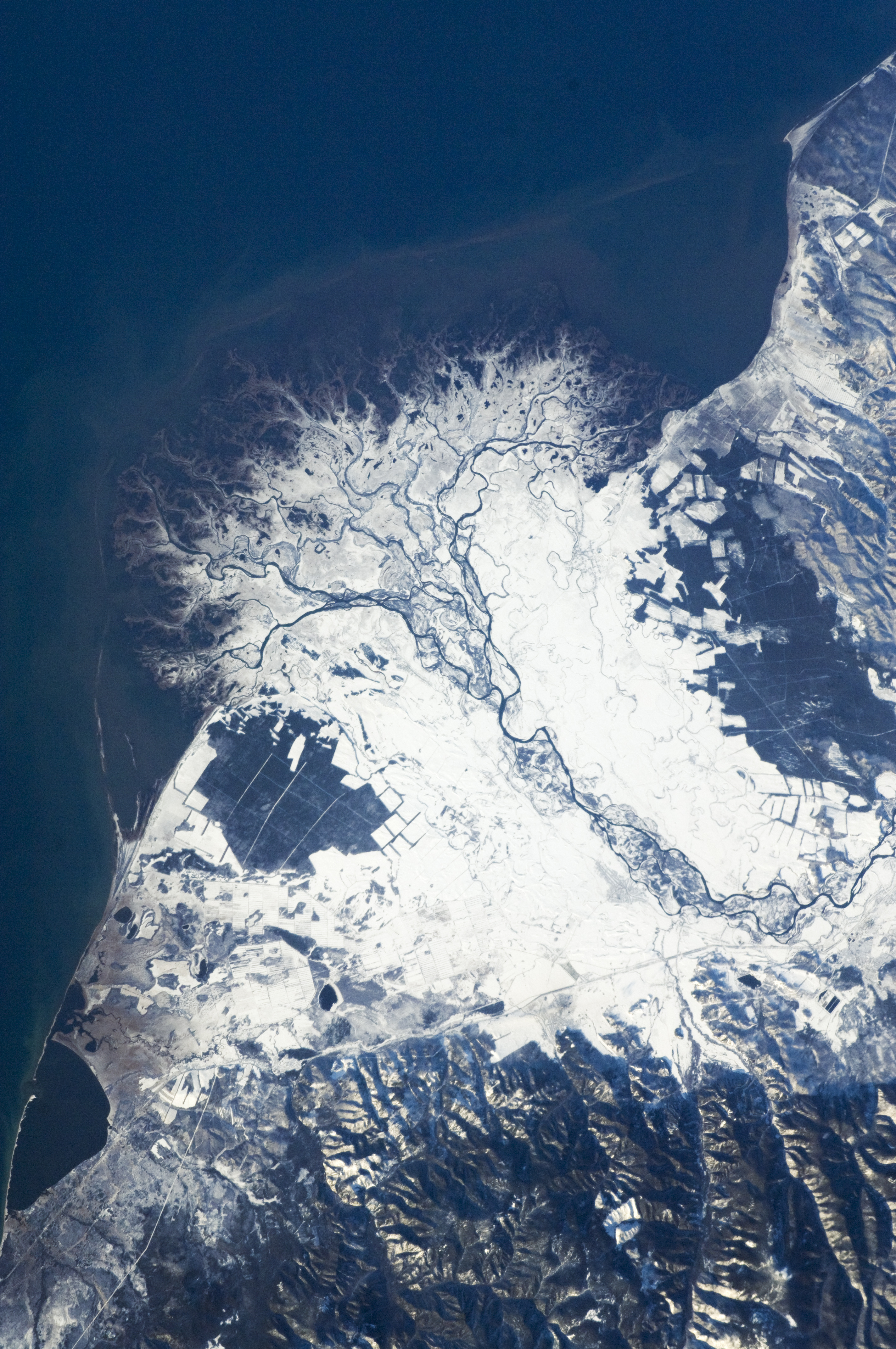
The Selenga River delta is the largest of any river flowing into Lake Baikal, covering an area of approximately 680 square kilometers. It provides about half of the total water inflow to the lake, discharging an average of 935 cubic meters of water per second. This massive volume of water also carries a substantial amount of sediment. The river deposits an average of 3.6 million tons of suspended solids into Baikal each year, forming a thick sedimentary layer estimated to be 5,000–5,500 meters deep. This process, ongoing for about 500,000 years, has built a complex network of channels, marshes, and meadows.
This wetland system is a natural bio-filter. As water flows through the diffuse channels and wetland vegetation, its velocity slows, allowing sediments and contaminants to settle out. Research shows that in the areas between the main river channels, the delta removes between 77% and 99% of important metals like copper, lead, and zinc from the water before it reaches the main body of Lake Baikal. This filtration is a direct function of the delta's unique hydrology and geography. The entire delta is part of a UNESCO World Heritage Site and is a Ramsar Wetland of International Importance, recognizing its global ecological value.
A crossroads under pressure
The Selenga Delta is a critical stopover point on the East Asian-Australasian Flyway. The wetlands are a habitat for 298 documented bird species, many are migratory. Of these, 70 are considered rare or protected species. Important breeding populations of the near-threatened Asiatic Dowitcher (Limnodromus semipalmatus) are found here, alongside significant concentrations of Northern Lapwings and Marsh Sandpipers. During migration, hundreds of thousands of ducks and other waterfowl assemble in the wetlands. Species such as the Swan Goose (Anser cygnoides) and White-tailed Sea Eagle (Haliaeetus albicilla) rely on this habitat.
The delta's ecosystem is facing threats. Since the mid-1970s, the sediment load from the Selenga River has been decreasing, a change attributed to regional climate shifts and human activity. Severe droughts have reduced the river's discharge. Upstream in Mongolia, planned hydropower dams threaten to alter water and sediment flows, which would disrupt the natural processes that sustain the delta's structure and filtering capacity. The construction of the Irkutsk Hydroelectric Power Station downstream on the Angara River—Baikal's only outlet also affects the delta by causing artificial fluctuations in the lake's water level, leading to periods of extensive waterlogging.