A Fire Older Than The Pyramids
Deep beneath a hill in New South Wales, a fire has been burning for at least 6,000 years. This is not a conventional fire with flames and smoke visible for kilometers. Instead, it is a coal seam fire, a slow, persistent combustion of bituminous coal buried 30 meters underground. The site, known as Mount Wingen, is the oldest known continuous coal fire in the world. "Wingen" is believed to mean "fire" in the language of the local Wanaruah people, who have known of the site for generations.
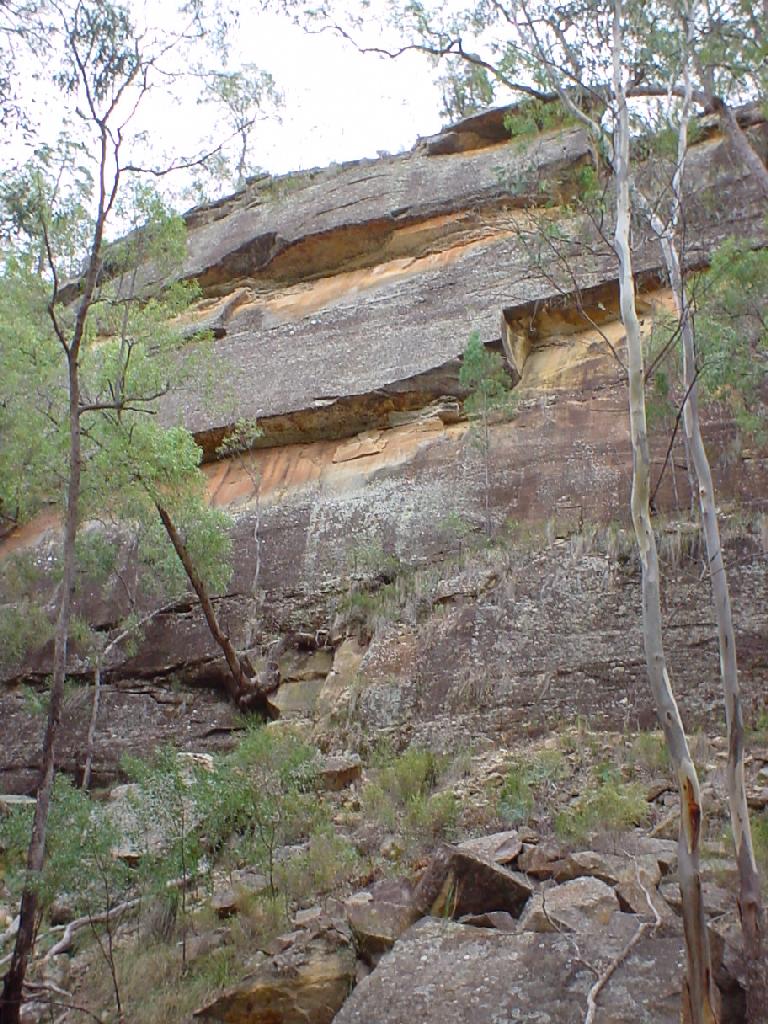
The fire is located within the Gunnedah Basin, a geological feature that contains extensive Permian-era coal deposits. The slow combustion process, starved of oxygen, advances through the coal seam at a rate of approximately one meter per year in a southerly direction. This relentless subterranean heat cooks the surrounding Jurassic-era Pilliga sandstone and claystone. The ground above the fire is hot, barren, and fissured, releasing sulphurous fumes that give the area a distinct smell. When European settlers first encountered the smoking vents in 1828, they mistook it for an active volcano. It was geologist Reverend C.P.N. Wilton who correctly identified it as a coal seam fire in 1829.
Nature's Kiln
The intense, sustained heat from the smouldering coal seam acts as a natural kiln, transforming the overlying rock through a process called pyrometamorphism. The clay and sandstone are baked into a hard, reddish, ceramic-like material. This naturally fired rock is known scientifically as buchite or, more commonly, as clinker. Buchite is a type of metamorphic rock composed primarily of glass, formed when sedimentary rock melts under extreme heat and low pressure.
The properties of this durable, sharp-edged material did not go unnoticed by the region's Aboriginal inhabitants. For thousands of years, the Wanaruah people utilized the clinker created by the "burning mountain". They quarried the material to fashion tools and weapons. The site is culturally significant in their mythology as the fiery tears of a woman turned to stone by the sky god Biami. The path of the fire, now stretching over 6.5 kilometers, has left a trail of this unique, human-utilized geological formation. The ecological impact is also clear; the ground along the fire's path is barren and rocky, with vegetation struggling to survive the heated soil and sulphurous emissions.