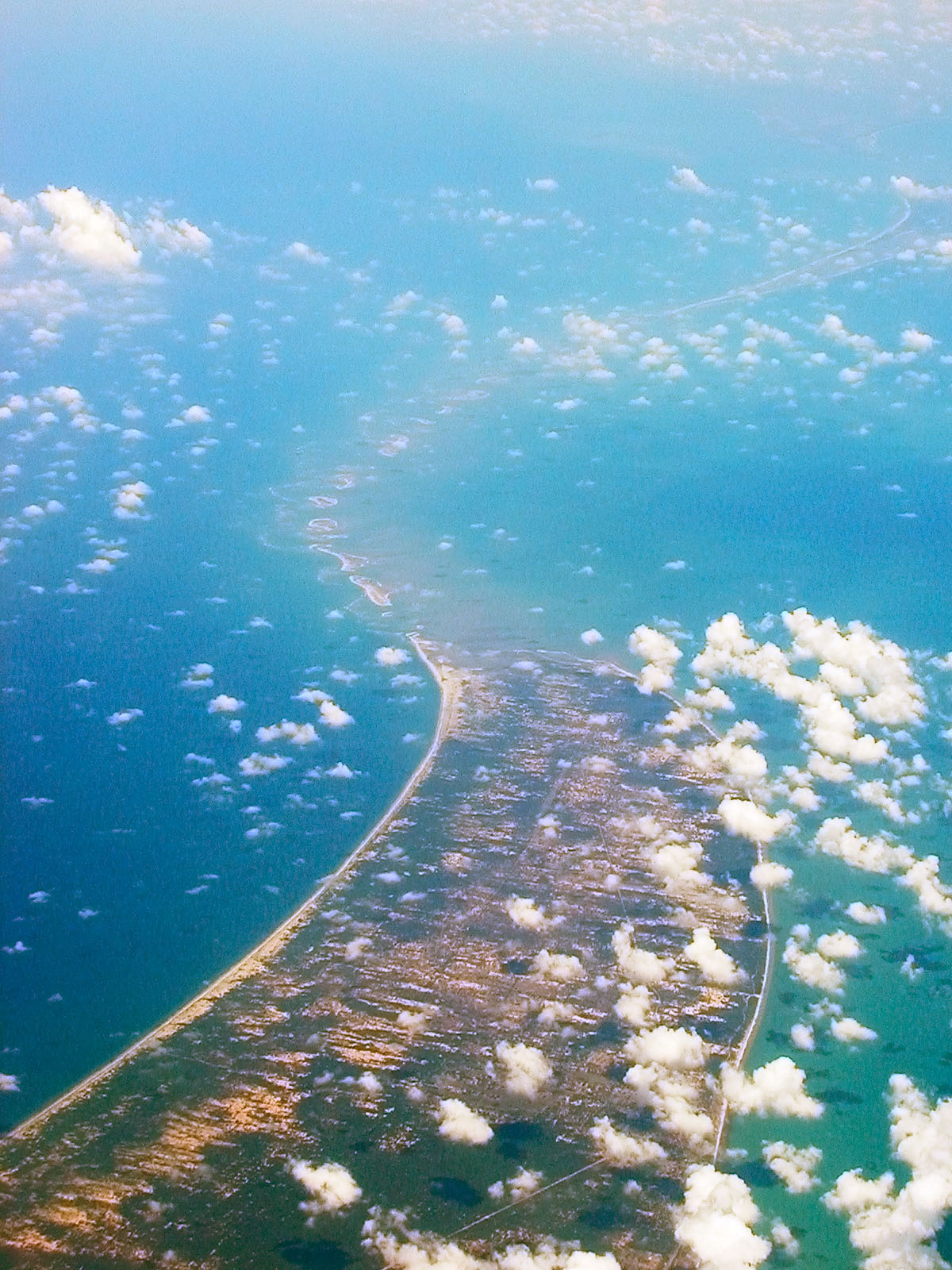
An undersea structure in question
Between the southeastern coast of India and the northwestern coast of Sri Lanka lies a 48-kilometer-long chain of limestone shoals. Known as the Palk Strait Underwater Linear Formation, and more popularly as Adam's Bridge or Ram Setu, this structure separates the Gulf of Mannar from the Palk Strait. The water here is remarkably shallow, often no more than one meter deep over the shoals, which has historically blocked large ships from passing through. The entire formation is a series of sandbanks, coral reefs, and exposed sandy islets. While some parts of the formation rise above the water, recent detailed mapping by the Indian Space Research Organisation (ISRO) using satellite laser data confirmed that 99.98% of the structure is submerged. Temple records from Rameswaram suggest the formation was passable on foot until a cyclone destroyed the walkable path in 1480.
Natural processes or ancient engineering?
The origin of this linear formation is the focus of intense scientific and public debate. One geological hypothesis suggests it formed through natural coastal processes. This theory posits that longshore currents deposited sand and sediment in a linear pattern, over which corals began to grow, trapping more sand and eventually forming the chain of shoals seen today. Tectonic movements in the region and changes in sea level over millennia also helped. During the Last Glacial Period, around 11,700 to 115,000 years ago, sea levels were up to 120 meters lower, exposing a complete land connection between India and Sri Lanka. As sea levels rose, this connection submerged, with the present-day formation becoming fully underwater around 7,000 years ago. Radiocarbon dating of corals from nearby Rameswaram Island by the Geological Survey of India suggests an age of 125,000 years. Other studies of marine sediments place the formation's origins at least 18,400 years ago.
The alternative view questions a purely natural origin. Proponents of this theory point to borehole data collected along the formation. S. Badrinarayanan, a former director of the Geological Survey of India, reported that core samples showed a layer of marine sand, followed by an arrangement of boulders, corals, and limestone, and then sand again underneath. He argued that corals naturally grow on hard rock substrates, not loose sand, suggesting the boulders may have been placed there artificially before the corals grew on them. This arrangement is presented as evidence of ancient engineering, matches the account in the Hindu epic Ramayana, which describes the construction of a bridge to Lanka. The debate continues as comprehensive field studies are limited, and existing data is interpreted differently by various scientific and cultural groups.