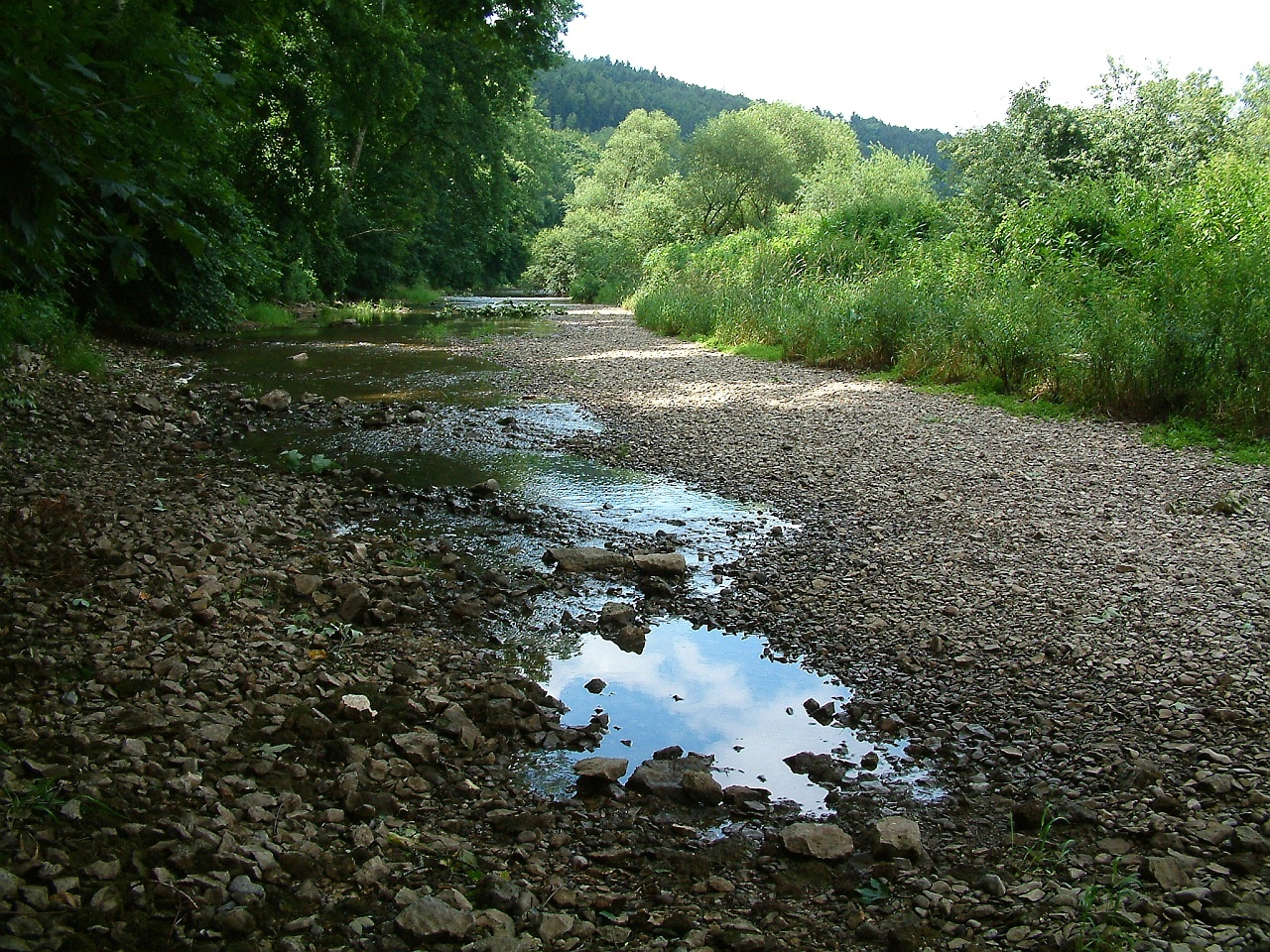
A tale of two rivers
In southern Germany, a slow-motion act of geologic piracy is underway. The headwaters of the Danube, Europe's second-longest river, are being systematically stolen by the Rhine. This process, known as stream capture, is rewriting the hydrography of a continent, diverting water destined for the Black Sea and sending it to the North Sea instead.
The conflict began in the deep past. The Danube is geologically older than the Rhine. Before the last ice age, an "Urdonau," or original Danube, carried meltwater from the Alps eastward. The Rhine, at that time, was a much smaller river. Tectonic uplift and the subsidence of the Upper Rhine Graben gave the Rhine an advantage: a much steeper, shorter path to sea level. This steeper gradient allows the Rhine's tributaries to erode backward into the landscape more aggressively, a process called headward erosion. This erosion is currently chewing through the divide separating the two river basins. The location of the capture is the Swabian Jura, a plateau of porous Jurassic limestone.
The disappearing river
The evidence of this capture is the Donauversickerung, or Danube Sink. Between the towns of Immendingen and Möhringen, and also near Fridingen, the Danube's water vanishes into a series of sinkholes and fissures in the riverbed. For an average of 155 days a year, the river completely disappears, leaving behind a dry, rocky channel. The first documented instance of the river vanishing entirely was in 1874.
The captured water flows south through a vast underground karst system for approximately 12 kilometers. It reemerges at the Aachtopf, Germany's most voluminous spring. This spring discharges an average of 8,500 liters of water per second into the Radolfzeller Aach, a river that flows into Lake Constance and ultimately joins the Rhine.
The connection was proven in October 1877. The geologist Adolf Knop poured 10 kilograms of sodium fluorescein, a green dye, into the Danube sinkholes. Around 60 hours later, observers at the Aachtopf saw the spring water turn "green lit," confirming the underground connection. Geologists estimate that the Upper Danube will one day be completely captured by the Rhine system.