A Miocene lake of perfect preservation
Near the town of Clarkia, Idaho, lies a famous fossil deposit, or Lagerstätte, dating to the Middle Miocene epoch, around 15 to 16 million years ago. This site, part of the Latah Formation, was once a deep, narrow lake formed when massive lava flows from the Columbia River Basalt Group dammed a local river. The ancient lakebed's unique conditions led to the extraordinary preservation of an entire ecosystem.
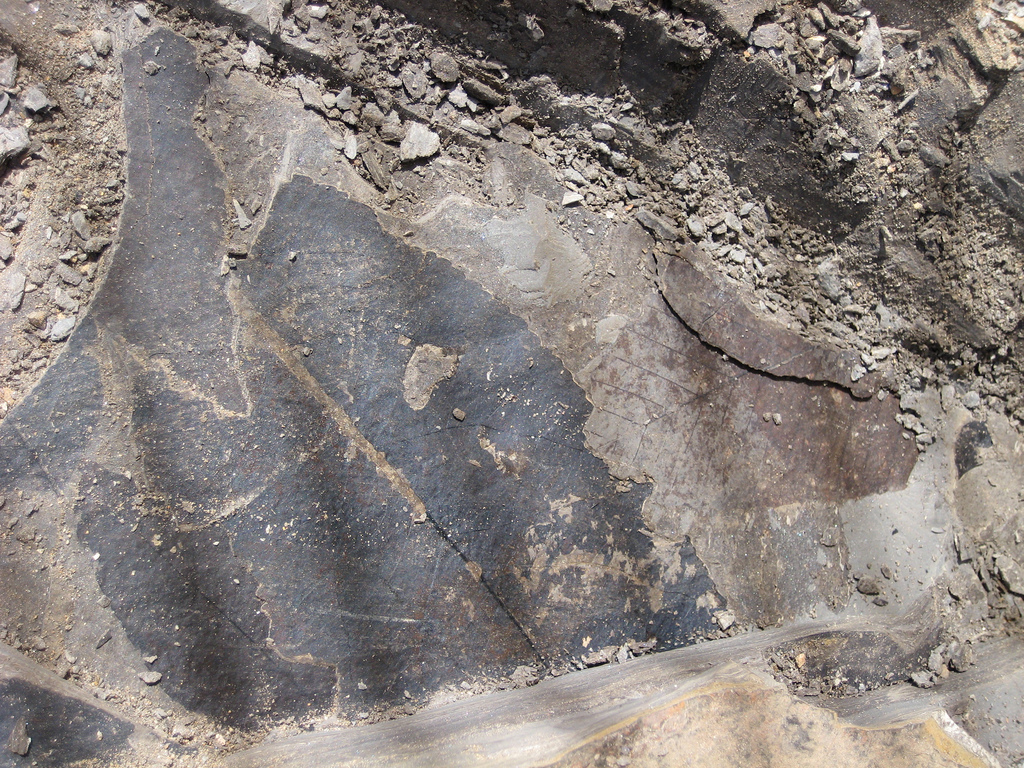
The reason for this preservation was the lake's structure. It was cold and stratified, which resulted in an anoxic (oxygen-free) bottom layer. This environment prevented the bacteria and scavengers that normally decompose organic matter from surviving. As leaves, insects, and fish sank, they were quickly buried by fine-grained sediments and volcanic ash. The result is a record where the specimens are not petrified, they are compressed, with much of their original organic material intact. Over 100 species of plants have been identified, including relatives of modern dawn redwoods (Metasequoia), magnolias, and oaks (Quercus). The preservation is such that when the sedimentary layers are first split, fossil leaves can briefly show their original autumn colors before oxidizing and turning black.
The ancient DNA debate
The exceptional state of the Clarkia fossils prompted a scientific investigation in the 1990s. A team of researchers reported that they had successfully extracted and sequenced fragments of DNA from a 17-million-year-old Magnolia leaf. This claim was significant because DNA is a fragile molecule that degrades over time. At the time, the theoretical survival limit for DNA was thought to be well under a million years, even in ideal, frozen conditions. Finding identifiable genetic sequences from a temperate Miocene lakebed would rewrite the timeline of molecular survival.
The announcement was met with significant skepticism. The primary concern in ancient DNA research is contamination from modern sources, such as bacteria, fungi, or human handling during excavation and analysis. Subsequent studies failed to replicate the initial findings, and many scientists now believe the detected DNA was likely modern contamination. Today, the oldest widely accepted DNA ever sequenced is about 2 million years old, recovered from permafrost in Greenland. While the Clarkia DNA claim is now viewed as a cautionary tale in the field of paleogenomics, the site itself is an important location for studying the biochemistry of exceptionally preserved fossils.