Islands Without Snakebites, Amphibians Without Defenses
Caecilians, obscure legless amphibians, convergently evolved resistance to elapid snake neurotoxins at least 15 separate times across the globe, using three completely different molecular mechanisms. But the Seychelles caecilians, isolated from elapid snakes for 65 million years, show zero resistance mutations, a perfect natural control experiment. Our own lineage carries partial cobra-venom resistance that may have inadvertently driven some cobras to evolve the ability to spit venom at us.
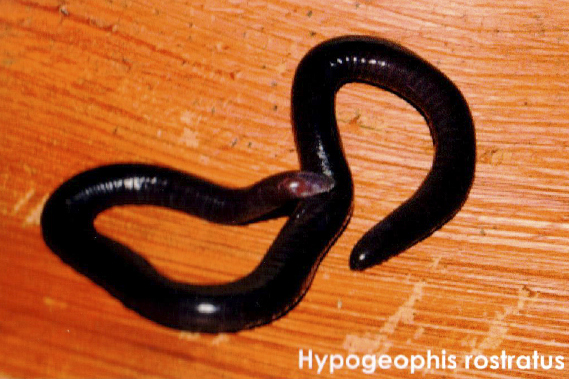
Salifa Karapetyan, Seychelles News Agency, CC BY 4.0, via Wikimedia Commons
An Evolutionary Experiment 65 Million Years in the Making
Caecilians are legless, burrowing amphibians that live in tropical regions around the world. Often mistaken for worms or snakes, they are reclusive creatures of the soil. On the continents of Africa, Asia, and the Americas, caecilians are prey for elapid snakes—a family that includes cobras, mambas, and coral snakes, all known for their potent neurotoxic venom. This predator-prey relationship has sparked a co-evolutionary arms race. Research has revealed that caecilians on these continents have independently evolved resistance to elapid alpha-neurotoxins on at least 15 separate occasions.
The Seychelles archipelago, however, is different. These granitic islands broke away from the supercontinent Gondwana before the major radiation of elapid snakes, leaving them completely isolated from these specific predators. As a result, the seven endemic species of Seychelles caecilians, such as Hypogeophis rostratus, have never encountered this type of venom. A 2023 study published in the International Journal of Molecular Sciences sequenced the venom-receptor genes of 37 caecilian species worldwide, including those from the Seychelles. The results were definitive: the Seychelles caecilians showed no mutations for venom resistance. They represent a natural control group, an evolutionary example of the ancestral, vulnerable state before the pressure of snake predation rewrote their genetics elsewhere.
The Three Methods of Molecular Defense
The global study of caecilians uncovered three distinct molecular strategies for resisting alpha-neurotoxins, which function by binding to the nicotinic acetylcholine receptor (nAChR) at the neuromuscular junction, causing paralysis. Each strategy is a modification of this receptor to block the venom's "key" from fitting the molecular "lock."
The first method is a form of steric hindrance, where a bulky sugar molecule is attached to the receptor near the toxin-binding site via a process called N-glycosylation. This physically obstructs the toxin from reaching its target. The second strategy involves changing the receptor's physical shape. Proline amino acids at specific positions, like 194 or 197, create a specific kink in the receptor's structure; replacing them alters the shape of the lock so the toxin's key no longer fits. The third and most recently discovered mechanism is electrostatic repulsion. The snake's neurotoxins are positively charged. This defense involves mutating the receptor to introduce a positively charged amino acid, actively repelling the toxin like two similar magnetic poles pushing each other away. Some caecilian species even possess multiple resistance modifications, suggesting they have undergone at least 20 separate evolutionary events to acquire these defenses.
The absence of any of these adaptations in Seychelles caecilians is a example of evolution in action—and inaction. Without the selective pressure from elapid snakes, the amphibians' genetic code had no reason to change. This finding is mirrored in our own evolutionary history. Studies show that primates from Africa and Asia, including the human lineage, have a higher baseline resistance to cobra venom than primates from other regions, suggesting a long co-evolutionary history. This partial resistance in early hominins may have been a reason for some African and Asian cobras to evolve venom spitting, bypassing the body's defenses to target the eyes.
💡Fun Facts
The name "caecilian" derives from the Latin word *caecus*, meaning "blind," a reference to their small, sometimes skin-covered eyes.
Some caecilian mothers practice a form of parental care called maternal dermatophagy, where they grow a special, nutrient-rich outer layer of skin for their young to peel off and eat.
The world's largest known caecilian is Thompson's Caecilian (*Caecilia thompsoni*) from Colombia, which can reach a length of 1.5 meters (5 feet).
All caecilians use internal fertilization, and males possess a unique copulatory organ called the phallodeum.
The natural habitats of the Seychelles are always accessible, but the caecilians themselves are fossorial—living hidden in soil and leaf litter—and are very rarely seen.
Admission
Free to observe the natural environment where the caecilians live.
Accessibility
The granitic islands of the Seychelles are mountainous and often feature rugged terrain. Searching for caecilians involves exploring damp soil and leaf litter in forests.