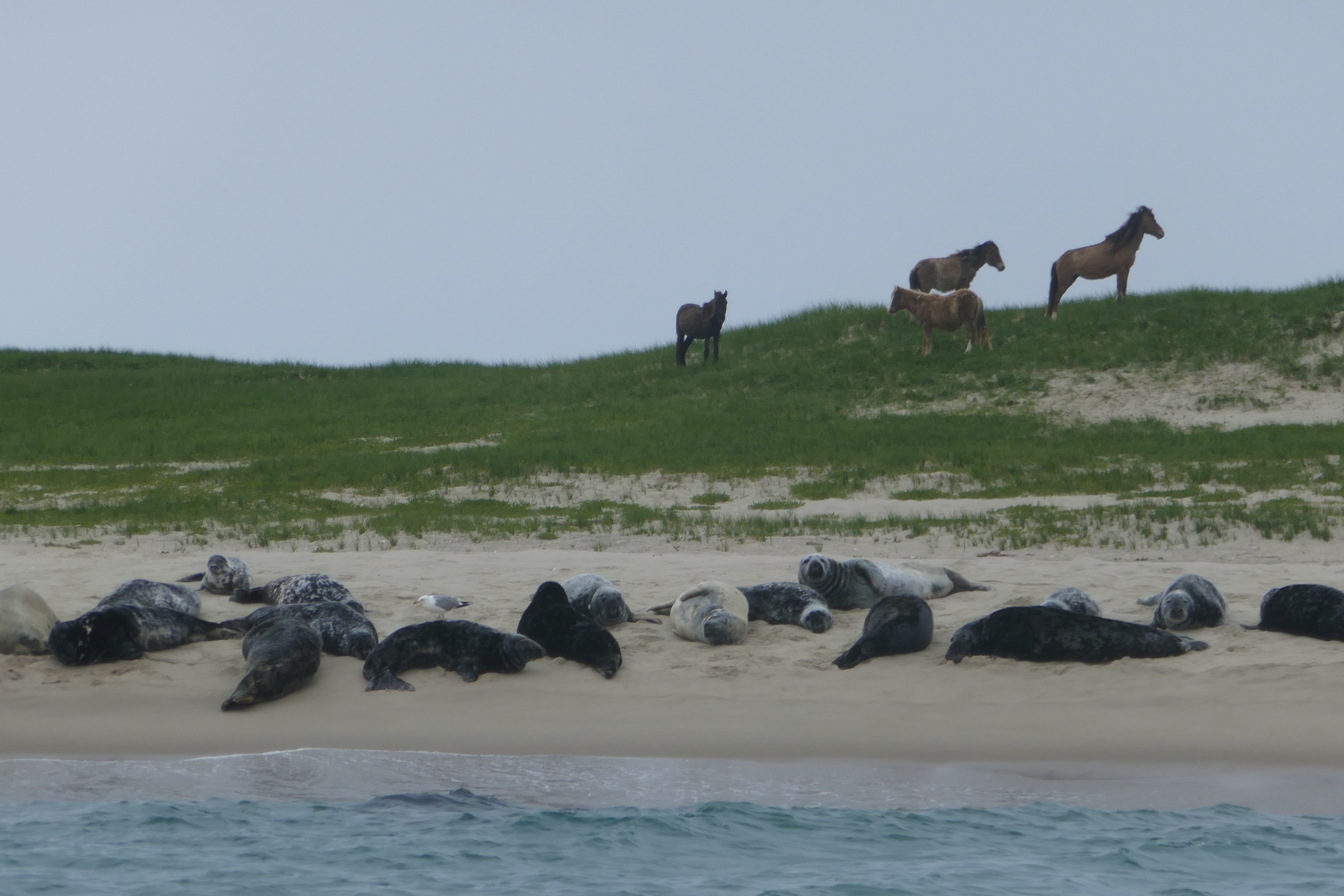
A living laboratory on a sandbar
Sable Island, a crescent of sand just 42 kilometers long, drifts in the North Atlantic. Called the "Graveyard of the Atlantic" for the more than 350 ships it has wrecked, its most famous residents are the descendants of horses introduced in the mid-18th century. While romantic legends tell of horses swimming ashore from wrecks, historical records point to a more deliberate introduction. The most accepted theory is that the Boston merchant Thomas Hancock transported around 60 horses, seized from deported Acadians around 1760, to the island to be ranched. Of the various livestock introduced, only the horses survived.
For over 250 years, this isolated population of Equus ferus caballus has lived without human interference or predators. This has turned the island into a unique natural experiment. The horse population has fluctuated, with recent estimates ranging between 400 and 550 individuals. They are entirely unmanaged, receiving no supplemental food or veterinary care. In 1960, the Canadian government granted them full legal protection from human interference, and their status as "naturalized wildlife" was reinforced when Sable Island became a National Park Reserve in 2011.