A world frozen in silica
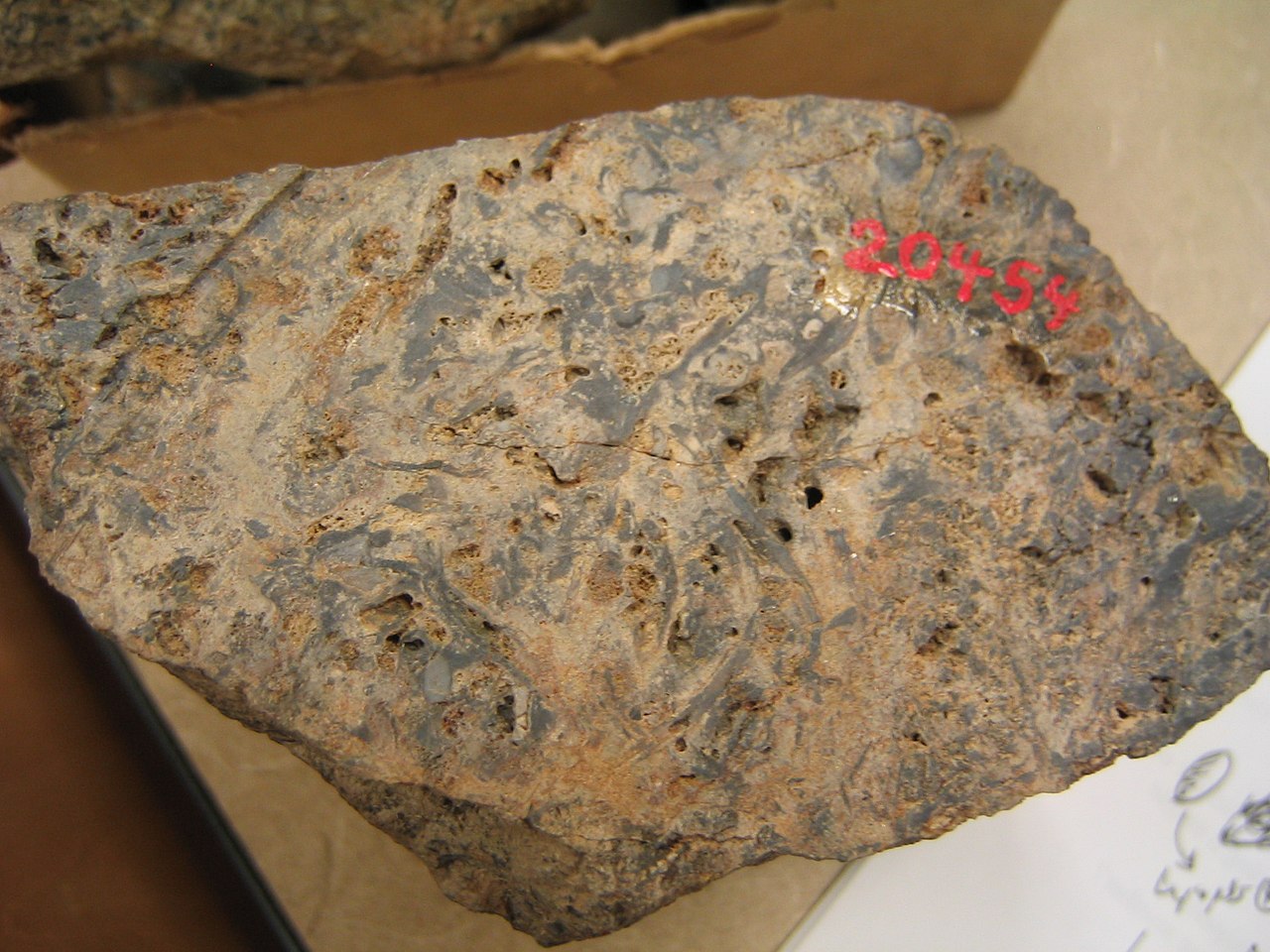
In a small field near the Scottish village of Rhynie lies evidence of one of the planet's earliest and most complete terrestrial ecosystems. This is not a site of grand fossilized bones, but a microscopic world locked inside a flint-like rock called chert. Around 410 million years ago, during the Early Devonian period, this area was a volcanic area of geysers and hot springs, similar to modern-day Yellowstone. These springs periodically overflowed, flooding the surrounding terrain with silica-rich water that rapidly hardened, preserving everything it touched with astonishing fidelity.
The Rhynie chert, as the deposit is known, captured an entire community of organisms in three dimensions, right down to their individual cells. It contains the oldest definitive fossils of land plants like Rhynia and Aglaophyton, which stood no more than 20 centimeters tall. Fungi, algae, and lichens are also present, some showing symbiotic relationships with the plants. But among the miniature forests, a drama was unfolding between the first creatures to truly conquer the land. The chert holds many arthropods, including the oldest known insect, a springtail-like creature named Rhyniella praecursor. It also holds its potential predators.
The flight for survival
Living alongside Rhyniella were several species of arachnids called trigonotarbids. These animals, such as Palaeocharinus, were relatives of modern spiders. While they couldn't produce silk, they were active, ground-dwelling predators equipped with fangs and book lungs for breathing air. The exceptional preservation of the chert shows these two groups sharing the same tiny habitat. The constant threat from these earthbound arachnid predators likely drove the intense evolutionary pressure that drove insects toward their most famous innovation: flight.
With predators ruling the ground, the air offered a revolutionary escape route. The jumping mechanism of springtails like Rhyniella was a good start, but powered flight would have been the ultimate advantage. This "arms race" hypothesis suggests that the primary drive for insect flight was not to find food or mates, but to escape being eaten. This took place more than 100 million years before the first flowering plants appeared, fundamentally reframing the origins of aerial life on Earth. The conflict frozen within the Rhynie chert shows when life on Earth began to conquer the skies, not for opportunity, but for sheer survival.