A Foundation of Frozen Soil
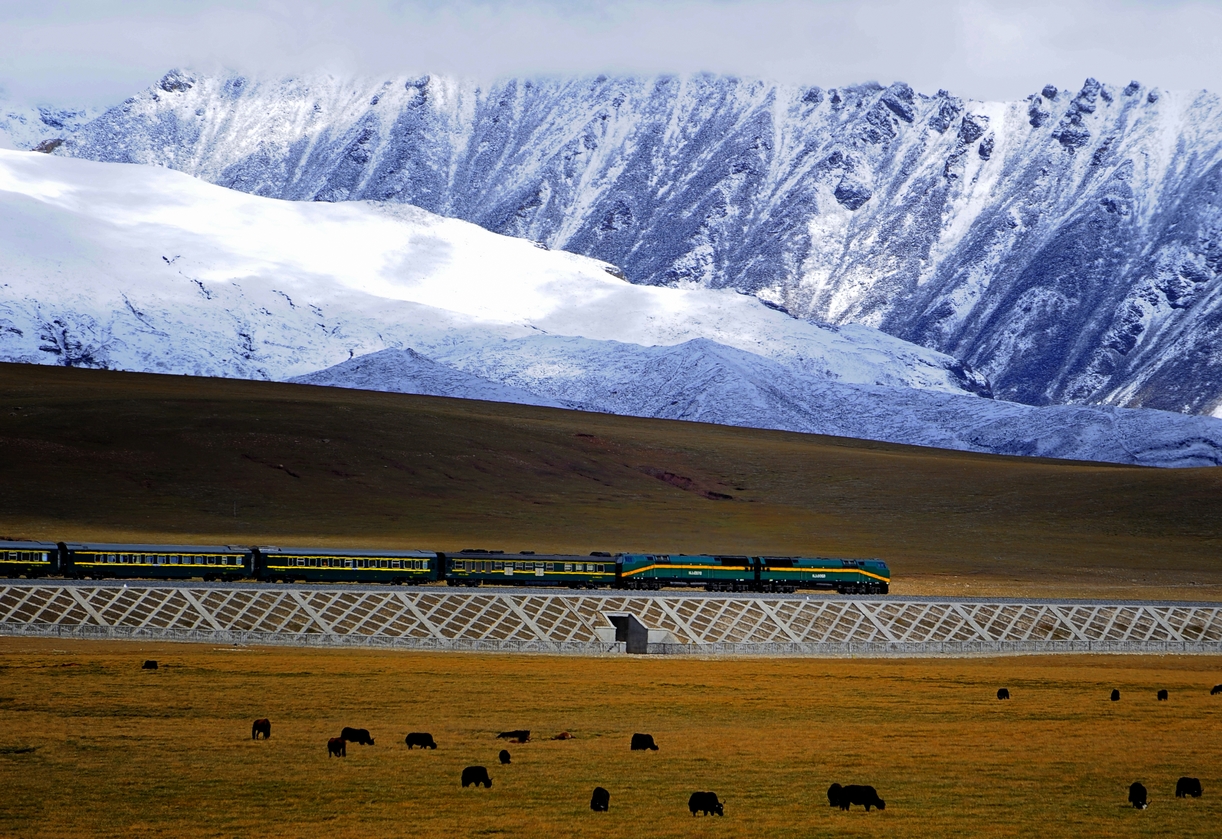
The Qinghai-Tibet Railway, connecting Xining to Lhasa, is the world's highest railway.. Over half of its 1,142-kilometer Golmud-Lhasa section is built on permafrost—ground that remains frozen for at least two consecutive years. This "warm" permafrost, with temperatures between 0 and -1°C, is extremely sensitive to thermal changes. The engineering challenge was immense: the heat from the sun and the trains themselves could thaw this unstable foundation, causing the ground to deform and sink, which would inevitably lead to derailments.
The permafrost presents a unique construction problem because its "active layer" thaws in the summer and refreezes in the winter. This annual cycle of expansion and contraction can crack and destroy conventional structures. To build a stable railway across 550 kilometers of this terrain, engineers needed to find a way to actively cool the ground beneath the tracks, ensuring the permafrost remained solidly frozen year-round.
Engineering a Cooler Earth
To solve the permafrost problem, engineers employed a multi-faceted cooling strategy. The most visually striking solution is the use of over 20,000 thermosyphons, or passive heat pipes, installed along the tracks. Each thermosyphon is a sealed pipe, about 15 cm in diameter, that extends several meters into the ground and about 2 meters into the air. Inside is a fluid, often ammonia, that has a low boiling point. During the cold winter, when the air is colder than the ground, the fluid at the bottom evaporates, rises as a gas, condenses in the cold upper section exposed to the air, and releases its heat into the atmosphere. The condensed liquid then flows back down the pipe walls by gravity. This process effectively pumps heat out of the ground, super-cooling the permafrost. In the summer, when the air is warmer than the ground, the temperature difference is reversed, and the heat transfer process stops automatically, making the system a one-way heat conductor.
Alongside the thermosyphons, engineers constructed vast sections of crushed-rock embankments. Layers of large, angular rocks, up to 1.5 meters thick, are used to build up the foundation for the tracks. The large air gaps between the rocks act as a natural ventilation system. In winter, cold, dense air sinks into the gaps, displacing warmer air and cooling the ground below. In summer, the air within the rock layer remains relatively stable, acting as an insulating barrier against solar radiation and warm ambient temperatures. This "thermal semi-conductor" effect helps maintain a net heat loss over the year, preserving the frozen soil beneath. In some of the most sensitive areas, bridges were built to avoid contact with the permafrost altogether, with the 11.7-kilometer Qingshuihe Bridge being the longest bridge in the world built on permafrost.