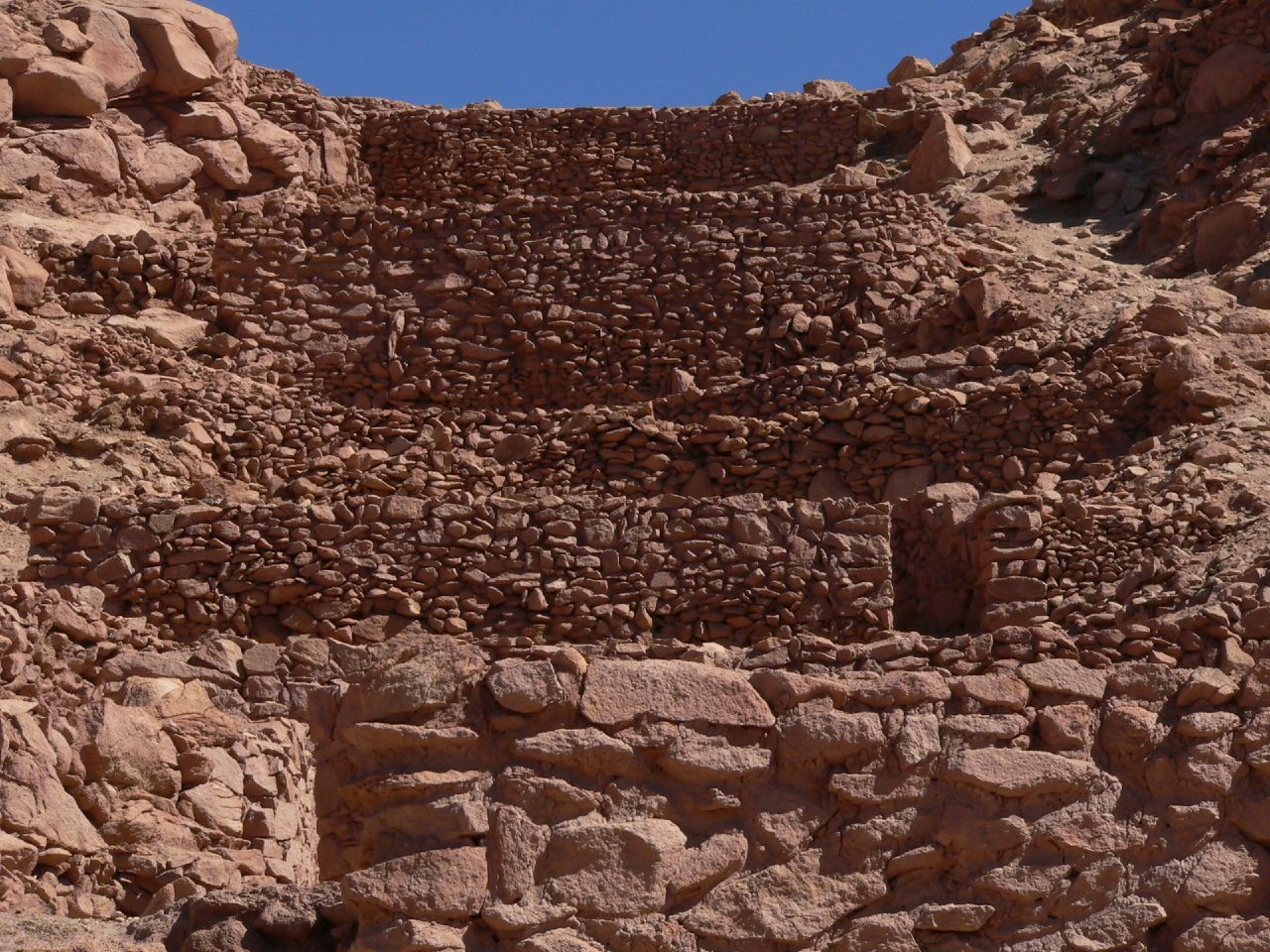
Architectural Anatomy of a Hillfort
Pukará de Quitor is a pre-Inca fortress constructed around the 12th century by the Atacameño, or Lickanantay, people. The structure occupies a strategic position on a steep hill at the confluence of the San Pedro and Salado rivers, providing natural defenses and clear views of the surrounding valley. The entire fortress covers 2.5 hectares and contains approximately 160 distinct structures, including dwellings, storage silos, and defensive walls. The hill rises 70 meters from the cultivated fields at its base to its highest point.
The builders used a dry-stone technique known as pirca, fitting together locally sourced reddish volcanic stone, called liparita, and binding it with a clay mortar. The fortress is built in a terraced formation, creating multiple defensive levels that ascend the slope like an amphitheater. This tiered design, combined with a labyrinthine layout, controlled access points, and high perimeter walls, created a formidable defensive system. The original roofing, now gone, consisted of chañar or carob tree beams, branches, ichu straw, and a final layer of mud. Restorations occurred in 1981 and again in 1992 to preserve the site.
The 1540 Siege
For centuries, the Pukará de Quitor protected the Lickanantay people and their trade routes from rival groups like the Aymaras. In the 15th century, the expanding Inca Empire occupied and reinforced the fortress. The fortress's ultimate test came in 1540 with the arrival of Spanish conquistadors. Francisco de Aguirre, a lieutenant of Pedro de Valdivia, led the assault on the fortress.
The Atacameño defenders, numbering around a thousand, fiercely resisted the Spanish forces. The battle was unequal; the Spanish possessed cannons, cavalry, and steel armor, technologies unknown to the defenders. Despite the Atacameños' strategic position, the Spanish firepower eventually overwhelmed them, leading to the fall of the fortress. In the aftermath, to quell any further resistance in the region, Aguirre ordered the execution of the Atacameño leaders. Around 25 chieftains were beheaded, and their heads were displayed as a warning. Stone faces carved near the site are said to commemorate these slain leaders. The fortress was declared a Chilean National Monument in 1982.