Anaerobic Archives
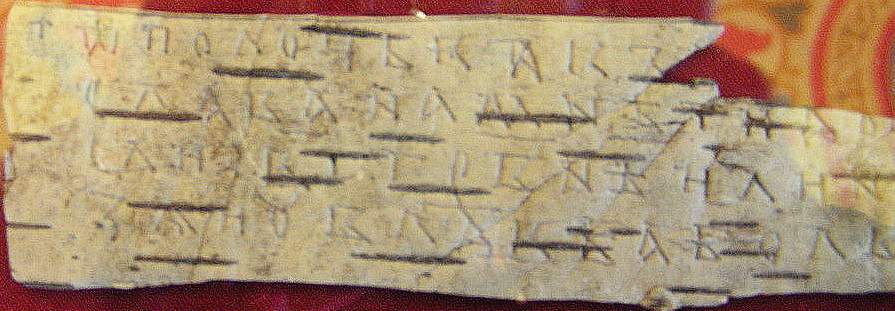
The survival of over 1,100 delicate birch bark documents in Veliky Novgorod is because of the local soil chemistry. The city is built on thick, waterlogged clay soil with a low oxygen content. This anaerobic environment is hostile to the microorganisms that typically decompose organic materials like wood and bark. The cultural layers of Novgorod, in some places up to eight meters (25 feet) deep, effectively sealed the discarded letters away from oxygen, preserving them for centuries. The first letter was discovered by accident on July 26, 1951, by Nina Fedorovna Akulova during an archaeological expedition led by Artemiy Artsikhovsky. Since then, finds have dated from the 11th to the 15th centuries.
The letters were not written with ink, which would have washed away, but were scratched into the soft inner surface of the bark. The tool for this was a stylus, called a "pisalo," made of iron, bronze, or bone. The writing material was cheap and readily available, unlike expensive parchment which was reserved for official and religious texts. These were disposable, everyday documents, thrown away after being read, which makes their preservation purely an accident of geology.
Voices from the Clay
The birch bark letters show the daily lives of medieval Novgorod's people, revealing a surprisingly high level of literacy across social classes. The texts are written in the Old Novgorod dialect, a vernacular version of Old East Slavic, showing linguists the spoken language of the time. They contain everything from business dealings and debt lists to personal letters and legal complaints. One straightforward message, letter #377, reads "From Nikita to Ulyanitsa. Marry me. I want you and you me."
Perhaps the most famous author is a boy named Onfim, who lived in the 13th century. At least 17 of his letters survive, filled with his homework. He practiced his alphabet, wrote out psalms, and doodled in the margins. His drawings show knights in battle, his teacher, and a self-portrait as a fantastical beast. These school exercises are some of the personal and revealing documents from the entire medieval period, showing that even a six or seven-year-old boy was learning to write. The collection also includes the oldest known document written in any Finnic language, letter #292, an invocation against lightning dated to the early 13th century.