The Great Drying
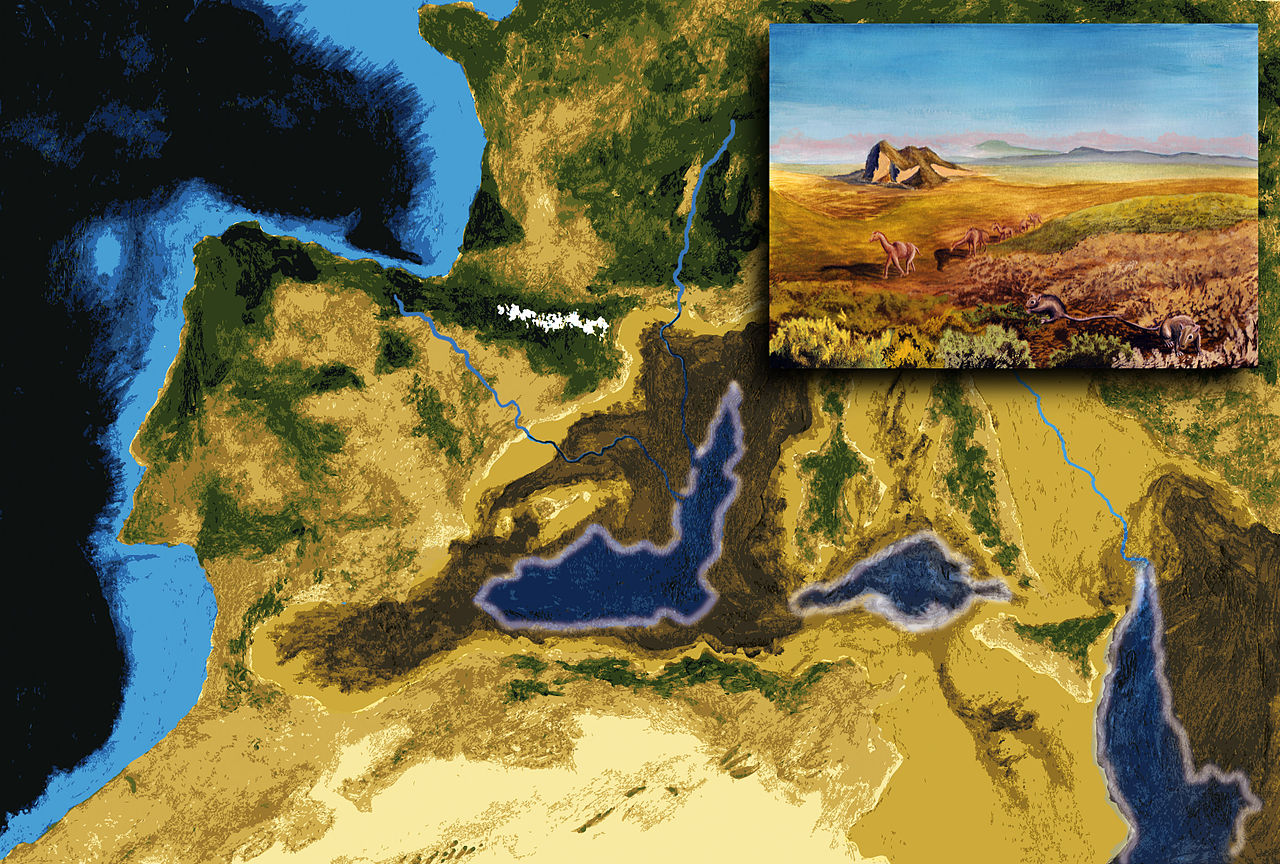
Between 5.96 and 5.33 million years ago, the Mediterranean Sea experienced a large geological event known as the Messinian Salinity Crisis. Tectonic plate movements between Africa and Eurasia gradually closed the ancient seaways that connected the Atlantic Ocean to the Mediterranean. Cut off from its primary source of water, the sea began to evaporate much faster than rivers could replenish it.
This isolation led to a dramatic drop in sea level, with the basin floor sinking between 1.5 and 2.5 kilometers below the global ocean level. As the water vanished, the remaining sea became a series of hypersaline lakes. The extreme concentration of dissolved minerals caused them to precipitate out of the brine, blanketing the seabed. This process laid down a colossal layer of evaporite minerals, primarily gypsum, anhydrite, and halite (common salt). In some areas, these salt deposits reach a thickness of over 3 kilometers, with a total estimated volume exceeding 1 million cubic kilometers. This event also carved the landscape, as rivers like the Nile and Rhône cut deep canyons into the newly exposed continental margins, with the Nile's canyon reaching 2,500 meters below sea level near modern-day Cairo.