A chemical autobiography
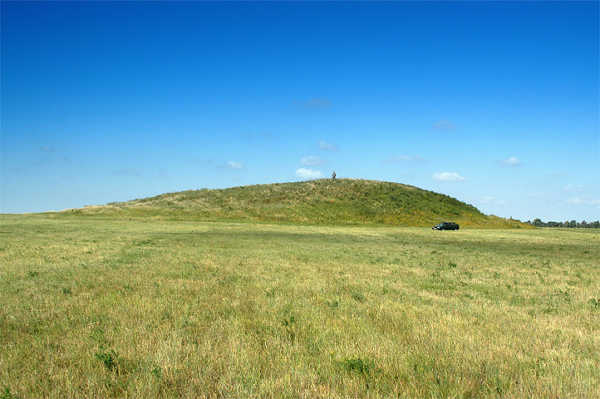
In the arid foothills of the Hissar Mountains, a burial mound known as a kurgan holds a silent biography. This story is not written in text, but in the atomic composition of a skeleton from the Iron Age. Scientists can read this story using isotope analysis, a technique that turns bone and tooth enamel into a geological record. The main element is strontium (Sr), a chemical element that the human body absorbs from food and water. The ratio of two strontium isotopes, strontium-87 (⁸⁷Sr) and strontium-86 (⁸⁶Sr), varies depending on the age and type of underlying bedrock in a geographic area. These unique geologic signatures are passed up the food chain and become locked into a person's skeleton.
The analysis hinges on a simple difference between teeth and bones. Tooth enamel forms during childhood and its isotopic composition does not change for the rest of a person's life. It is a permanent record of where an individual grew up. Bone, in contrast, is a dynamic tissue that remodels itself over a period of roughly seven to ten years. Its strontium ratio reflects the geology of the place an individual lived in the years leading up to their death. A mismatch between the ⁸⁷Sr/⁸⁶Sr ratio in tooth enamel and bone from the same skeleton is definitive proof of migration.
A life of movement
For the individual buried at Kurganzol, the isotopic differences are significant. Analysis of the tooth enamel reveals a high ⁸⁷Sr/⁸⁶Sr ratio, one that does not match the local geology of southern Uzbekistan. The local geology of the Surkhandarya region has strontium ratios generally between 0.708 and 0.709. The ratios from the teeth point to a childhood spent in a region with much older, more radiologically active rock, consistent with areas near the Caspian Sea or parts of the Iranian plateau.
The bone records the final chapter of this person's life. Its ⁸⁷Sr/⁸⁶Sr ratio is much lower, matching the local strontium signature of the Surkhandarya region where the kurgan is located. This confirms the individual died and was buried far from their birthplace. The travel from the Caspian region to Uzbekistan may have included a significant period in what is now Iran. Evidence for such intermediate stops can sometimes be found by analyzing different types of bone tissue that remodel at different rates, or through other isotopic markers for diet, such as carbon and nitrogen, which can indicate shifts between different ecosystems. This single skeleton records long-distance mobility among the nomadic peoples who lived in Central Asia during the Iron Age.