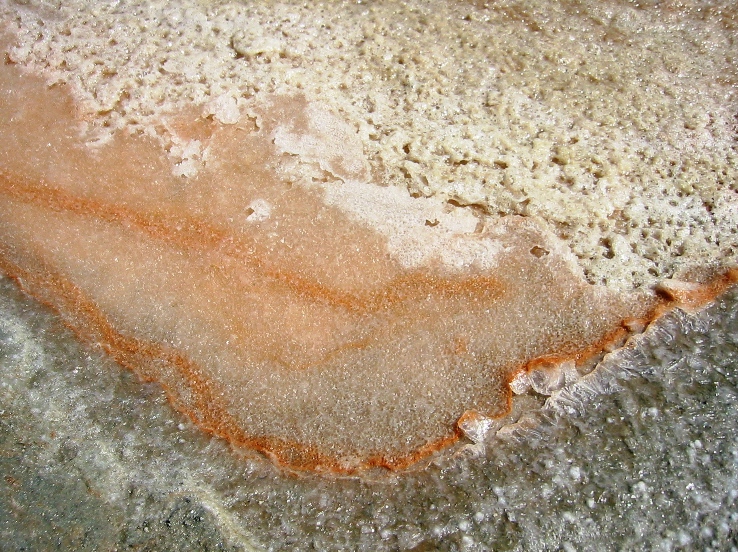
A microbial masterpiece
The otherworldly pink and orange waters of the Camargue salt flats are not the result of minerals or soil. They are colored by life itself—specifically, microscopic life pushed to its biological limits. The primary cause is a single-celled green alga named Dunaliella salina. This extremophile thrives in hypersaline environments where salt concentrations can exceed 200 grams per liter, far beyond the tolerance of most other organisms.
To survive the intense solar radiation and high salinity of the shallow lagoons, Dunaliella salina produces massive quantities of beta-carotene, the same orange pigment found in carrots. This carotenoid acts as a protective shield against UV damage. Under the most stressful conditions of high salt and bright sun, typically in late summer, the algae's beta-carotene production skyrockets, turning the water a bright pink or orange. The alga can accumulate beta-carotene up to 14% of its dry weight. Also present are halophilic archaea, another group of salt-loving microbes that contain red pigments, further deepening the water's unusual hue.
A pigmented food chain. The bright color of the water is directly linked to the famous pink flamingos (Phoenicopterus roseus) of the Camargue. The connection is a simple food chain. The beta-carotene-rich Dunaliella salina is the main food source for a tiny, resilient crustacean: the brine shrimp (Artemia salina).%%CITE_5%%%%CITE_6%% These shrimp graze on the algae, accumulating the carotenoid pigments within their own bodies.
Flamingos, in turn, consume vast quantities of these brine shrimp. Their digestive system breaks down the beta-carotene, and the pigment molecules are then deposited in their growing feathers. A flamingo is not born pink; its chicks hatch with soft, grey plumage. Only after two to three years of consuming a carotenoid-rich diet do their feathers acquire the famous pink shade. Without the algae and the shrimp, the flamingos of the Camargue would be white.
This entire ecosystem also contains a unique plant community. The ground surrounding the salt pans is often covered by halophytes—plants specifically adapted to grow in saline soils. One of the most common is glasswort (Salicornia), a succulent plant that manages the high salt content by storing water in its fleshy stems. In autumn, the glasswort turns a deep red, adding another layer of color to the salt marsh landscape.