The mushroom with a triple life
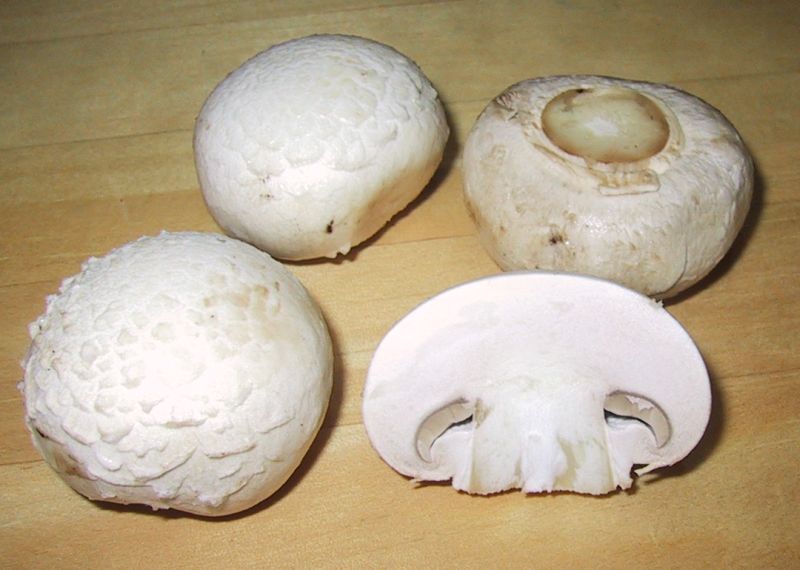
The white button, brown cremini, and large portobello mushrooms found in markets worldwide are not different types of fungi. They are all the same species, Agaricus bisporus, harvested at different stages of maturity. The small white button mushroom is the juvenile stage, picked before the cap has expanded and the gills are exposed. If left to grow, it becomes a cremini, which has a brownish cap and a slightly more developed flavor. The final stage is the portobello, a fully mature mushroom with a large, flat cap measuring 5 to 10 centimeters across, where the gills are dark brown and fully visible. This maturation process alters the size and color, and deepens the flavor, making the portobello much more savory and meaty in texture.
The commercial cultivation of Agaricus bisporus began in France. In the 17th century, King Louis XIV’s gardener, Jean-Baptiste de La Quintinie, is said to have first cultivated them at the Palace of Versailles. The practice evolved in the 1800s when Parisian farmers discovered that abandoned limestone quarries under the city provided the perfect growing conditions. These subterranean farms, or champignonnières, offered constant temperature (~15°C), high humidity, and darkness, allowing for year-round production. Farmers would bring horse manure into the caves, where the mushrooms would sprout. At its peak in the late 19th century, there were over 300 mushroom farms operating in the Parisian catacombs. The construction of the Paris Métro eventually disrupted many of these farms, which relocated to other regions like the Loire Valley.
A master of decomposition
Agaricus bisporus is a saprotroph, an organism that feeds on decaying organic matter. It is a secondary decomposer, meaning it thrives on material that has already been partially broken down by other microorganisms, like the bacteria in composted manure. Its ability to break down tough plant material is encoded in its genome. Sequencing of the A. bisporus genome has revealed a large array of genes for carbohydrate-active enzymes (CAZymes).
These enzymes are specialized for degrading the complex polymers that make up plant cell walls: cellulose, hemicellulose, and lignin. The fungus secretes enzymes like cellulases, xylanases, and pectinases to break down these compounds into simpler molecules it can absorb for energy. Compared to wood-decaying fungi, A. bisporus has a unique expansion of genes for enzymes like heme-thiolate peroxidases and β-etherases, which are particularly effective at attacking the complex, decaying metabolites found in humus and leaf litter. This genetic toolkit makes it an exceptionally efficient recycler of nutrients in grassland and forest floor ecosystems. The modern white button mushroom variety arose from a single chance mutation discovered on a farm in Pennsylvania in 1925.