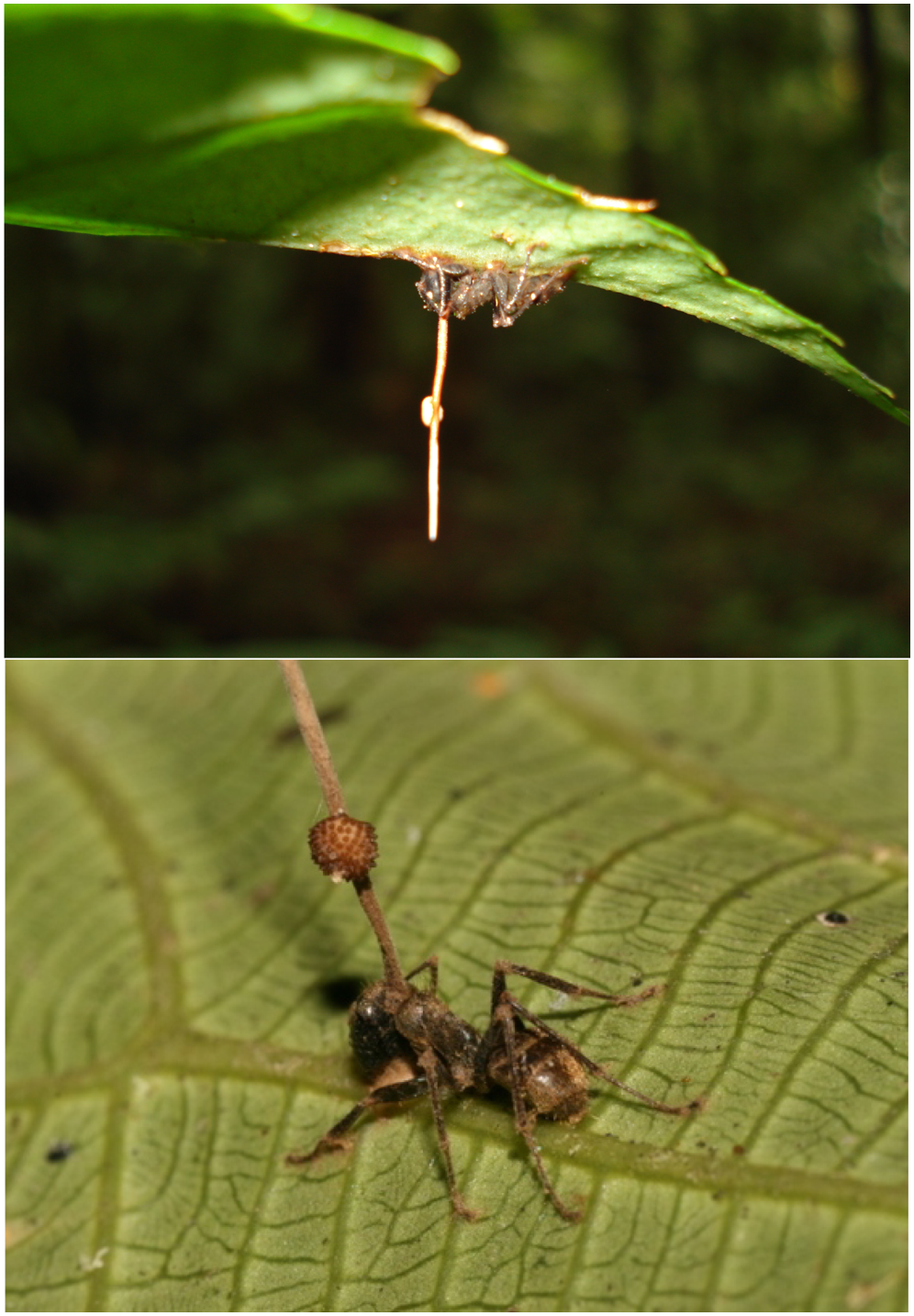
A hostile takeover
In the rainforests of Thailand, a microscopic spore of the fungus Ophiocordyceps unilateralis begins a sinister process. When the spore lands on a carpenter ant, typically of the species Camponotus leonardi, it enzymatically bores through the insect's tough exoskeleton. Once inside, the fungus does not immediately kill its host. Instead, it proliferates throughout the ant's body and head, forming a network of interconnected fungal cells. This network grows around the ant's brain but does not penetrate it. The fungus takes control of the ant's muscles and central nervous system, transforming the living insect into a vehicle for the parasite's own reproduction. The ant is a chimera: part ant, part fungus. For the next three to nine days, the infected ant appears normal, interacting with its colony, before the final, manipulated behaviors begin.
The death grip
The fungus compels the ant to leave the safety of its canopy nest and descend to the forest floor. The ant exhibits strange, convulsive movements and wanders erratically, making it impossible to return to its colony. The parasite's control is precise. It forces the ant to climb the stem of a sapling to a height of about 25 centimeters above the ground. This specific location has the ideal temperature (between 20-30°C) and humidity (94-95%) for the fungus to thrive.