A Jurassic seabed in the mountains
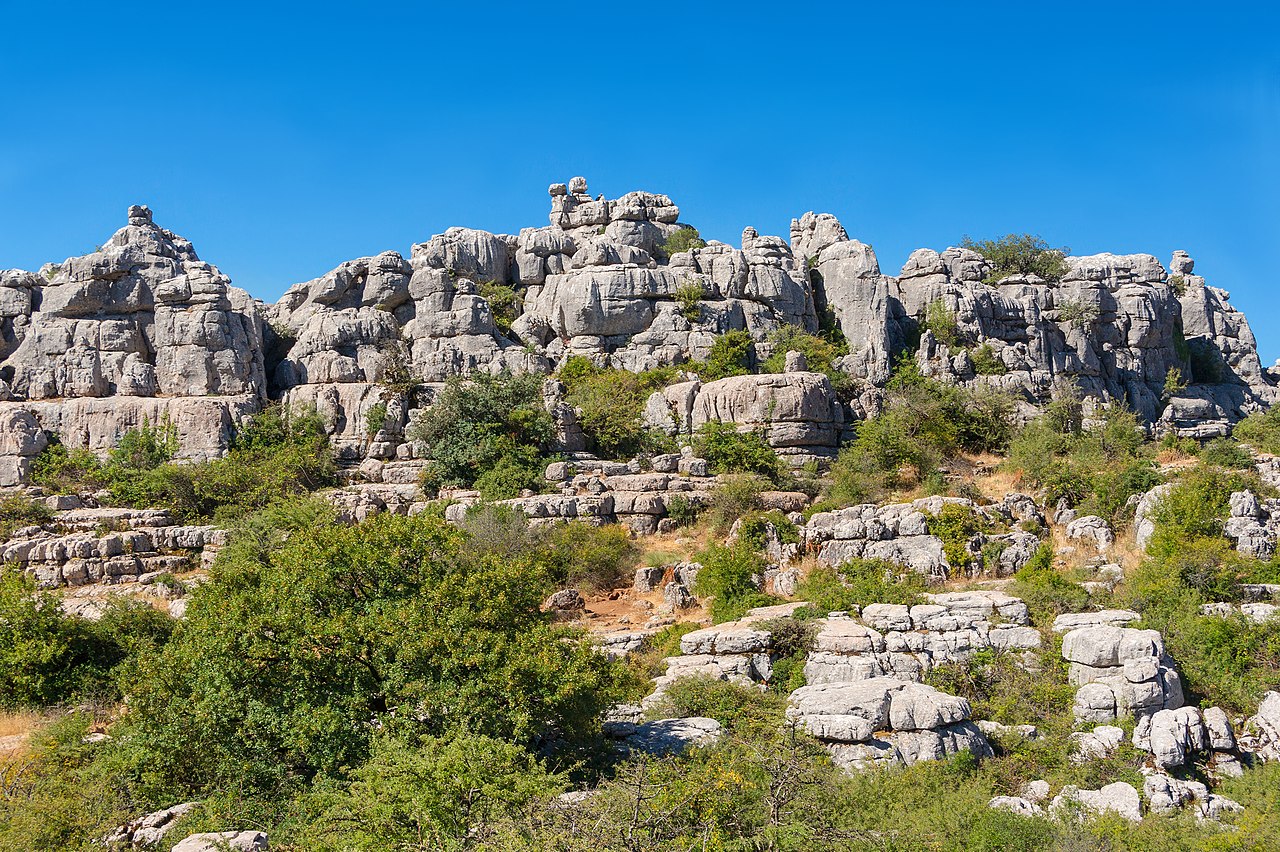
The story of Torcal de Antequera begins around 150 million years ago, during the Jurassic period. At that time, this part of Spain was a marine corridor, a seabed under the Tethys Sea that connected the Atlantic and the Mediterranean. For millions of years, the shells and skeletons of marine animals accumulated on the seafloor. This process of carbonate sedimentation formed thousands of meters of horizontal limestone layers. Today, the rock contains the fossilized remains of this ancient life, especially ammonites, extinct relatives of the modern nautilus.
During the Tertiary era, the immense pressure from the collision of the Iberian and African tectonic plates caused this ancient seabed to buckle and lift. This tectonic upheaval, part of the Alpine orogeny, raised the flat limestone beds more than 1,300 meters above sea level, creating the mountain range we see today. The highest point in the 17-square-kilometer reserve is Camorro de las Siete Mesas, at 1,336 meters.
The chemistry of a labyrinth
Once exposed, the limestone became subject to a classic geological process: karstification. The tectonic pressure that lifted the mountains also created a grid of fractures and faults, typically at right angles to each other. Rainwater, made slightly acidic by absorbing carbon dioxide from the atmosphere, began to infiltrate these cracks. The acidic water reacted with the calcium carbonate in the limestone, slowly dissolving the rock.
Over eons, this chemical weathering widened the fractures into the deep passages and alleys that form the labyrinth. Simultaneously, water and ice worked on the horizontal sedimentary layers, creating the distinctive, stacked formations. Differential erosion, where some rock layers dissolve faster than others, sculpted the individual towers into fantastic shapes. Many have been given names based on their appearance, such as the Sphinx, the Camel, and the most famous, "El Tornillo" (The Screw), which has become the symbol of the natural park. This entire process created one of the most impressive karst landscapes in Europe, which was designated a UNESCO World Heritage site in 2016.