A Volcanic Chemical Factory
The Tolfa Mountains, about 60 kilometers northwest of Rome, are an ancient volcanic complex. Between 4.2 and 2.3 million years ago, volcanic activity shaped this landscape with domes and lava flows of silica-rich rocks like rhyolites and trachytes. Long after the eruptions ceased, geothermal processes continued deep underground. Hot, sulfur-rich water and steam circulated through fractures in the volcanic rock, a process called hydrothermal alteration. This activity bleached and transformed the original rock, creating large deposits of kaolinite (a clay mineral) and a special mineral called alunite.
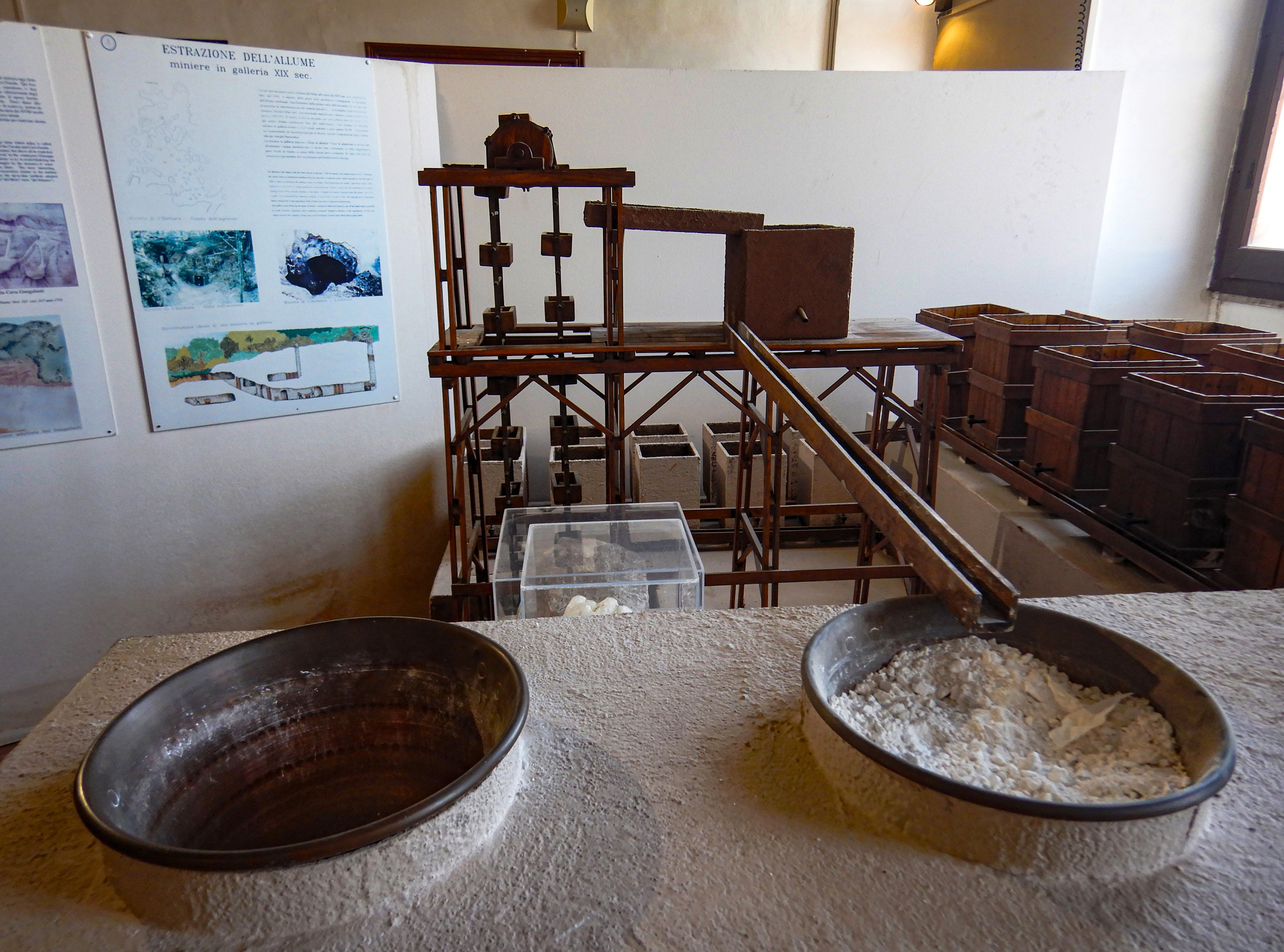
Alunite, with the chemical formula KAl₃(SO₄)₂(OH)₆, is a hydrated potassium aluminum sulfate. This compound, known commercially as "alum," was indispensable in the pre-industrial world. Its primary use was as a mordant in textile dyeing. A mordant is a substance that chemically binds a dye to fabric fibers. The aluminum ions from the alum form a molecular bridge between the dye and the cloth, fixing the color and preventing it from running or fading. Roman alum from Tolfa was especially prized for its purity, which produced clear, brilliant colors.
A Papal Monopoly
In 1461, a papal official named Giovanni da Castro discovered the large alunite deposits in the Tolfa hills. His discovery was timely. The fall of Constantinople in 1453 had cut off Europe's traditional supply of alum from mines in Anatolia, which were now under Ottoman control. Recognizing the value of a local source, Pope Pius II moved quickly. He established a papal monopoly over the mines, which were located within the Papal States.
The Apostolic Camera, the papal treasury, managed the enterprise, granting mining contracts and controlling the international trade through partners like the Medici Bank. The revenue generated was enormous, at one point boosting papal income by an estimated 20 percent. This wealth helped fund the papacy's political and military ambitions, including crusades against the Ottoman Empire. It also financed the work of Renaissance artists and architects. The mining operations led to the founding of the town of Allumiere, whose name derives from "alum," specifically to house the miners and process the ore. The mines operated for nearly 500 years before finally closing in 1941.