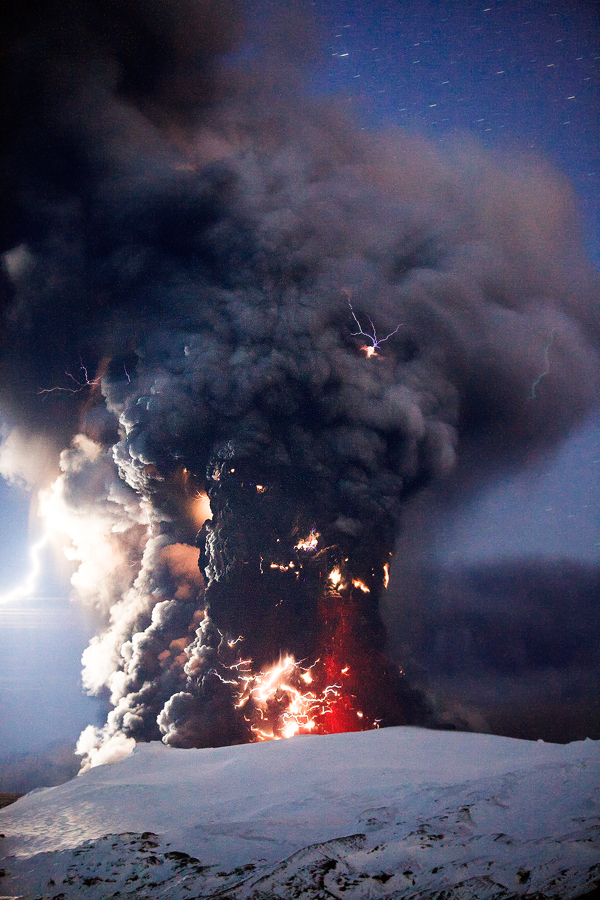
An electrifying phenomenon
Volcanic lightning is an electrical discharge caused by an eruption, creating a spectacle often called a "dirty thunderstorm". The 2010 eruption of Iceland's Eyjafjallajökull volcano provided a well-documented example of this powerful event. Unlike a typical thunderstorm where lightning is generated by colliding ice crystals, volcanic lightning has multiple charging mechanisms. Near the volcanic vent, the violent fragmentation of rocks and magma generates an electrical charge in a process called fractoemission. Higher in the plume, triboelectric charging occurs as particles of volcanic ash and rock fragments collide, stripping electrons from one another and building static charges.
The height of the ash plume determines which charging mechanism dominates. In shorter plumes, typically 1 to 4 kilometers high, fractoemission and the friction between rock particles are the primary drivers. In taller ash plumes, like those from Eyjafjallajökull which reached heights of 7 to 12 kilometers, another process occurs. The abundant water vapor from the magma and melted glacial ice rises into the cold atmosphere, where it freezes. Collisions between these new ice crystals and the ash particles create charge separation, similar to a regular thunderstorm. This interaction between magma and ice water, a phreatomagmatic eruption, can lead to significantly more lightning.