The seismic song of magma
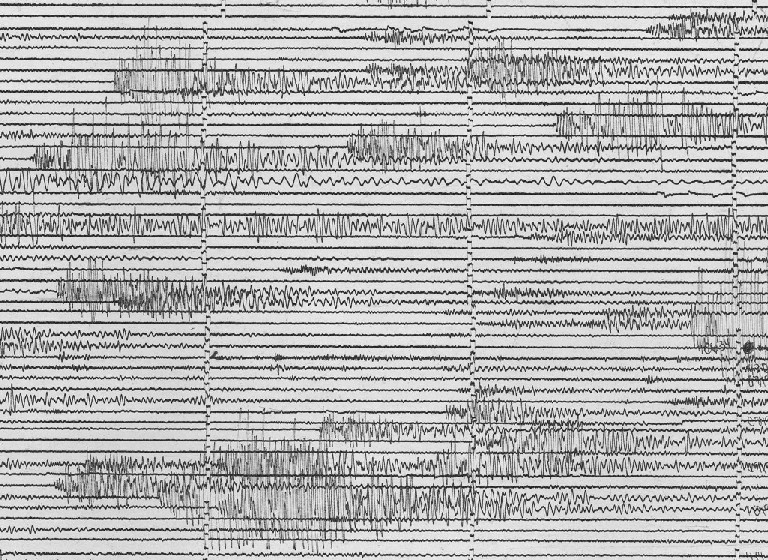
Before many volcanic eruptions, the ground begins to vibrate in a steady, distinctive way. This phenomenon, known as harmonic tremor, is a continuous seismic signal that is different from the sudden, sharp jolt of a typical earthquake. It's generated by the movement of magma and hot gases through the volcano's internal plumbing. Scientists at observatories like the Hawaiian Volcano Observatory (HVO) use networks of sensitive seismometers to listen to these vibrations, which often precede or accompany eruptions.
The sound of a harmonic tremor is characterized by a narrow frequency band, typically between 0.5 and 7 Hertz. This gives it a "harmonic" quality, with a fundamental frequency and several overtones, similar to a musical instrument. The source is thought to be the resonance of magma and gas oscillating within a conduit or crack, much like how a pipe organ creates sound. The specific frequency can reveal clues about the volcanic system; for Kīlauea in Hawaii, tremor frequencies of 0.5–2 Hz suggest resonating conduits between 1 and 5 kilometers long. Broadband seismometers, which can detect a wide range of frequencies from 0.01 Hz to 50 Hz, are the primary tools for capturing these subtle but persistent signals.
Sometimes, the frequency of the tremor changes over time, a phenomenon called "gliding." At Kīlauea in 2011, scientists observed a tremor's fundamental frequency glide upward from 1.2 Hz to over 5.6 Hz in just five hours, indicating dynamic changes within the magma system. While harmonic tremor is a strong indicator of magma on the move, it does not guarantee an imminent eruption.
A vocabulary of volcanic quakes
Harmonic tremor is one of several seismic signals that volcanologists study. The movement of magma stresses the surrounding rock, causing it to fracture and generate what are known as volcano-tectonic (VT) earthquakes. These are similar to standard tectonic earthquakes and signal that rock is breaking to make way for rising magma.
Another important signal is the long-period (LP) earthquake. These are caused by the resonance of magma and gases moving through cracks and are often seen before eruptions. Volcanic tremor can sometimes be understood as a continuous series of LP events occurring so rapidly they blend into a single, sustained signal. Together, these different seismic signatures provide a more complete picture of the processes happening deep underground.
In addition to seismic waves through the ground, volcanoes also produce low-frequency sound waves in the atmosphere called infrasound. With frequencies below 20 Hz, infrasound is inaudible to humans but can travel for thousands of miles. Monitoring infrasound provides clear evidence that a volcanic vent is open to the atmosphere and can help scientists detect eruptions even in remote, cloud-covered locations like Alaska's Aleutian Islands. The combination of seismic and infrasound data allows for a more robust monitoring system, helping to distinguish between subsurface magma movement and surface eruptions.