A Sea of Microbes
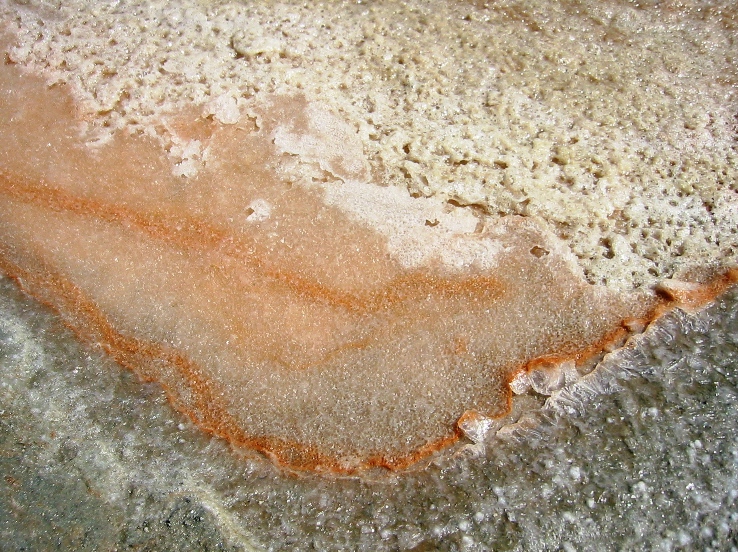
The Sivash lagoon system, a vast network of shallow marshes covering around 2,560 square kilometers, gets its colors from a microscopic survivalist. The bright pink and reddish hues are not from minerals, but from a salt-tolerant microalga, Dunaliella salina. This single-celled organism thrives in the lagoons' hypersaline water. Under the stress of intense summer sunlight and extreme salt concentrations, the alga produces high levels of beta-carotene, the same orange-red pigment found in carrots. This pigment protects the organism against the harsh solar radiation.
The lagoons' other characteristic is their smell. The nickname "Rotten Sea" comes from the pungent odor of hydrogen sulfide that arises during the summer. This gas is a byproduct of the microbial breakdown of organic matter in the thick, oxygen-poor silt that coats the lagoon floor. This layer of silt can be up to five meters deep in some areas. The extreme shallowness of the lagoons—with an average depth of 0.5 to 1 meter, evaporation concentrates the salts and increases the color and smell.
A Geologic Salt Factory
The Sivash lagoons are a geologically young feature, formed between 1100 and 1200 AD. They are separated from the Sea of Azov by the Arabat Spit, a narrow sandbar that stretches for 112 kilometers, making it one of the longest in the world. This spit effectively created a massive evaporation pond. Water from the Sea of Azov enters through the narrow Henichesk Strait, but has limited escape. Summer evaporation drives the water's salinity to extreme levels, sometimes exceeding 200 parts per thousand, compared to the average ocean salinity of about 35 ppt.
This natural salt concentration has been exploited for centuries. Salt harvesting is a traditional industry here, with an estimated 200 million metric tons of salt contained within the system. The historic Chumak trade route once saw merchants transporting Sivash salt across the region. The process has changed little over time; the salt is harvested in autumn after the hot summer months have evaporated much of the water, leaving behind crystallized salt pans. Some of the equipment still in use for harvesting dates back to the early 20th century.