A Landmark for Astronauts
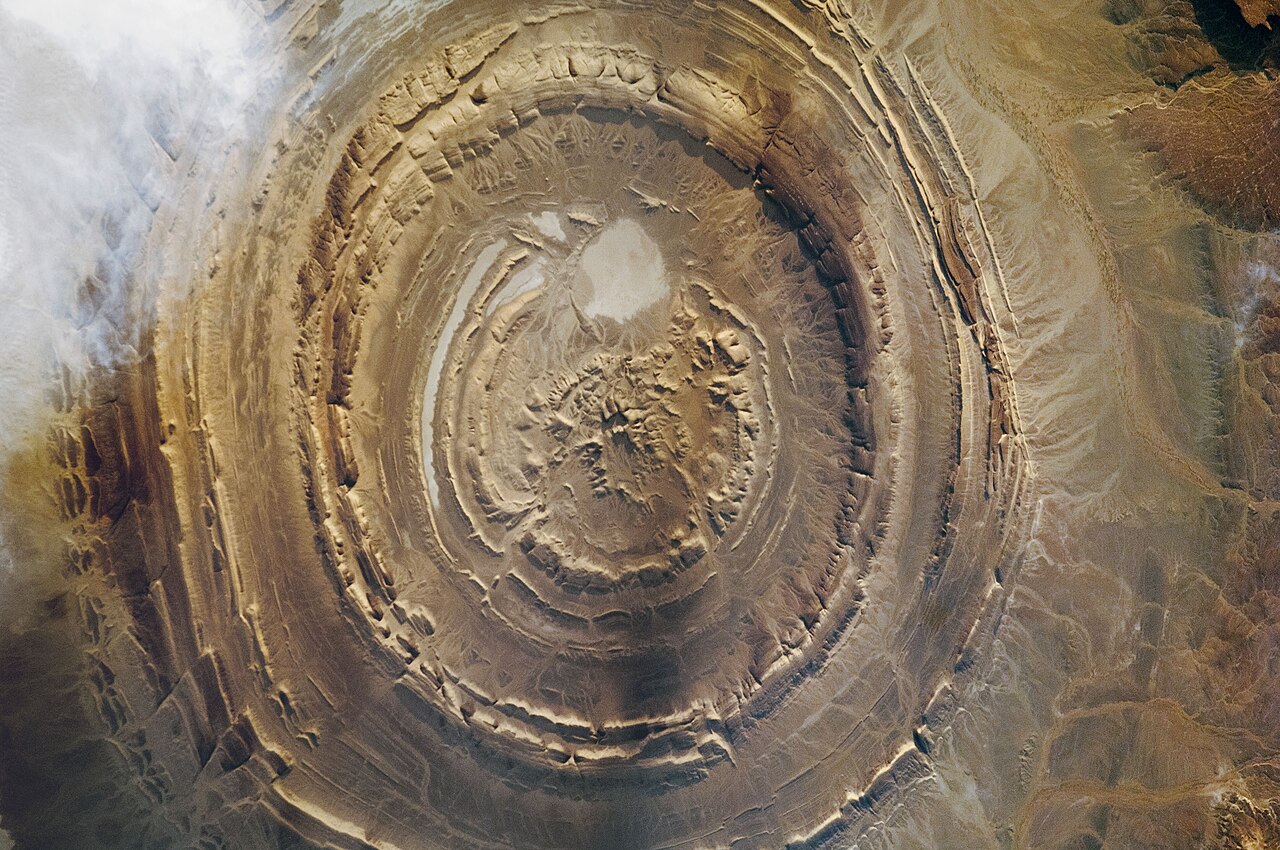
From the ground, the Richat Structure is a series of low, rocky ridges in an otherwise flat expanse of the Sahara. Its true form, a vast, 40-kilometer (25-mile) wide set of concentric rings, is only visible from high above. Astronauts on early NASA missions were the first to recognize its distinct shape, using the Eye of the Sahara as a landmark while orbiting the Earth. During the Gemini 4 mission in 1965, astronauts James McDivitt and Edward White were specifically tasked with photographing large circular features, and their images brought the structure to global attention.
Initially, its bullseye shape suggested that it was an impact crater. However, field expeditions in the 1950s and 60s found no definitive evidence of a hypervelocity impact. The flat central area lacks a central peak, and scientists found no shock metamorphism—the unique rock deformations and minerals like coesite that indicate an extraterrestrial collision. The initial reports of coesite were later found to be a misidentification of the mineral barite.
A Dome from Deep Time
The current geological consensus indicates a terrestrial origin. The Richat Structure is a deeply eroded geological dome. the result of a massive upward push from below. Around 100 million years ago, during the Cretaceous Period, a body of magma swelled beneath the surface, forcing the overlying layers of sedimentary rock to bulge upwards into a massive dome. This alkaline igneous intrusion also created a complex network of volcanic features, including gabbroic ring dikes and kimberlite pipes. The carbonatite rocks associated with this event have been dated to between 94 and 104 million years ago.
Over millions of years, wind and water sliced away at the top of this dome. The process of differential erosion carved out the landscape we see today. More resistant layers of quartzite rock formed the high, circular ridges, known as cuestas, while softer rock types eroded away to form the valleys in between. The oldest rocks, dating back to the Late Proterozoic eon, are exposed in the center, with progressively younger layers of Ordovician sandstone found toward the edges. The very center consists of a massive siliceous megabreccia, a rock made of angular fragments cemented together by hydrothermal fluids that dissolved and collapsed the original limestone and dolomite core.