A startling discovery
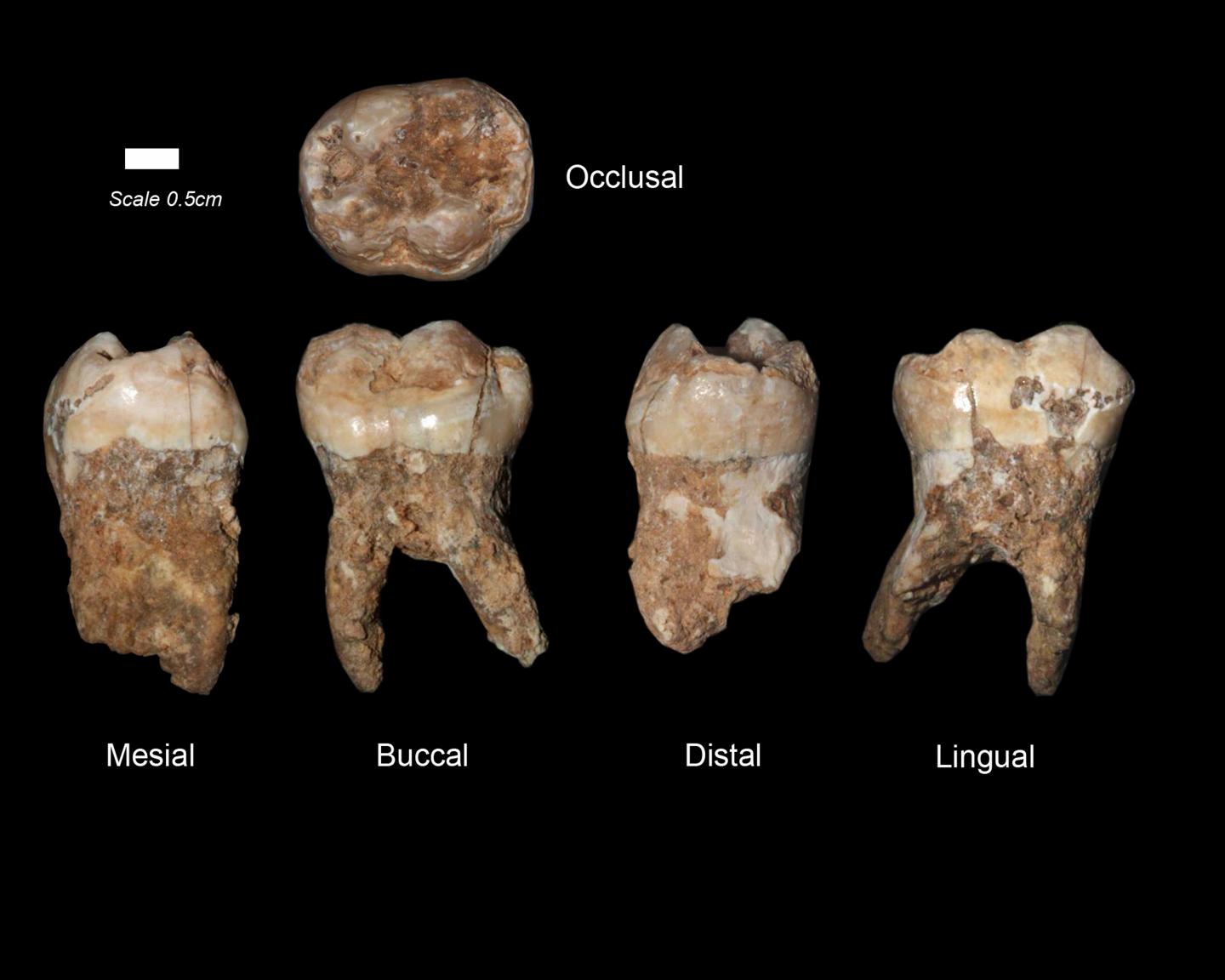
In the limestone hills 12 kilometers east of Tel Aviv, a road construction project in 2000 accidentally destroyed the ceiling of a previously unknown cave. This site, now called Qesem Cave, revealed a large deposit of archaeological material from the late Lower Paleolithic period. Excavations led by archaeologists from Tel Aviv University have since uncovered many flint tools and animal bones. The most debated discovery from Qesem is a small collection of hominin teeth.
Dating methods, including Uranium-Thorium series on speleothems and Electron Spin Resonance on herbivorous teeth, place the occupation of the cave between 420,000 and 200,000 years ago. The 13 hominin teeth found within these layers present a puzzle. Their size and shape are remarkably similar to those of modern Homo sapiens. This finding challenges the consensus timeline that Homo sapiens evolved in Africa around 300,000 years ago and migrated out much later. The Qesem teeth are older than any other Homo sapiens fossils, yet they appear in a region and time period typically associated with other archaic humans, like the ancestors of Neanderthals.
Modern teeth, ancient behavior
The dental evidence is contentious. Morphological analysis shows the Qesem teeth share features with the later Skhul and Qafzeh hominins, early Homo sapiens also found in Israel, but they also have some Neanderthal-like traits. This ambiguity has led to intense scientific debate. Some researchers propose these teeth belong to a new, unknown hominin lineage, while others suggest they represent a very early population of Homo sapiens that originated in the Levant, not Africa.
The lifestyle of the cave's inhabitants makes the find more mysterious. The immense quantity of animal bones, mostly from fallow deer, shows evidence of systematic, cooperative hunting. The hominins butchered their prey, brought select cuts back to the cave, and cooked them over a central hearth. This 300,000-year-old hearth is one of the earliest uses of the repeated and controlled use of fire. The inhabitants also produced sophisticated flint blades, part of a tool industry known as the Amudian, which may have been used as a kind of Paleolithic cutlery.
Analysis of hardened plaque, or dental calculus, on the teeth provided more details. Microscopic traces of charcoal showed that these individuals regularly inhaled smoke from their indoor fires, the earliest evidence of human-made air pollution. The plaque also contained plant-based food particles, indicating a more varied diet than meat. Some inedible plant fibers found may have been used for rudimentary tooth cleaning.